Key Points
- OpenAI unveiled ChatGPT Wallet, letting AI agents complete purchases without accessing users' real card numbers.
- It launches with American Express, Mastercard and Visa for US ChatGPT Pro subscribers aged 18 and older.
- The move turns ChatGPT from shopping research tool into a checkout layer businesses can accept today.
The latest:
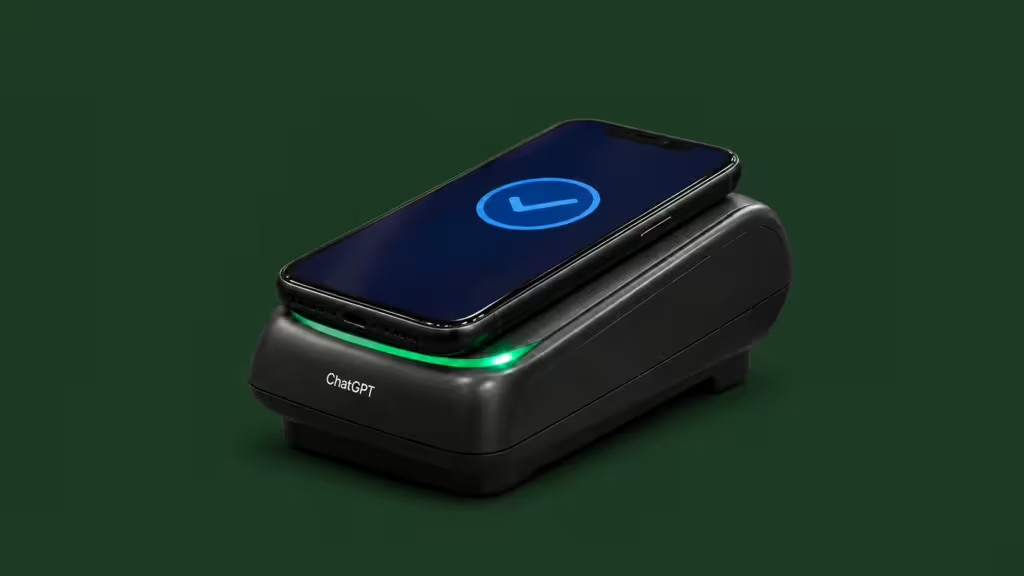
AI agents can now pay on a user’s behalf without ever touching the real card number. OpenAI said ChatGPT Wallet, built with American Express, Mastercard and Visa, substitutes a payment token for actual card details and requires a security check such as Face ID or a fingerprint before every purchase. It begins rolling out through dots for US ChatGPT Pro subscribers.
Details:
- The mechanics: Users add a card once, then approve each transaction without re-entering payment details, according to OpenAI. Before every purchase the user reviews the items, the total and the selected card, then confirms with a biometric check. Each approval creates a record of what the user authorized the agent to buy.
- The tokenization: After approval, the payment network issues a payment token — a substitute carrying its own card number, security code and expiration date, OpenAI said. The charge lands on the user’s selected card, but the company said ChatGPT Wallet never shares the actual card details with either the business or the agent.
- Consumer protections: OpenAI said cardholders keep their existing rewards and their protections for eligible disputes with merchants, citing a defective item as an example. Banks and payment networks continue to apply their own transaction evaluation, a structure that keeps the wallet inside established card rails rather than outside them.
- The scale argument: OpenAI said 1.2 billion people use ChatGPT weekly, many of them to research products and compare options before deciding what to buy. The company framed the wallet as the step that closes that loop, giving agents a payment method merchants can accept through systems they already operate.
- Merchant position: Users transact directly with businesses, which retain their customer relationships and keep control over pricing, fulfillment, returns and customer service, according to OpenAI. Alongside the wallet, the company said it is releasing tools and guidance to help merchants serve customers who arrive through an agent.
- Amex reaction: Luke Gebb, executive vice president and head of global innovation at American Express, said the wallet is the card issuer’s first Agentic Commerce Experiences integration, “enabling eligible Card Members to use their Amex Card while reviewing and approving each purchase.”
- Who gets it: Availability is limited at launch to ChatGPT Pro subscribers in the United States who are at least 18 years old and hold eligible US-issued cards, OpenAI said. Access comes through dots, the feature that allows an agent to complete a purchase on the user’s behalf.
- Expansion plans: OpenAI said it will work with businesses, banks and payment networks to learn from early use and widen availability over time. The company did not set a timeline for extending the wallet beyond the US, to non-Pro tiers, or to cards issued outside the American market.
Between the lines:
OpenAI is positioning the wallet as an addition to existing card infrastructure rather than a challenge to it: tokenization, dispute rights and bank-side evaluation all stay with the networks. That design choice explains why three card giants signed on at launch, and why merchants are told their pricing, returns and customer relationships remain untouched.
What’s next
Watch whether OpenAI extends access beyond Pro subscribers and US-issued cards, how quickly merchants adopt the published agent-support tools, and whether rival payment networks or AI developers announce competing agentic checkout systems.