Key Points
- Trump said he is close to choosing between a deal with Tehran and renewed military action.
- He has signaled strikes could resume after the Nov. 3 midterm elections.
- The US is thinning diplomatic and military staffing across parts of the Middle East.
The latest:
Decision time is approaching on Iran, President Donald Trump said, framing the choice as either a negotiated agreement with Tehran or finishing the job militarily. In a Fox News interview, he said the military option would be easy to carry out. The comments came as the US reduces staffing in parts of the Middle East and moves a third carrier group toward the Persian Gulf.
Details:
- The framing: Trump told Fox News’ Sunday Morning Futures that he has a decision to make between finishing it off, which he said would be very easy, or making a deal. He added that the administration does not play games. He did not set a deadline for choosing between the two paths.
- The timing: Trump has suggested US strikes on Iran could resume after the Nov. 3 midterm elections, according to Bloomberg. The signal ties military planning to the American electoral calendar rather than to any announced diplomatic milestone or negotiating round with Tehran.
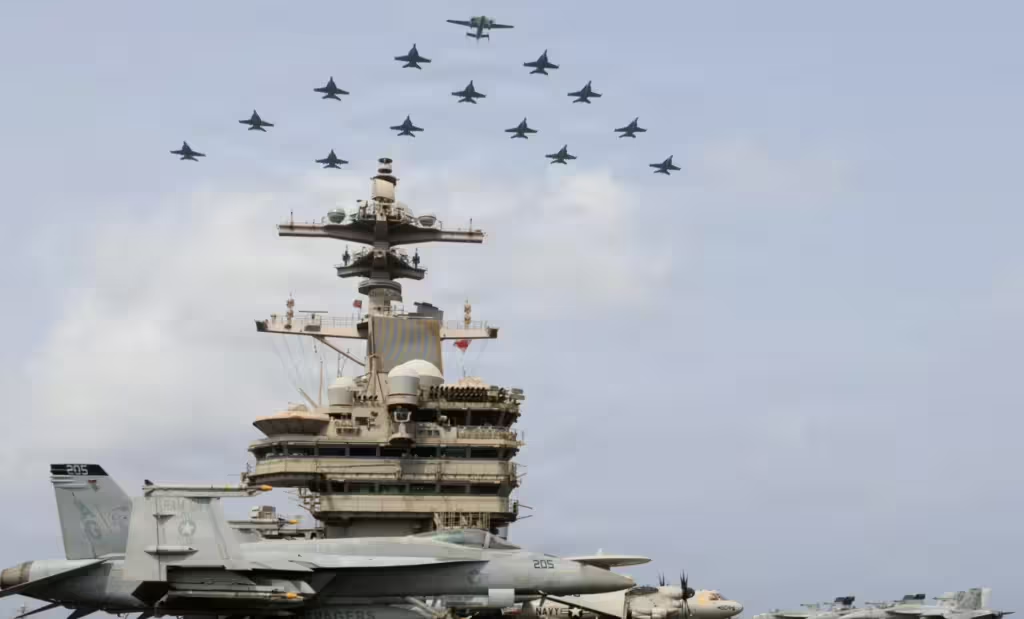
- The buildup: Additional US forces have been sent toward the Persian Gulf, including a third aircraft carrier group, Bloomberg reported. Three carrier groups in one theater is an unusually heavy concentration, and the deployment gives Washington standing strike capacity regardless of which option Trump chooses.
- The warning: Officials cautioned that the window between the election and the seating of the new Congress could be particularly dangerous, Bloomberg reported. Those same officials assessed that a negotiated deal remains the most likely route to ending the conflict, an assessment attributed to them rather than to the White House.
- The drawdown: The US is reducing diplomatic and military staffing in parts of the Middle East as threats grow from Iran and the Iran-backed Houthi militants in Yemen, Bloomberg reported. Staff reductions typically precede periods officials expect to be volatile.
- The discrepancy: The State Department had initially acknowledged departures only from Saudi Arabia. An American official told Bloomberg News on Friday that staffing changes are taking place more broadly, indicating the drawdown is wider than the department’s public account described.
- The maritime front: Iran has intensified attacks on ships near the Strait of Hormuz, the American official told Bloomberg. The strait is the chokepoint for a large share of seaborne crude, which makes shipping attacks a pressure lever on energy markets as well as on Washington.
- The Houthi factor: Threats to Americans in the region come from both Iran and the Houthis, per Bloomberg, widening the exposure beyond Iranian territory. No casualty figures or specific incidents against US personnel were detailed.
Background:
Bloomberg previously reported that Trump was preparing for Iran escalation after the US and Israeli elections, placing Sunday’s comments within an already-signaled sequence rather than presenting them as a sudden shift in posture.
Between the lines:
Two signals point in opposite directions. The carrier deployment and the staffing drawdown are preparations for a strike window, while officials’ own assessment names a negotiated deal as the likeliest end to the conflict. Tying the timing to Nov. 3 suggests the sequencing is political as much as operational, with leverage built before either path is chosen.
What’s next
The Nov. 3 midterm elections, the seating of the new Congress, any announced negotiating contact with Tehran, further State Department disclosures on regional staffing, and additional attacks on shipping near the Strait of Hormuz.