Key Points
- Semafor's Gulf bureau chief writes that Mohammed bin Salman now confronts simultaneous energy, security and fiscal crises.
- Trump's war with Iran, which the crown prince opposed, has deepened pressures that predated it.
- A damaged reputation as a reliable oil supplier threatens Riyadh's market share once fighting ends.
The latest:
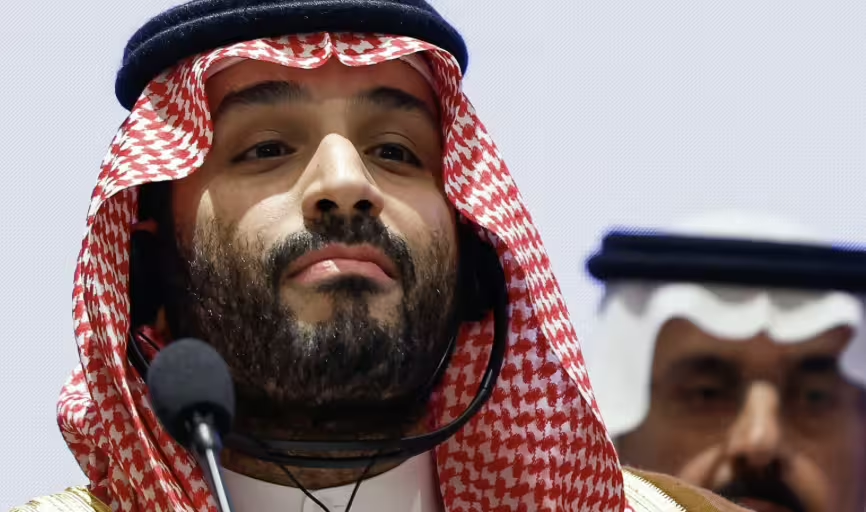
Saudi Crown Prince Mohammed bin Salman is confronting the limits of his power as an energy shock, a regional security emergency and a worsening domestic outlook converge, Semafor’s Saudi Arabia bureau chief Matthew Martin wrote in an analysis published Oct. 23. The kingdom’s budget deficit was already widening before the Iran war began, and flagship investment projects were being scaled back.
Details:
- The oil picture: Attacks on shipping through the Strait of Hormuz and Bab el-Mandeb pushed prices high enough to offset lower export volumes, Martin wrote. He argued the short-term gain conceals a longer-term risk: the longer disruption lasts, the more major importers prepare for life without Saudi crude.
- Market share risk: Martin assessed that consumers will seek alternative hydrocarbon sources and accelerate renewables investment, potentially triggering a global scramble to pump faster. That would leave the kingdom fighting to win back share after the conflict ends, into a glut and lower prices.
- The Houthi threat: The Yemeni group, which Saudi Arabia has fought on and off since 2009, has struck deep inside the kingdom, hitting targets from airports to the Aramco head office with no regard for civilian lives, according to the analysis. Residents and potential visitors are unnerved.
- Investment chill: Sustained uncertainty makes the diversification push harder to deliver, Martin wrote, arguing foreign executives would be reluctant to visit, let alone invest, if fighting with Iran intensifies again. He noted the recent Kuwait oil pipelines deal as evidence capital still flows into some critical infrastructure.
- NEOM’s cost: The government has admitted a costly defeat on NEOM after allocating roughly 8% of GDP to the project once contract cancellations are counted, according to Martin. Plans for the 2034 men’s soccer World Cup are being scaled back, along with other giant projects.
- The fiscal squeeze: The security crisis and higher fuel costs are pushing spending up faster than oil revenues, Martin wrote. Government debt remains low by global standards but is climbing, and he judged that higher defense spending, while vital, will do little for diversification.
- Washington leverage: Riyadh’s $1 trillion US investment pledge and outreach to Trump, including money placed into Trump family business interests, have not produced leverage in Washington, Martin assessed. Trump remarked in March that the crown prince never imagined he would be “kissing my ass.”
- No alternatives: China, which brokered the 2023 Saudi-Iranian rapprochement, is either unwilling or unable to help, Martin wrote. He added that despite heavy military spending, Saudi forces have struggled to deter their enemies.
Background:
Martin wrote that four years ago the crown prince was at the peak of his powers, courted by China’s president, snubbing the US president, and funding ambitious projects from a surge of oil revenue. He had warned against Trump’s war with Iran.
Between the lines:
The analysis frames the squeeze as structural rather than circumstantial: the reforms’ momentum was fading and the deficit widening before any missile flew, so the war compounds a trend instead of creating one. The Houthi strikes and the hollow $1 trillion pledge point the same way — spending buys neither deterrence abroad nor influence in Washington, while Vision 2030’s 2030 deadline keeps approaching.
What’s next
Watch whether fighting with Iran escalates further, how long shipping disruption through Hormuz and Bab el-Mandeb persists, and the scale of further cuts to the 2034 World Cup plans and other giant projects.