The latest:
Qatari mediators are in Tehran on Sunday seeking to lower regional tensions in coordination with the United States, an informed official told Reuters. A senior Iranian official told Al Jazeera a Qatari delegation had arrived and was holding talks as part of mediation efforts to secure stability in the region. The visit lands days after the US Central Command commander personally surveyed the Strait of Hormuz.
Details:
- The mediation: An informed official told Reuters the Qatari mediators arrived in Tehran on Sunday and are operating in coordination with Washington. A senior Iranian official told Al Jazeera the delegation is negotiating within ongoing Doha-Tehran contacts, framed around regional security and stability as tensions escalate.
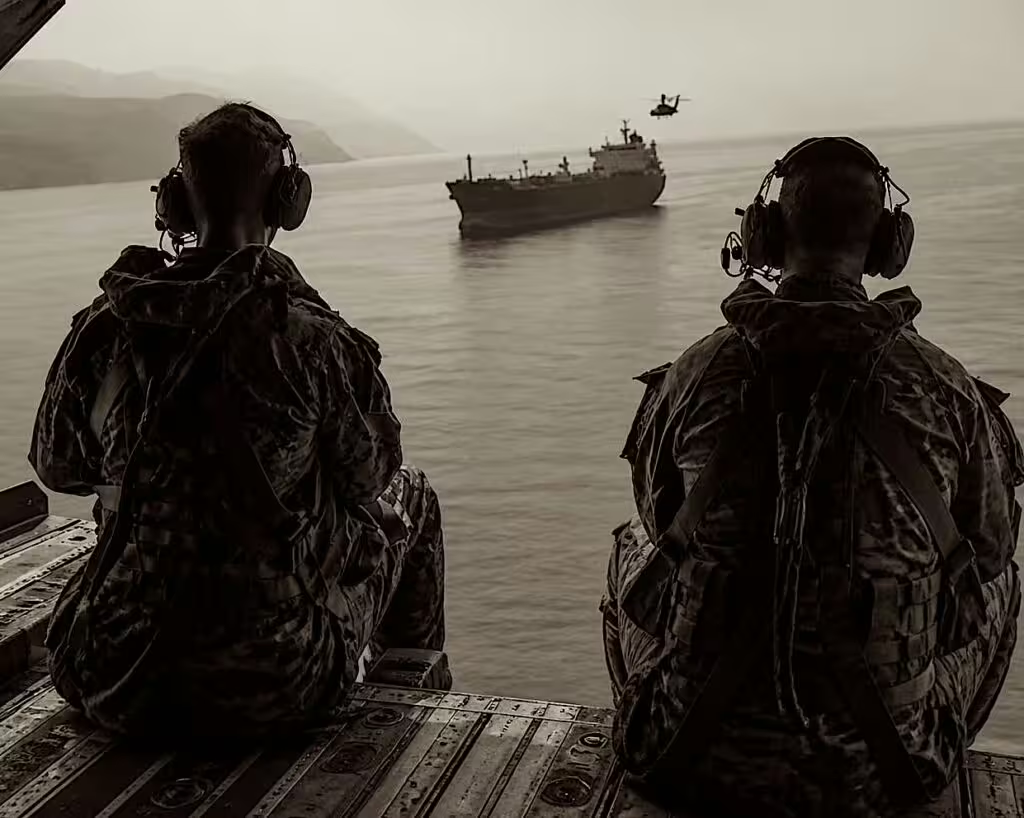
- CENTCOM inspection: Admiral Brad Cooper, commander of US Central Command, inspected the Strait of Hormuz on October 25, reviewing the operational picture from a US Army CH-47 Chinook helicopter over the international waterway. CENTCOM said the visit underscored the American commitment to freedom of navigation through the strait.
- The numbers: US forces have helped Gulf partners export more than 1.5 billion barrels of crude since the summer, CENTCOM said. More than 3,000 commercial vessels transited Hormuz successfully with American support over the past six months, and the command put the safe-arrival rate above 95%.
- The mines: CENTCOM said the operational tempo accelerated after US forces cleared international shipping lanes of naval mines it attributed to Iran’s Revolutionary Guard. Cooper said the main transit corridors remain free of Iranian mines, crediting the clearance effort, and met the personnel who carried out the mission.
- Cooper’s framing: The admiral said the United States “continues to stand shoulder to shoulder with our Gulf partners and the shipping industry,” adding that work continues with US government agencies, the Gulf Cooperation Council and shippers to keep commercial traffic flowing through the waterway.
- The accusation: CENTCOM described the safe-transit figures as achieved despite what it called unjustified aggression by the Revolutionary Guard, arguing the record reflects American and regional partner control of the international waterway. No Iranian response to the characterization was issued alongside the command’s statement.
- Hardliners push back: Influential hardline cleric Alireza Panahian said Saturday that insisting Iran’s problems can be solved through diplomacy alone is foolish and could undermine social unity, Iran International reported. Panahian, who holds no official government post, told a Revolutionary Guard-affiliated student news agency that peace with Washington is impossible.
- Clerical access: Panahian has long delivered sermons attended by the late Supreme Leader Ali Khamenei and maintains close ties to circles around his successor, Mojtaba Khamenei. He accused the US administration of operating under the influence of what he termed global Zionism, saying Iranian politicians must accept their adversaries do not want peace.
- Military signal: Yahya Rahim Safavi, a senior adviser to Mojtaba Khamenei, said Sunday that Iran’s adversaries believed they could defeat the country within days, but the population and armed forces held firm. Safavi said Washington knows Iran is at full strength and ready, and praised the Supreme Leader’s front-line presence.
Background:
The Strait of Hormuz is the chokepoint for a large share of seaborne Gulf crude. CENTCOM says Revolutionary Guard mine-laying prompted the clearance campaign it now credits for keeping the main transit corridors open.
Between the lines:
Two tracks are running at once. Washington is advertising military control of the waterway through Cooper’s inspection and the 1.5 billion barrel and 95% figures, while Doha works the diplomatic channel in Tehran in coordination with the Americans. Inside Iran, Panahian’s dismissal of diplomacy and Safavi’s readiness message suggest the mediators are negotiating against a leadership circle publicly invested in confrontation rather than a settlement.
What’s next
Watch for an Iranian readout of the Qatari talks, any US acknowledgment of the channel, and whether CENTCOM reports fresh mining or interference in Hormuz transit lanes in the coming days.