Key Points
- Dumb.co required handwritten cover letters for internships after AI-sounding applications overwhelmed its hiring pipeline.
- Nearly 900 people applied for four roles; roughly 70% uploaded handwritten letters, the company said.
- A Wharton economist expects AI-heavy hiring to push companies back toward human-to-human signals.
The latest:
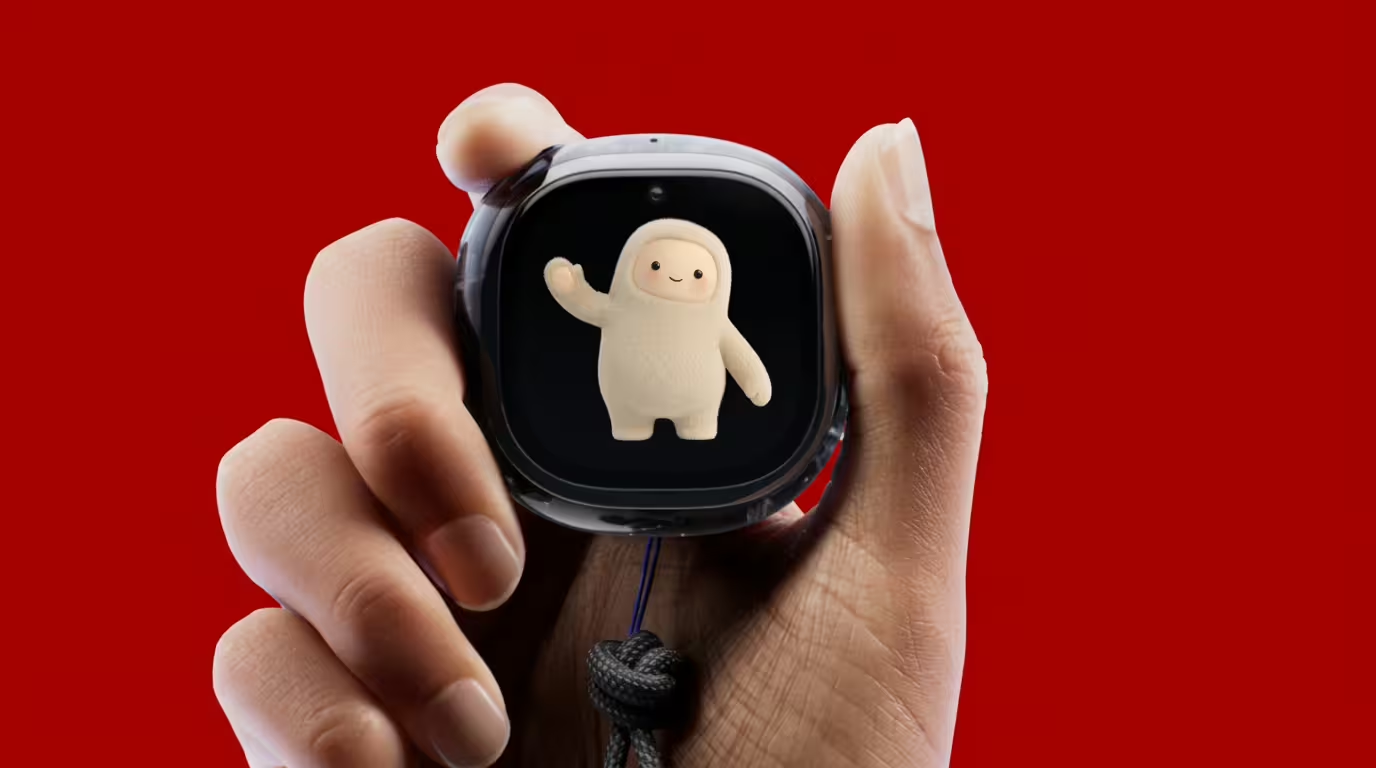
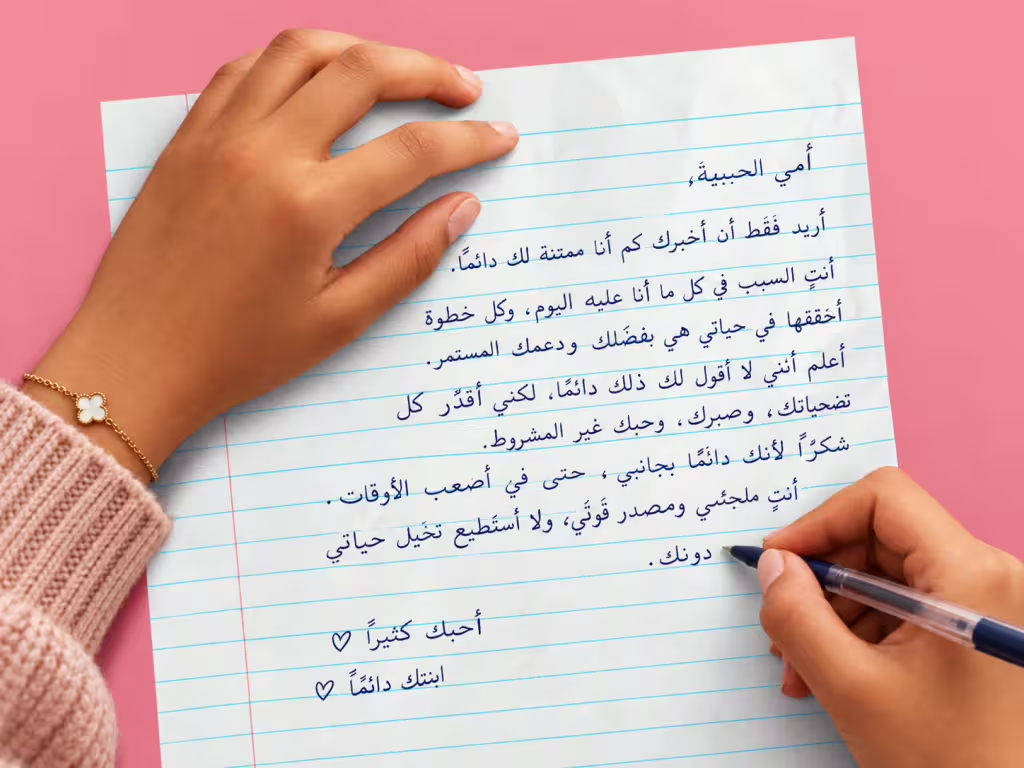
A startup selling modified flip phones began demanding handwritten cover letters from internship applicants, days after its listings went live, saying too many submissions read as AI-generated. Dumb.co told Business Insider that nearly 900 candidates applied for four intern roles, and that it interviewed 60 before hiring 10. Customer success manager Marlee Pelton-Fuentes, who runs the program, said the typed letters were not connecting with the company’s mission.
Details:
- The trigger: Dumb.co, which sells modified “dumb” phones, was recruiting interns interested in living more offline when it found a striking share of cover letters appeared machine-written. Pelton-Fuentes said she raised the problem with CEO Danny Hogenkamp and colleagues, and the requirement was added days after the roles were posted.
- The numbers: Nearly 900 people applied through the platform Handshake to four openings covering marketing, business and operations, customer success, and technology. About 70% uploaded handwritten letters. Another 200 to 300 mailed physical applications, said Afreka Ebanks, the company’s director of brand and communications.
- The prompts: Applicants were asked to answer in longhand why they were drawn to dumb living, why they wanted to work there, and whether they owned a dumb phone. Pelton-Fuentes said the answers read as personal reflections rather than formalities, surfacing attitude and motivation.
- The tradeoff: Reading hundreds of handwritten letters took longer than skimming typed submissions, Pelton-Fuentes said, but she described the applicant pool as better aligned with the company’s mission. Because each letter required individual review, she said she recalled what candidates had written when they reached the interview round.
- An applicant’s account: Ian-Karlo Krockel, 21, was hired as a marketing intern in July, months after graduating from Boston University. He said other employers rarely responded to him, that the letter took about an hour to write and scan, and that he had switched to a flip phone a week before applying.
- Inside the interview: Krockel said Hogenkamp held his letter and referred to it during a second-round interview, which he described as making the process feel more personal. He said the exercise reassured him that a person, rather than filtering software, would read his application.
- The expert view: Judd Kessler, a professor of business economics and public policy at Wharton, said candidates increasingly use AI to write applications while employers use it to screen them, leaving software effectively selecting software for human review. He said anything that breaks that loop is worth attempting.
- What comes next: Kessler predicted the spread of AI will push hiring toward more human contact, including phone calls to potential connections, and said he expects letters of recommendation to carry greater weight because they rest on real working relationships. Dumb.co did not specify whether the requirement will apply to future hiring rounds.
Background:
Dumb.co sells modified flip phones aimed at customers seeking less screen time, which made an analog application requirement consistent with its product pitch. Its internship listings ran on Handshake, a platform used widely by university students and recent graduates.
Between the lines:
The handwriting rule functioned as a filter on effort as much as on authorship: an hour of writing and scanning, as Krockel described, prices out mass-applying in a way a typed form cannot. That also explains why roughly 30% of applicants did not submit handwritten letters. Kessler’s framing suggests the appeal is less about detecting AI than about restoring a costly signal employers can read.
What’s next
Watch whether Dumb.co keeps the requirement for its next internship cycle, whether other employers adopt similar analog steps, and how the 10 hired interns perform against earlier cohorts recruited through standard applications.