Key Points
- Container rates from China to Gulf and Iraqi ports have surged as Hormuz disruption reshapes shipping networks.
- Xeneta put China-Jeddah spot rates at $10,870 per 40-foot box on September 10.
- Sustained costs at these levels threaten to lift landed import prices across Gulf markets and Iraq.
The latest:
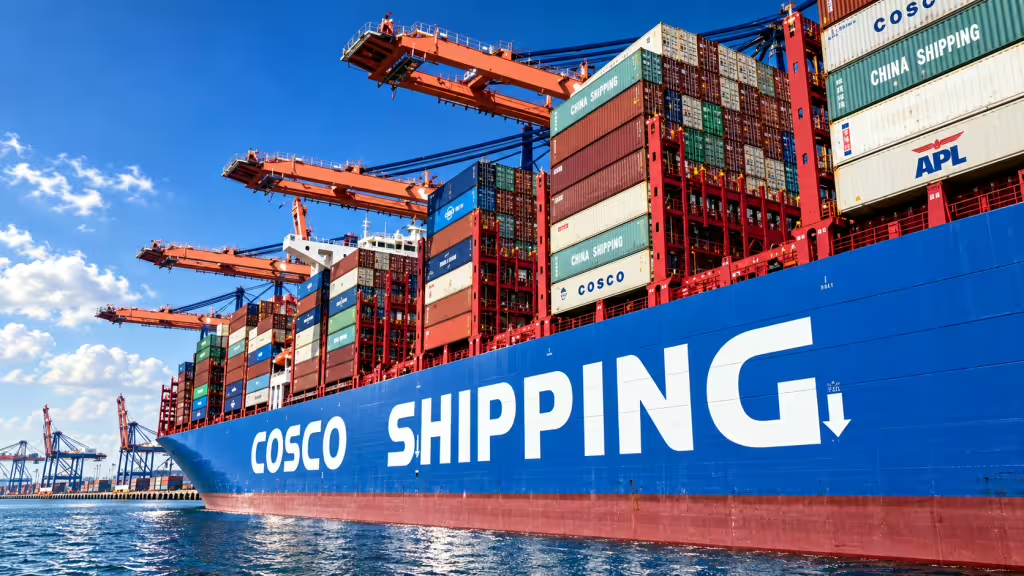
Container rates on China-to-Gulf lanes have broken past $10,000 per box on several routes as restricted traffic through the Strait of Hormuz forces carriers into alternative routing, longer voyages and emergency surcharges. Xeneta said some trades have now moved beyond records set during the Covid-era disruption. Quoted prices vary widely by origin port, container size, carrier and service type.
Details:
- Jebel Ali rates: September quotations collected by freight platforms put China-to-Jebel Ali pricing broadly in the $7,700-$9,200 range, depending on origin port and equipment type. One dataset placed the September average for quoted services at roughly $8,350, consistent with market indications around $8,000-$8,300 rather than any single universal rate.
- Saudi Arabia: Pressure is heavier on Saudi-bound cargo. Xeneta reported China-to-Jeddah spot rates at $10,870 per 40-foot container on September 10, up 256% from February 28. Separate September data showed Saudi-bound 40-foot rates ranging from about $11,655 to $14,245, depending on service.
- Iraq corridor: A September 18 Cogoport quote for Qingdao to Umm Qasr South showed $10,695-$11,141 for a 20-foot container. Globy listed a Ningbo-Umm Qasr 40-foot MSC quotation at $10,780, while another September quotation for a Shanghai-Umm Qasr 40-foot shipment reached $12,652.
- Record territory: Xeneta said China-to-Khor Fakkan spot rates hit $10,626 per 40-foot container on September 10, a 479% increase from February 28. The company said the escalation had pushed some trades past previous peaks recorded during pandemic-era supply chain disruption.
- Carrier surcharges: Maersk introduced an Emergency Freight rate of $1,800 per 20-foot dry container and $3,000 per 40-foot for cargo involving Iraq, Saudi Arabia, Kuwait, Bahrain, Qatar, the UAE and most of Oman. Boxes on vessels transiting Hormuz carry an extra $1,000 charge. Maersk said the measures cover alternative routing, storage, chartered tonnage, insurance and crew risk compensation, and set no end date for them.
- Vessel traffic: Reuters reported that only 17 commodity vessels crossed the Strait of Hormuz over one recent weekend, against a pre-war average of 125 large commercial vessels a day. Preliminary data later showed traffic dropping to two commodity vessels on September 21, though ships sailing without transponders may go uncounted.
- Transit times: The Financial Times reported China-UAE transit times have roughly doubled, while Iraq quotations show considerable variation by route and service. The newspaper also reported container traffic through the strait had fallen by 94%, pushing cargo toward Khor Fakkan and Omani ports.
- Asian congestion: Freightos reported repeated typhoon-related closures and congestion at major Chinese ports including Shanghai and Ningbo, with dozens of ships waiting for berths and carriers skipping some port calls, adding a second layer of delay before cargo even departs.
Background:
Hormuz is the main gateway for container services into upper-Gulf ports. Its effective closure to container traffic has cut available capacity and forced carriers to redesign Gulf networks, leaving Jebel Ali significantly harder to reach and diverting volumes to alternative hubs outside the strait.
Between the lines:
One quotation is not a market price. The spread between the Jebel Ali range and the $12,652 Shanghai-Umm Qasr figure shows how much depends on departure port, box size, carrier and whether emergency charges are bundled in. With Maersk surcharges alone adding up to $4,000 per 40-foot box, landed costs for Chinese consumer goods, machinery and industrial inputs rise, and how much reaches retail depends on the disruption’s length and importer pass-through.
What’s next
Watch commercial vessel counts through Hormuz, the restoration of regular container calls at upper-Gulf ports, whether Maersk withdraws its emergency surcharges, and China-Gulf spot rate movement. A sustained reopening would show whether current premiums unwind or stay embedded.