Key Points
- Qatar's prime minister said seven months of the Iran war devastated gas exports through Hormuz.
- Bloomberg Economics estimates Qatar lost 97% of hydrocarbon revenue in the second quarter.
- Doha is still shuttling messages between Tehran and Washington while its own economy contracts.
The latest:
Seven months of the Iran war have gutted Qatar’s gas exports and forced operational spending cuts, Prime Minister Sheikh Mohammed bin Abdulrahman Al Thani told Bloomberg at a UN General Assembly edition of the Qatar Economic Forum. He described the region as having lived through an earthquake, and said the disruption is circumstantial rather than structural.
Details:
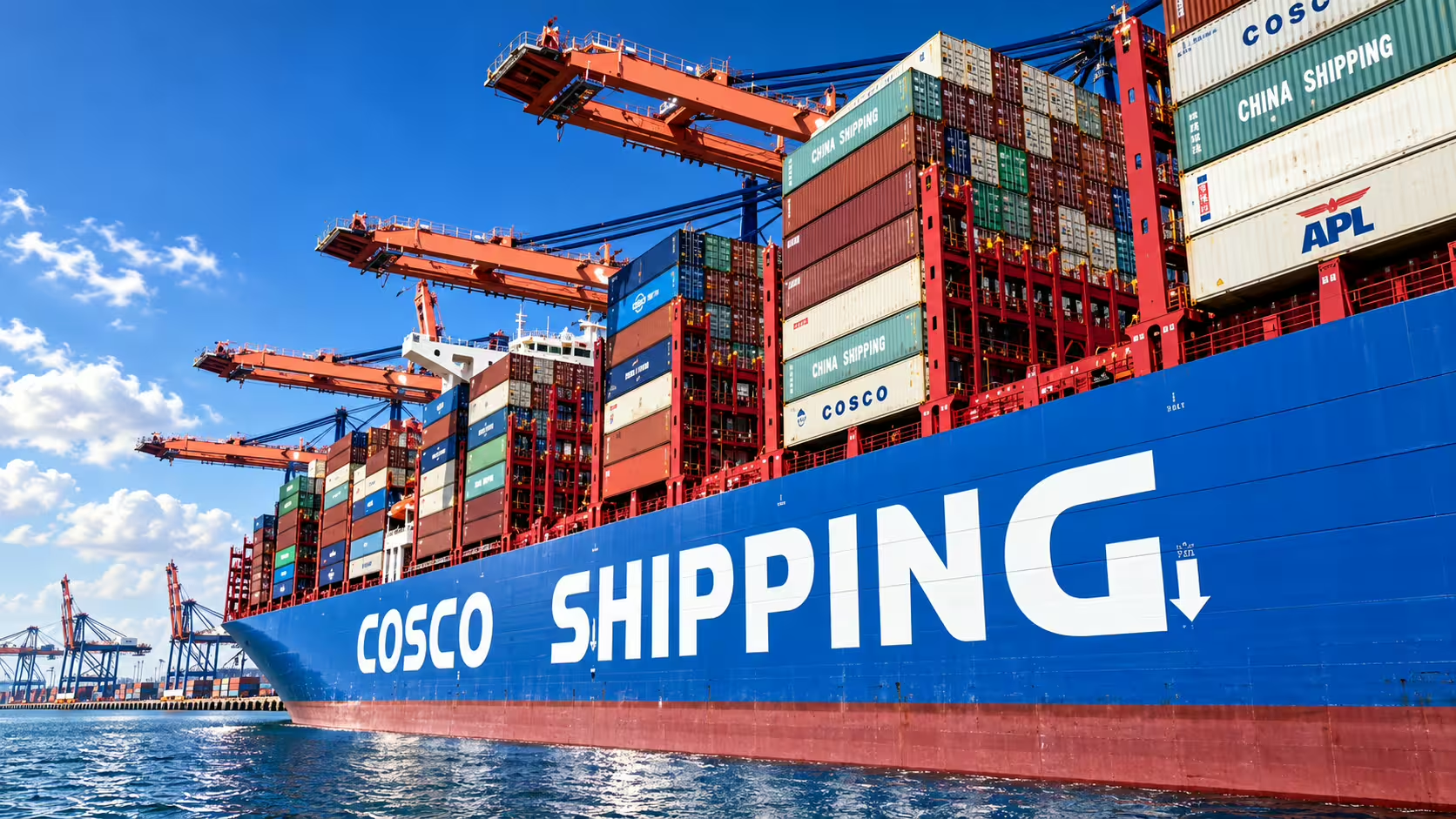
- The revenue hit: Qatar’s oil and gas income collapsed because its LNG exports depend entirely on passage through the Strait of Hormuz, with no overland alternative. Bloomberg Economics estimates the country lost 97% of hydrocarbon revenue in the second quarter. The prime minister said Qatar will meet its supply commitments once the disruption is resolved.
- The budget: Sheikh Mohammed pushed back on reported spending cuts of up to 30%, saying the reductions were necessary but applied to operational expenditure, not capital projects. He framed the crisis as a chance to cut fat from the budget and concentrate investment on priorities.
- The wider economy: The International Monetary Fund expects Qatar’s economy to contract by more than 8% this year, according to Bloomberg. Earlier this month the country reported its widest quarterly budget deficit in almost a decade, though gas wealth has left it substantial reserves to draw down.
- The mediation track: The prime minister said messages are being shuttled between Iran and the United States, calling the effort complex and requiring patience. He said Qatar is not a party to the war, and acknowledged there is no clear master strategy guiding the talks, with daily reactive events shifting the course of negotiations.
- On Iran: Asked whether Iran is a troublemaker, Sheikh Mohammed said its response to the American-Israeli war showed clearly it is not a peacemaker, then narrowed that to trouble caused for the Gulf. He called for a security framework binding Gulf states and Tehran so none threatens the other.
- On Israel: He said commitments in the Gaza agreement have not been fulfilled and accused the Israeli government of recklessness, continued killing and blocking humanitarian aid. He said the Palestinian issue will never be resolved under the current Israeli government’s policies, citing the West Bank, Lebanon, Syria and Iraq. He added that targeting schools, hospitals, bridges and energy facilities has become a new normal, with those responsible bragging about it, and said the international community must confront such violations.
- The Houthi escalation: He called Houthi attacks on Saudi Arabia, including Riyadh, very irresponsible and said all states should confront them. Bloomberg reported Houthi strikes launched from Yemen hit Saudi Aramco’s Jazan refinery on July 26, with satellite imagery capturing smoke plumes over the site.
- The US alliance: He said Washington will always be Qatar’s strategic ally and that nothing will break the partnership, even when the two sides disagree on Middle East policy. Asked whether Al Udeid air base has a future, he pointed to joint training and American equipment without directly answering.
- Doha Investment: Sheikh Mohammed unveiled a platform separating the domestic portfolio of Qatar’s sovereign wealth fund, aimed at building new national champions with combined private and state capital. He said the Qatar Investment Authority will keep investing globally in parallel, and cited a new domestic AI entity, Qai.
Background:
Qatar has built its foreign policy on mediation, from US-Iran contacts to Hamas-Israel talks and Venezuela. An Israeli strike on a Hamas office in Doha in September 2025 killed a Qatari security guard and five Hamas officials, captured on security footage.
Between the lines:
Two silences stand out. Sheikh Mohammed listed Israeli violations in Lebanon, Syria and Iraq without naming the strike on Doha itself, and he answered a direct question on Al Udeid’s future by praising the defense partnership instead. His clarification narrowing criticism of Iran to Gulf-specific grievances suggests Doha is preserving room to rebuild ties with a neighbor it still needs.
What’s next
Watch Israel’s election next month, after Prime Minister Benjamin Netanyahu rejected the Board of Peace plan for phased Hamas disarmament and Israeli withdrawal, and any movement in the Iran-US messages Qatar is relaying.