Key Points
- Macron says France will send soldiers and air-defense systems to protect the Red Sea port of Yanbu
- Saudi Arabia says it intercepted missiles aimed at Yanbu and Taif on Thursday
- The deployment puts French forces near a conflict Paris blames for its own fuel-price surge
The latest:
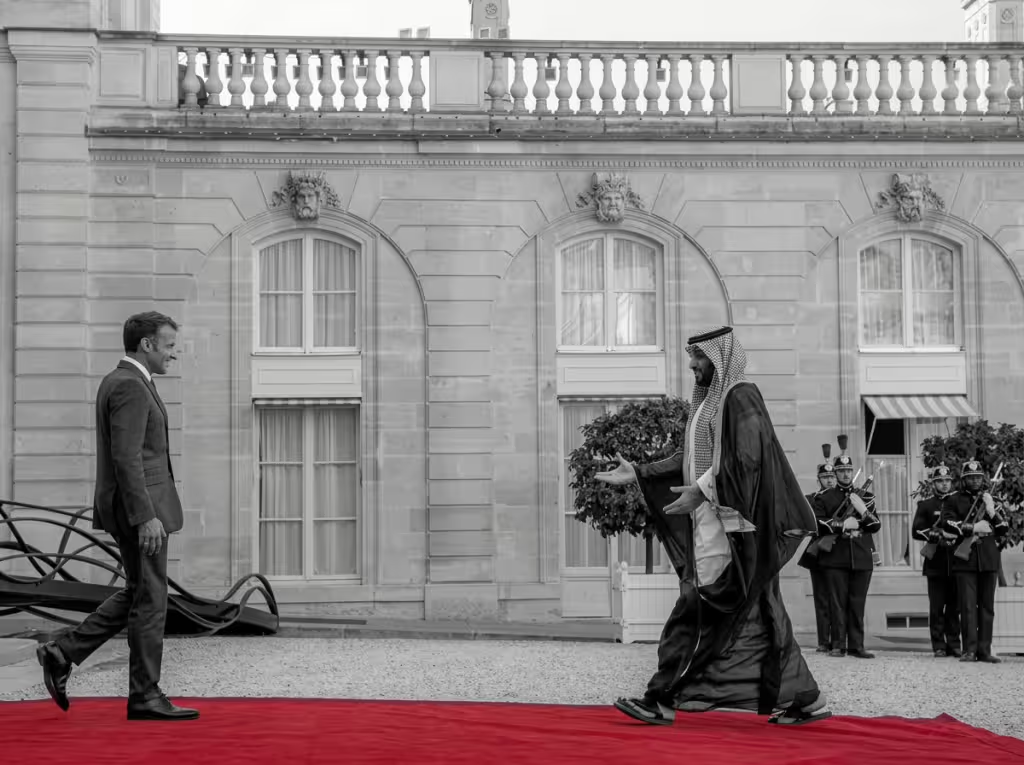
French soldiers, radar and defense systems will be deployed to protect the Saudi oil port of Yanbu on the Red Sea, President Emmanuel Macron said in a television interview Thursday, hours after the kingdom reported intercepting missiles fired toward the site. Macron said the French military would not take part in combat and was not entering the conflict, limiting its mission to protecting the facility.
Details:
- The pledge: Macron told TF1 and France 2 that France would send soldiers, radar systems and defense systems to the Yanbu site on the Red Sea. He framed the mission strictly as site protection, saying French forces would not get involved in any conflict. He did not give a deployment date or troop numbers.
- The attacks: Saudi Arabia said Thursday it intercepted missiles fired toward the Red Sea port of Yanbu and the city of Taif. The Iran-backed Houthi militia took responsibility for the new strikes, the latest in a campaign that has repeatedly targeted Saudi energy infrastructure.
- Houthi account: A Houthi spokesman said on Telegram the militia carried out two attacks using ballistic and cruise missiles as well as drones. The first was aimed at what the statement called a sensitive target in Riyadh; the second targeted Aramco facilities in Yanbu. The spokesman did not detail damage.
- Riyadh’s appeal: Saudi Foreign Minister Faisal bin Farhan Al Saud, speaking on the sidelines of the United Nations General Assembly in New York, called on the international community to take responsibility for containing the Houthi threat, saying it does not rest on Saudi Arabia alone.
- The Saudi framing: Faisal described the Houthis as “a risk to international security and stability,” pushing the file beyond a bilateral security dispute and toward a collective response. His remarks at the UN gathering placed the appeal in front of the widest possible diplomatic audience.
- Oil reaction: Brent crude settled above $106 a barrel, after briefly paring its rally on news reports that the United States and Iran are exploring a phased deal to reopen the Strait of Hormuz. The reports did not indicate that any agreement had been concluded.
- French politics: Macron’s pledge lands as tensions rise in France over surging fuel prices. He has insisted the increases stem from international conflicts, citing the US war in Iran and the disruption of the Strait of Hormuz rather than domestic policy. Paris has rolled out €450 million in fuel aid for households absorbing the energy shock.
Background:
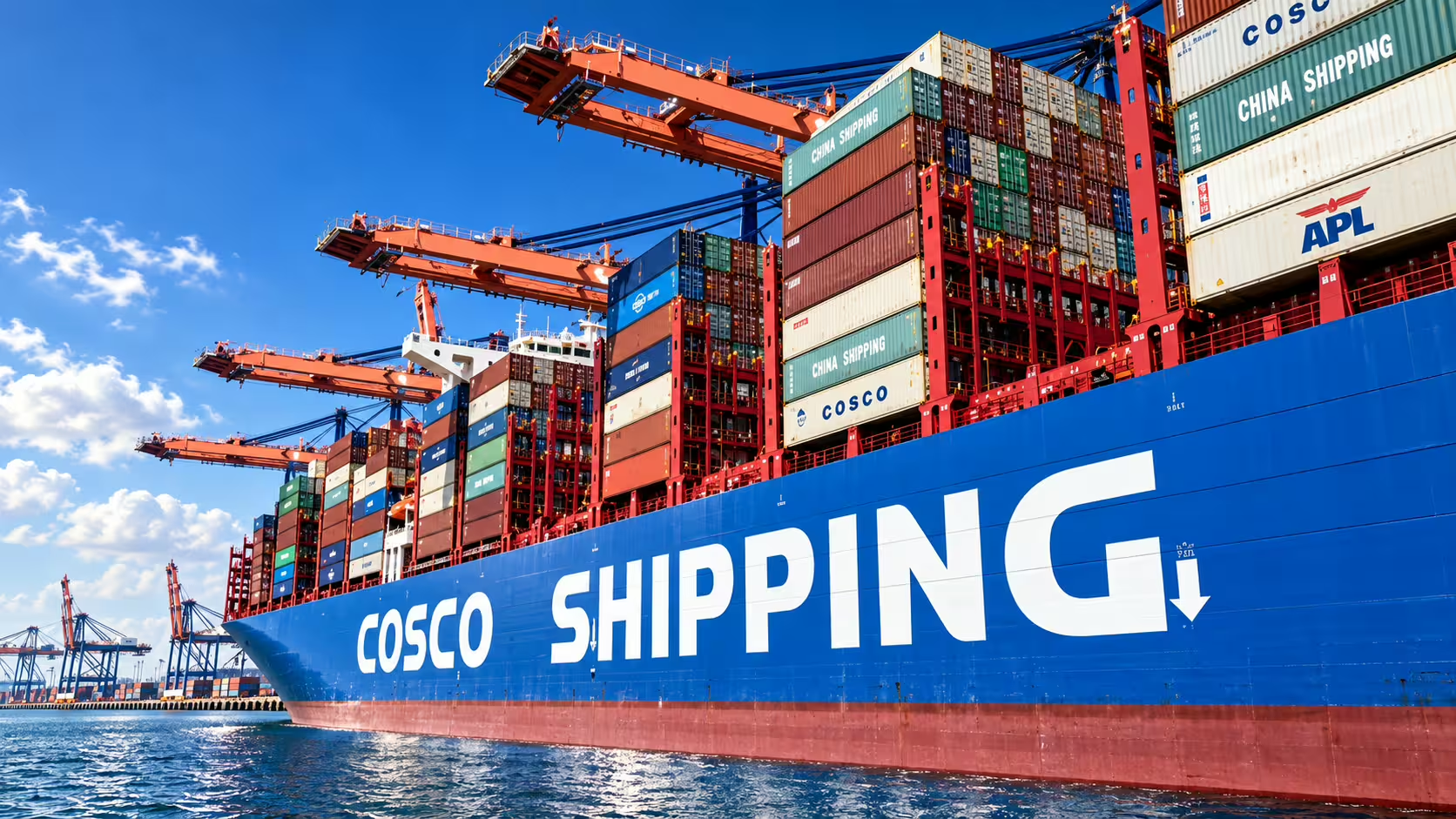
Yanbu is a Red Sea export and refining hub for Saudi Aramco, positioned outside the Strait of Hormuz chokepoint. That geography has made it a fallback route for Saudi crude when Gulf shipping lanes are disrupted, and a target of value to the Houthis.
Between the lines:
Macron is attempting two things with one deployment: securing a Red Sea export node whose disruption feeds directly into the fuel prices straining him at home, while insisting the mission is defensive and non-combat. The distinction is doing heavy political work, since French radar and air-defense crews at a site the Houthis say they struck would sit inside an active exchange of fire.
What’s next
Watch for a French deployment timetable and troop figures, further Houthi claims against Saudi energy sites, and whether the reported US-Iran talks on a phased reopening of the Strait of Hormuz produce anything concrete.