The latest:
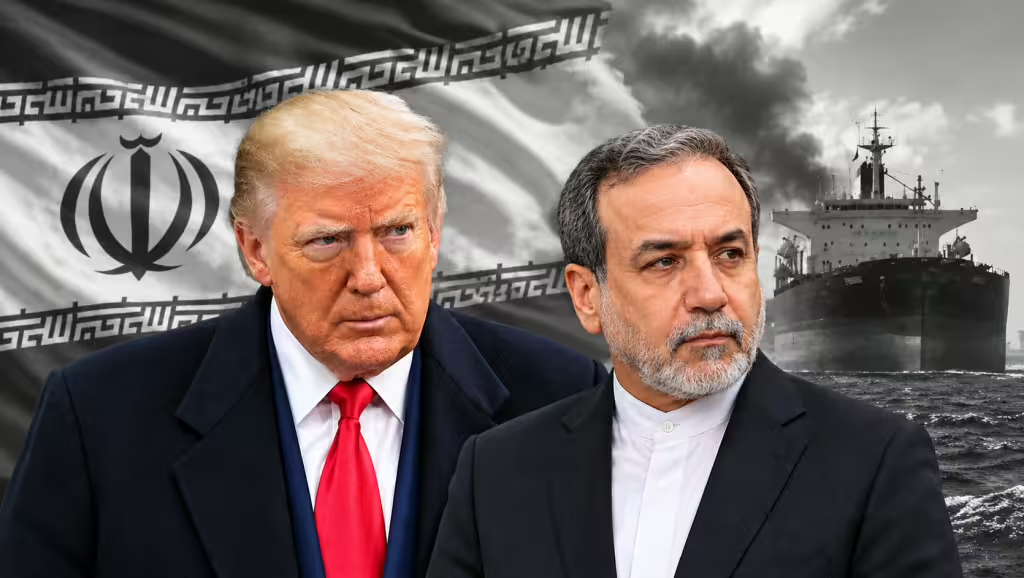
Iran has put a seven-day plan on the table to reopen the Strait of Hormuz, Foreign Minister Abbas Araghchi told reporters at the United Nations on Friday, saying the choice now belongs to Washington. The package would end hostilities on all fronts including Lebanon, lift the US naval blockade of Iranian ports, release frozen assets and waive oil sanctions. Nuclear talks would follow immediately.
Details:
- The offer: Araghchi said the steps Washington must take are not new and are already contained in the memorandum of understanding agreed in June, according to Reuters. That deal was designed to unfold in stages over 60 days; Iranian officials told The New York Times the new proposal compresses the same sequence into a single week.
- The conditions: Senior Iranian officials have previously listed lifting the naval blockade, exempting Iranian oil sales from sanctions, releasing frozen assets worth at least 12 billion dollars, and ending the war on all fronts including Lebanon. Araghchi said Hormuz would open by the end of the seventh day if those demands are met.
- The hard line: A senior Iranian official told Reuters on condition of anonymity that Tehran will show no flexibility on its nuclear program even if Washington accepts the Hormuz proposal, and that the waterway stays shut until all of Iran’s conditions are satisfied. He did not spell out what those conditions are.
- The threat: The same official warned Iran would respond forcefully to any American escalation, saying Iranian fingers are on the trigger and that excessive US demands leave very slim odds of a diplomatic solution. Araghchi separately said Iran would not surrender its sovereign rights under pressure.
- Washington’s stance: Trump has promised a deal eventually, before or after the November congressional midterms, but says repeatedly he is not in a hurry. The Wall Street Journal reported the US signaled through Qatari mediation that he does not intend to drop the blockade, which a White House source said gives Washington a strong position.
- The Saudi shift: Riyadh, which backed a new agreement over the summer and opposed resuming the war, has reversed course, according to the Associated Press and the Wall Street Journal. It is now pressing Washington, alongside the UAE, not to lift the port blockade or ease economic pressure on Tehran.
- Why Riyadh moved: A source told the Associated Press that rising tension with the Houthis changed the calculation. The Iran-aligned group seized the Bab al-Mandab strait and struck Saudi oil facilities, while Iraqi militias hit the East-West pipeline that lets Saudi crude bypass Hormuz via the Red Sea.
- The Emirati line: Officials in Abu Dhabi, previously supportive of diplomacy, are now lowering expectations for talks with Iran after the latest escalation and continued attacks on shipping, the Wall Street Journal reported. Emirati sources told the paper Gulf states should not accept permanent Iranian control over the strait.
- The clock: President Masoud Pezeshkian said on Thursday he hopes for a deal before the 3 November midterms, and Araghchi called that timing preferable. Reuters noted neither side wants to give up leverage without something tangible, and that the vote may cap the window for diplomacy rather than force a deal.
- Nuclear file and denial: The IAEA estimates Iran held 440.9 kilograms of uranium enriched to 60% when Israeli and American strikes hit its nuclear sites in June 2025. Tehran denies seeking weapons and rules out concessions on enrichment. Sources told Fars on Friday that reports of new talks are untrue and aimed at moving oil prices.
Background:
Hormuz has become the central bargaining chip. Tehran wants relief from a blockade squeezing its economy; Washington wants free passage on a global oil artery. Araghchi held three hours of indirect talks with Steve Witkoff and Jared Kushner under Qatari mediation on Tuesday.
Between the lines:
Ali Vaez of the International Crisis Group told The New York Times the offer is a smart move: it ends an unpopular war and lowers energy prices before the midterms, while restoring a June framework widely seen as favorable to Tehran. The counter-pressure is now regional — with Saudi and Emirati officials lobbying against the very terms Iran wants restored, Trump’s incentive to trade away the blockade shrinks rather than grows as the vote nears.
What’s next
Araghchi is expected to stay in New York until Monday, with further indirect contacts possible. Watch whether Washington responds to the seven-day plan, and whether shipping traffic through Hormuz and Bab al-Mandab changes before the 3 November midterms.