The latest:
A missile attack on Riyadh, full Houthi control of Yemen’s Red Sea coastline and a blockade on Saudi oil exports have exposed the limits of one of the world’s best-equipped militaries. France 24 reported that the kingdom met those moves with apparently limited resistance, and has not launched a large-scale ground counteroffensive even as fighting between the Houthis and Yemeni government forces continues.
Details:
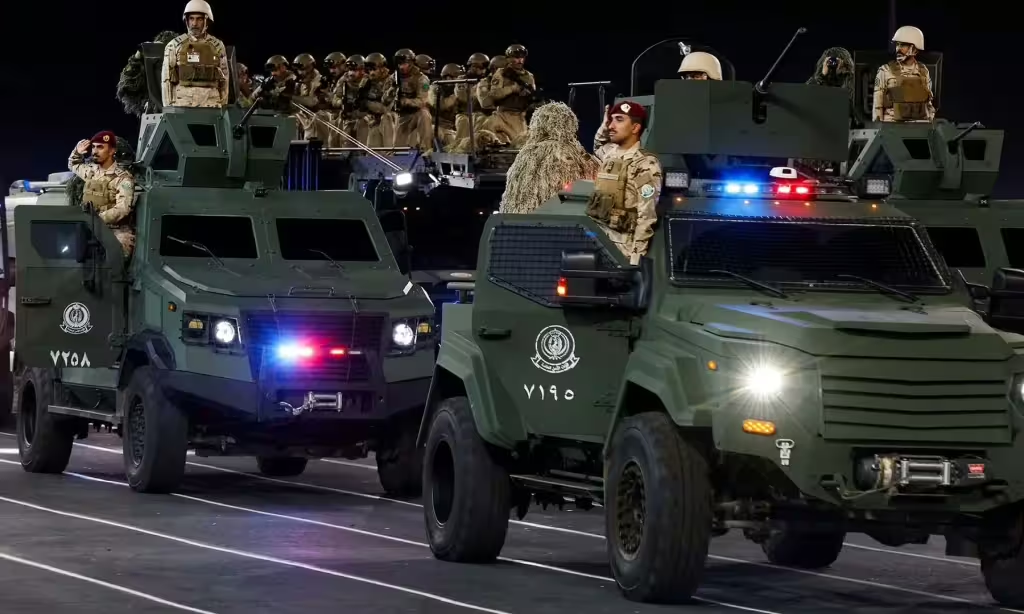
- The arms spending: Saudi Arabia has spent billions of dollars on advanced weapons and leaned heavily on foreign personnel, contractors and trainers. Large deals with American, British and French firms have become a pillar of defense policy and part of a strategy to keep allies close.
- The latest deal: Washington last week approved a potential 24.3 billion dollar sale of 48 F-35 stealth fighters to Saudi Arabia, according to France 24. The arsenal has grown faster than the combat experience: the military has relatively limited practice running complex operations independently.
- The coup factor: Experts have long argued the Saudi armed forces were deliberately kept small and fragmented, partly out of historical fear of military coups in a region where armies have repeatedly toppled kings and governments.
- The testimony: Ray Takeyh, a Middle East specialist, told a US congressional hearing in 2015 that Saudi Arabia was an exception because its monarchy had never been overthrown by the military, attributing that partly to keeping the armed forces weak.
- The assessment: Bernard Haykel, a Saudi affairs expert at Princeton University, said in an online discussion after the latest Houthi attack that the kingdom needs an army ready to fight, alongside a society willing to make sacrifices to protect what it has.
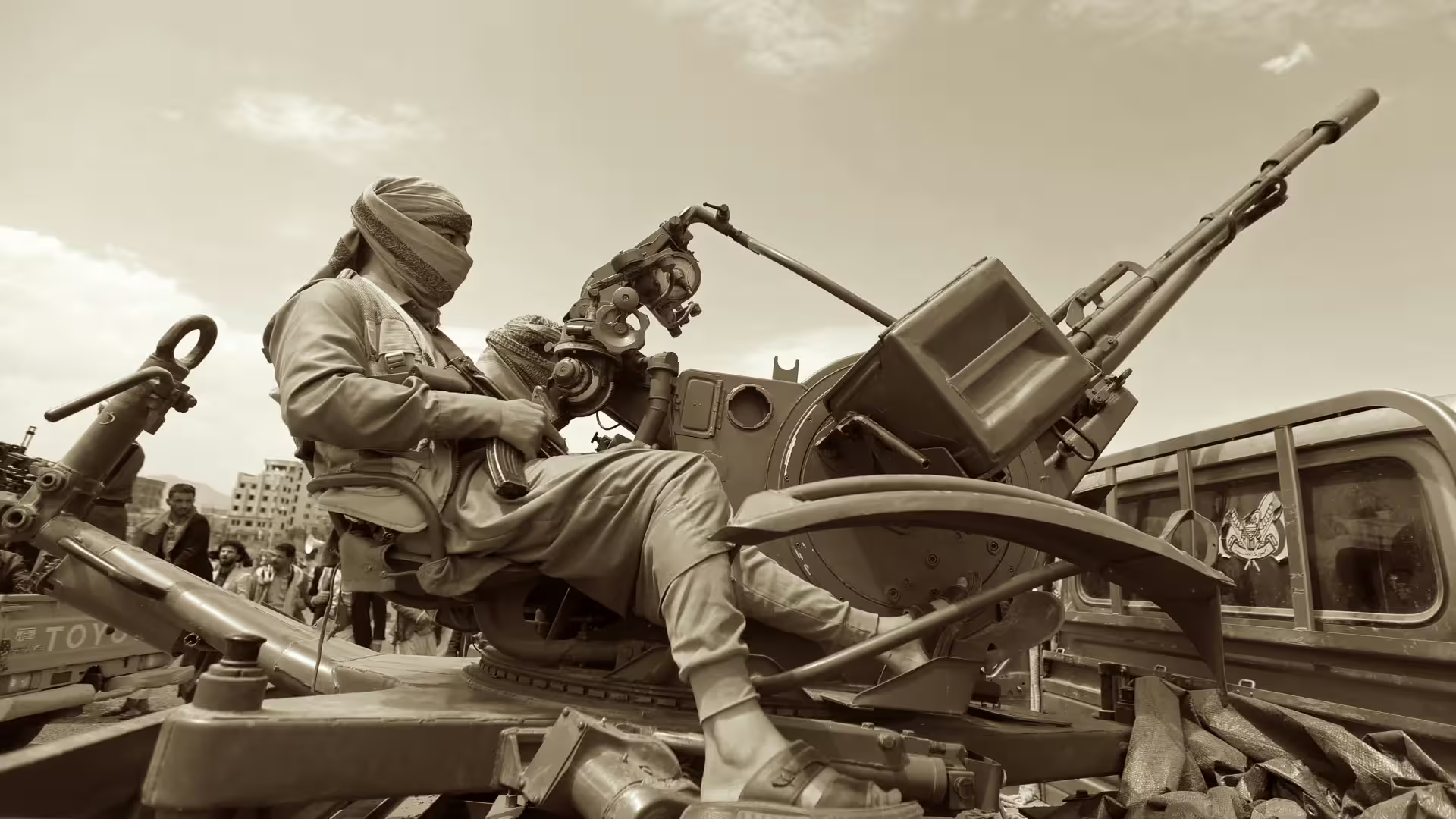
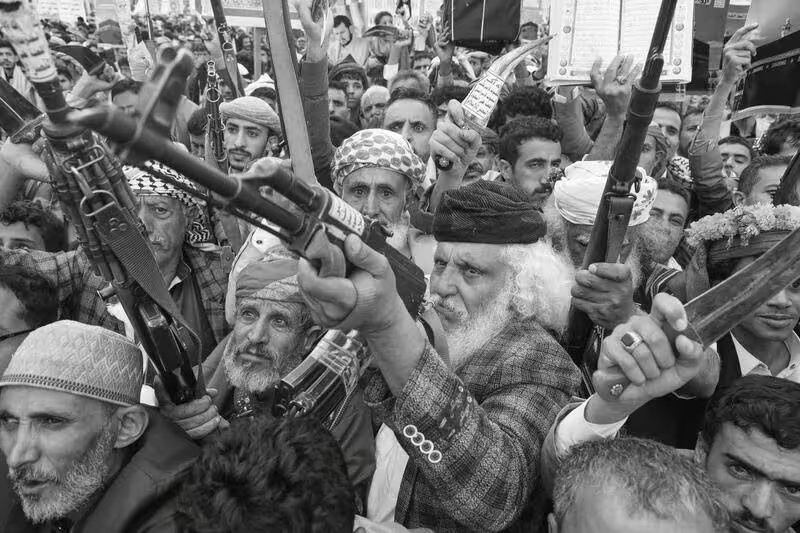
- How the Houthis built up: The group started lightly armed and used Yemen’s mountainous terrain and tribal networks to build defenses that proved hard to penetrate. Thomas Juneau of the University of Ottawa told AFP the Houthis formed a unified front, with highly centralized leadership imposing strict control over originally fragmented forces.
- The Red Sea leverage: Since 2023 the group has disrupted Red Sea shipping by attacking vessels it accused of Israeli links after the Gaza war began, showing how a small armed group can threaten a major waterway. Repeated US, British and Israeli strikes in 2024 and 2025 are believed to have damaged Houthi infrastructure without eliminating its missile and drone capabilities.
- The Gulf rift: Saudi Arabia entered the war in 2015 alongside the UAE to back the internationally recognized government after the Houthis took Sanaa. In December, Emirati-backed forces briefly seized all government-held areas, angering Riyadh, which demanded Abu Dhabi pull out. The UAE withdrew personnel and equipment, including attack helicopters, from near the coast.
- The collapse: Riyadh could not fully replace the capabilities lost after the Emirati withdrawal, leaving poorly coordinated forces to defend a wide stretch of strategic territory. Michael Knights, a Middle East specialist, told AFP the collapse reflected the severity of the initial blow and weak coordination with Yemeni forces.
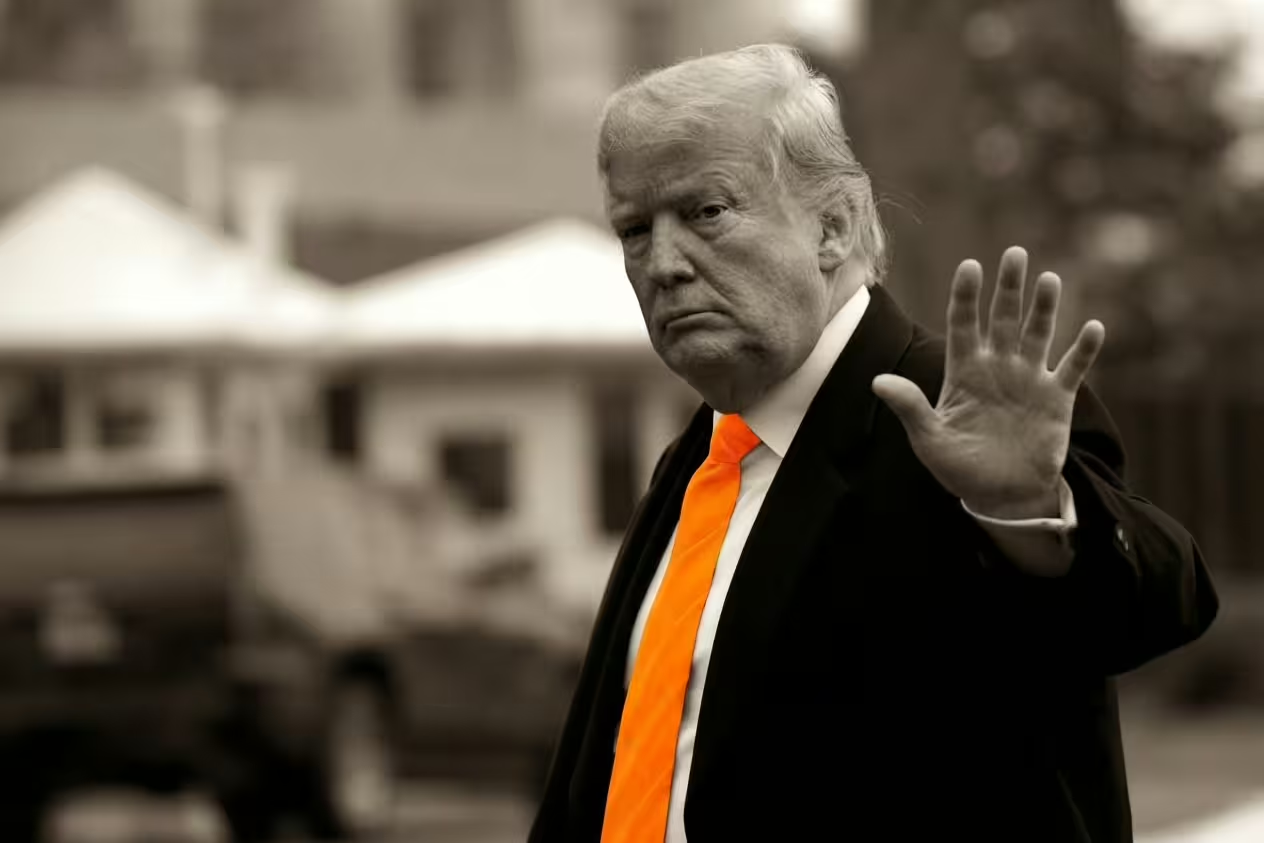
- Inside the ranks: Yemeni government fighters have complained of low morale and shortages. One fighter in southern Lahj province told AFP his unit lacked weapons and ammunition and faced delayed salaries. US media reported that Crown Prince Mohammed bin Salman repeatedly asked President Donald Trump to help stop the Houthis, without securing direct American military intervention.
Background:
The 2022 ceasefire collapsed in July after an Iranian aircraft landed directly in Sanaa, a move Riyadh read as a challenge. The Houthis then declared a naval blockade on Saudi Arabia and began targeting Saudi ships, territory and oil facilities before advancing on the coast.
Between the lines:
The pattern the experts describe is structural, not tactical. A force kept small to prevent coups, staffed by foreign contractors and dependent on local proxies is built for regime security, not sustained ground war against an entrenched insurgency. The F-35 sale addresses none of that, and the Emirati pullout removed the one partner supplying the ground capability Riyadh never built itself.
What’s next
Watch whether Riyadh launches a ground counteroffensive, whether Washington moves beyond arms sales toward direct intervention, and whether the F-35 package advances to a signed contract.