The latest:
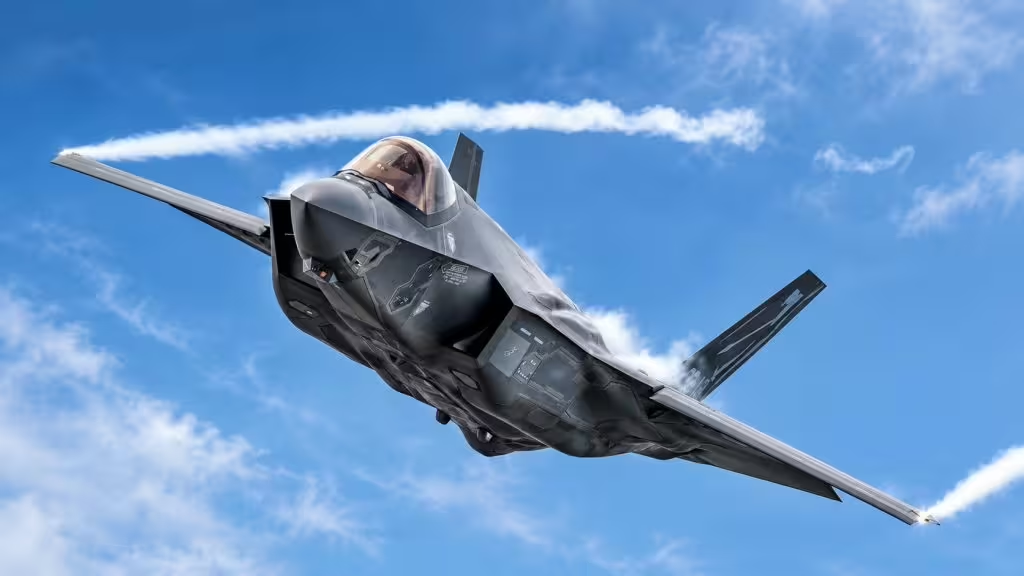
Forty-eight F-35 fighters and 49 engines, valued at roughly $24.3 billion, are cleared for sale to Saudi Arabia, the State Department announced Thursday, with formal notification sent to Congress. The department said the package would strengthen the kingdom’s ability to deter current and future threats. The approval landed one day after The New York Times reported internal intelligence warnings about the deal.
Details:
- The intelligence warning: Internal reports circulated among federal agencies and congressional committees warned F-35 technology could be compromised through the China-Saudi military partnership, according to The New York Times. A detailed Defense Intelligence Agency report issued months earlier questioned whether Americans and Saudis could secure sites housing the aircraft’s technology.
- The specifics cited: The DIA report raised concerns over Chinese military personnel accessing Saudi bases and the kingdom’s widespread use of Chinese technology in telecommunications and defense facilities, the Times reported. A broader internal assessment last autumn noted China sells ballistic missiles to Riyadh and is teaching it to build them.
- Congressional friction: State sent the package to two congressional committees in June for preliminary clearance, and US officials said it secured sign-off from all four senior lawmakers only in the middle of this week. Representative Raja Krishnamoorthi, an Illinois Democrat on the House Intelligence Committee, said the administration should not proceed while the intelligence community warns the deal could place “the crown jewels of American military technology” within reach of the Chinese Communist Party.
- The narrow window: Lawmakers have 30 days to review the sale and may file a joint resolution of disapproval, but overriding a presidential veto requires two-thirds in both chambers. With the House in recess until November and the Senate close behind, any resolution filed now is almost certain to fail.
- Israel’s concern: Some Israeli officials feared the sale would erode Israel’s military advantage over neighboring Arab states, the Times reported. Since the 1973 war, US policymakers have sought to preserve Israel’s qualitative military edge, a standard written into law by Congress.
- Israel’s response: An Israeli official told Walla that Washington informed the prime minister’s office of its intent to sell the jets in a deal worth $25 billion. Israel is expected to seek compensation in the form of weapons systems the United States has so far declined to sell it, Walla reported.
- The Israeli military’s view: A source told Walla the Israeli military would prefer that no other Middle Eastern state obtain the stealth fighter, and said that even with a prompt signing, Riyadh would not receive its first aircraft for five years. Another defense official played down the risk, arguing the air force’s advantage rests mainly on personnel.
- Israel’s wish list: Israeli officials plan to seek participation in developing and producing classified systems, according to Walla, including space weapons, Arrow 4 and Arrow 5 interceptors, bunker-penetrating munitions and drone swarms. Israel is currently struggling to finance a third F-15 squadron and additional F-35 squadrons.
- Riyadh’s position: The Saudi embassy in Washington welcomed the proposed sale on X, describing it as reflecting the strength and continuity of the strategic partnership and continued progress in defense cooperation, Reuters reported. Saudi Arabia requested the aircraft directly from Trump in early 2025 after pursuing them for years.
- A precedent for delay: The Biden administration halted an F-35 sale to the United Arab Emirates that Trump announced in 2020, after intelligence agencies raised concerns about close China-UAE ties. Biden officials had also weighed supplying the jets to Riyadh within a wider normalization package with Israel, an effort that stalled.
Background:
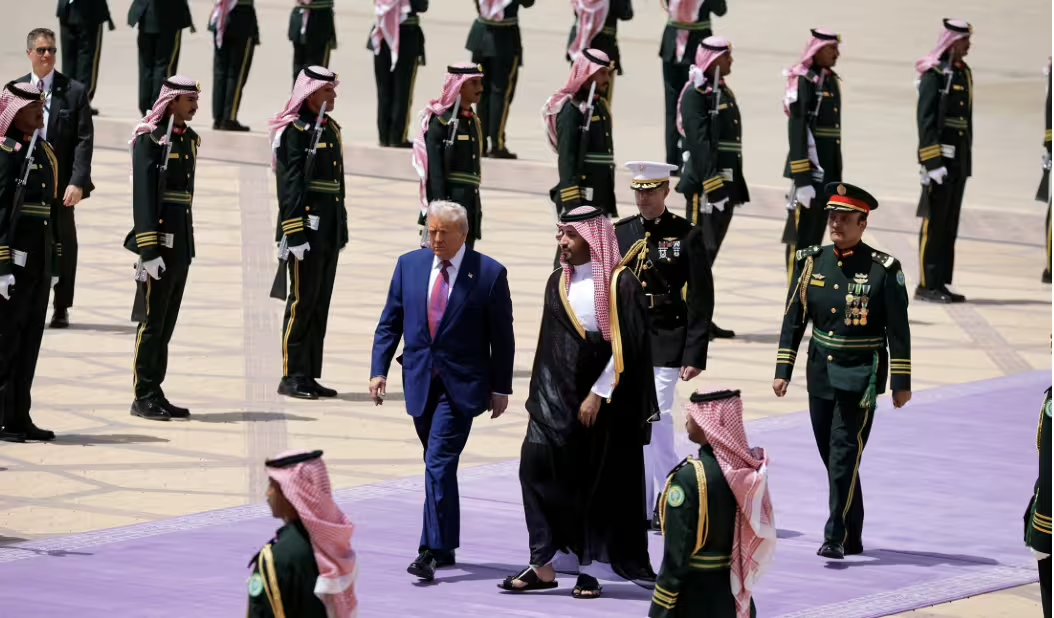
Trump announced the F-35 sale last November, on the eve of Crown Prince Mohammed bin Salman’s Washington visit. In 2025, the United States approved an arms package worth roughly $142 billion for the kingdom, which the White House called its largest-ever defense cooperation agreement.
Between the lines:
Reuters assessed that the sale marks a major shift in US policy that could alter the regional military balance and tests Washington’s own definition of Israel’s qualitative military edge. The recess timing leaves objecting lawmakers with a procedural path that cannot realistically be completed, while the five-year delivery horizon cited to Walla gives Israel time to negotiate the compensation package it is seeking.
What’s next
The 30-day congressional review period and whether any joint resolution of disapproval is filed; Israel’s formal compensation requests to Washington, including Arrow 4 and Arrow 5 production participation and bunker-penetrating munitions.