Key Points
- The State Department cleared a potential $24.3bn sale of up to 48 F-35 jets to Riyadh.
- Saudi Arabia is fighting an escalating Houthi offensive that has hit its tankers and oil exports.
- Congress and US intelligence officials have long resisted transferring the jets to Middle East governments.
The latest:
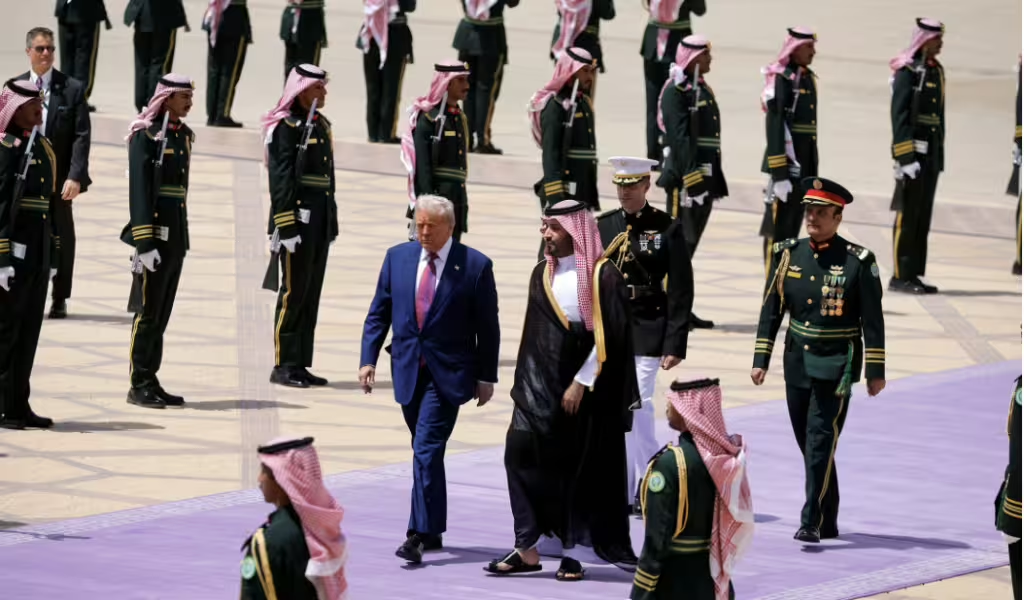
Up to four dozen of the world’s most advanced fighter jets, along with 49 Pratt & Whitney engines and other parts, are covered by a potential $24.3bn package the State Department announced on Thursday. The department said the sale would strengthen Saudi homeland defence and improve interoperability with US, regional and Nato forces. The Financial Times reported the deal is likely to face opposition in Congress.
Details:
- The package: The proposed sale could include as many as 48 F-35 aircraft plus 49 Pratt & Whitney engines and additional parts, according to the State Department announcement on Thursday. The department framed the transfer as improving Riyadh’s ability to deter current and future threats. No delivery date was announced.
- The delay risk: Even if the sale is finalised, a US production backlog could push delivery back by years, the Financial Times reported. Earlier US attempts to sell the advanced fighter to Middle East governments were derailed by congressional opposition and special-interest groups.
- The security objection: Raja Krishnamoorthi, a top Democrat on the House Intelligence Committee, warned on Thursday the sale would threaten US national security if allowed to proceed. He said in a statement that “Beijing has spent decades stealing American intellectual property and technology to close the gap with the United States, and we must not help them do it.”
- The China risk: US intelligence officials have repeatedly cautioned that transferring the jets abroad risks China gaining access to the technology. Washington has never completed a transfer of the F-35, its most advanced fighter aircraft, to a Gulf state.
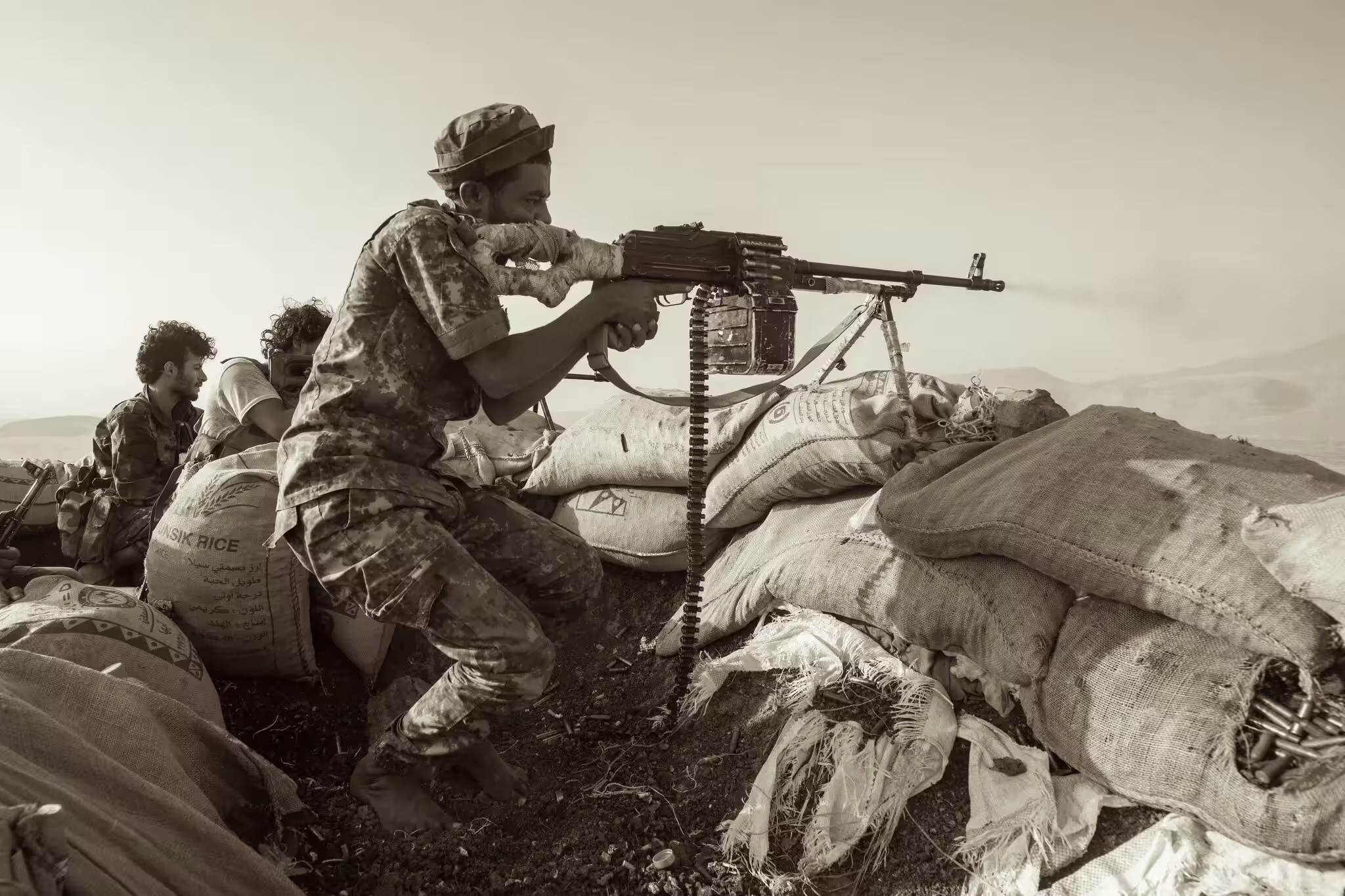
- The Yemen front: The Houthis launched a lightning offensive in Yemen last week, targeting Saudi assets and threatening Red Sea shipping, according to the Financial Times. The Iran-backed group is responsible for striking Saudi tankers in the Bab al-Mandeb Strait, a vital oil-export route.
- First civilian death: Saudi authorities announced on Thursday the first civilian death since the Houthis resumed attacks on the kingdom. Debris from an intercepted drone killed one person and injured two others. Authorities did not name the location.
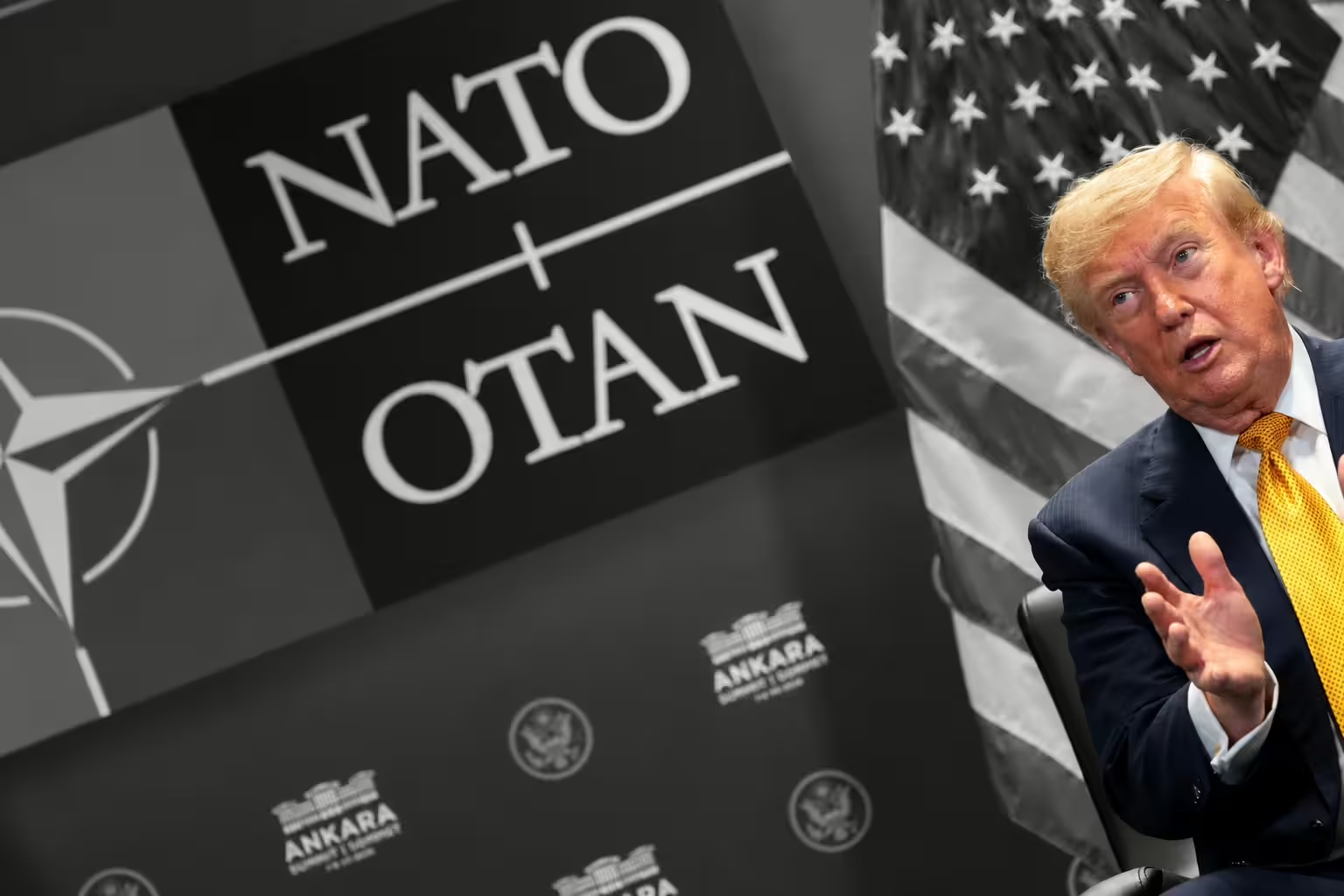
- Trump’s posture: Trump has shrugged off the threat posed by the Houthis and played down the chances of the US defending Saudi Arabia. Speaking of the group during a trip to Ireland last weekend, he said they do not want to fight the United States.
- Oil impact: The Houthi advance in Yemen, combined with the US-Iran conflict in the Strait of Hormuz, has helped push oil prices above $100 a barrel. Saudi oil exports have fallen steeply in recent months because of the increased regional attacks triggered by Trump’s war in Iran.
- Prior approvals: Over the summer, Washington approved the sale of $7bn in precision-guided missile systems and bombs to the kingdom. The US has also cleared billions of dollars in potential sales to other Gulf allies since the start of the war in Iran.
Between the lines:
The approval lands at the moment Riyadh is least able to absorb delay: its tankers are being hit, its oil exports are falling, and Trump has publicly signalled the US may not defend it. A package that could take years to deliver, and that faces congressional and intelligence-community resistance, answers a long-term capability gap rather than the offensive under way now.
What’s next
Watch for a formal congressional review of the notification and any resolution of disapproval, further Houthi strikes on Saudi territory or Bab al-Mandeb shipping, and whether oil holds above $100 a barrel.