The latest:
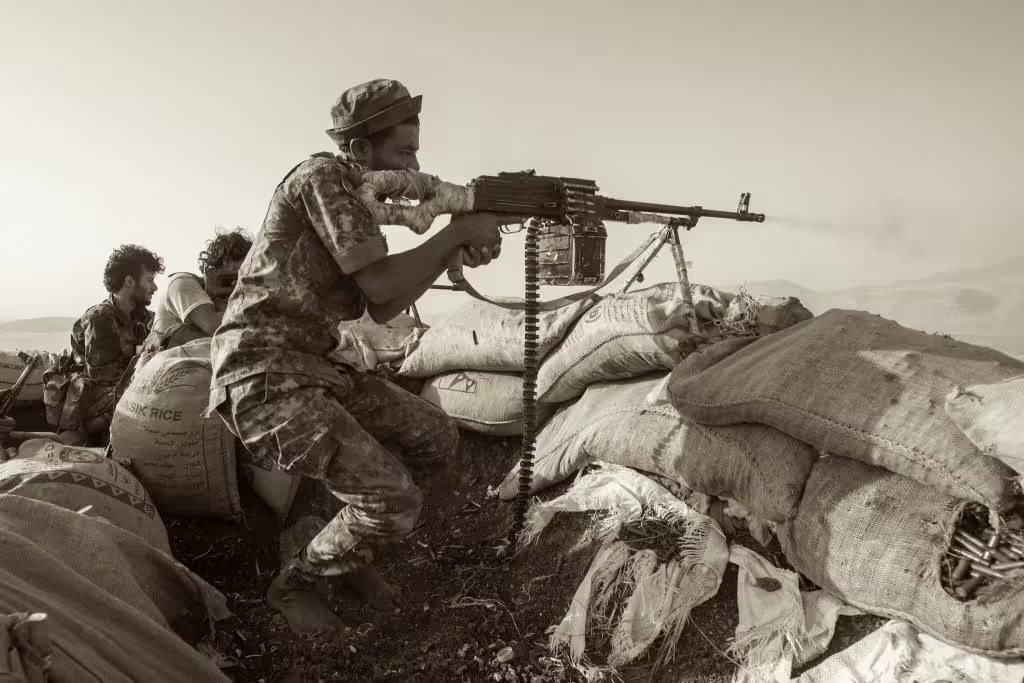
Combat around Yemen’s oil-rich Marib and the southern city of Taiz has escalated into some of the heaviest fighting since 2021, as Iran-backed Houthi forces widen their offensive following their capture of the country’s Red Sea coast. Pro-government forces say airstrikes have repelled the advance. The Houthis answered with missiles fired into government-held areas, according to The New York Times.
Details:
- The prize: Marib, roughly 75 miles east of Sanaa, hosts some of Yemen’s largest oil and gas fields. Analysts told The New York Times its loss would be a severe blow to government finances and would undercut the legitimacy of the internationally recognized authorities, seated in the temporary capital Aden.
- Why it matters militarily: Mohammed al-Basha, a Washington-based risk analyst on Yemen, described Marib as the northern stronghold of those who resisted the militia’s takeover more than a decade ago, saying its recapture would be a symbolic and strategic victory for the Houthis.
- The Saudi calculation: Ahmed Nagi, senior Yemen analyst at the International Crisis Group, said a Houthi seizure of Marib would place the militia close to the Saudi-Yemeni border and open a path toward Hadramawt, Yemen’s largest province, which he framed as unacceptable to Riyadh’s national security.
- The air war: Houthi military spokesman Yahya Saree said Saudi forces carried out 37 airstrikes with F-15s against Taiz and Hajjah within 24 hours. The Houthi-run Saba agency reported strikes on Abs in Hajjah that killed one person and wounded another, plus three telecom towers hit in Taiz.
- The downed jet: The Houthis said Wednesday they shot down a Saudi F-15 over Marib with a locally made missile, releasing video of fighters around charred wreckage holding a wing section bearing Saudi markings. A New York Times image review found the debris appeared consistent with Royal Saudi Air Force F-15s; the wreckage location could not be established.
- Cross-border toll: Saudi Civil Defense announced Thursday that a Yemeni resident was killed by shrapnel from an intercepted Houthi drone over Taif, the first death Riyadh has declared since the escalation. It had earlier reported more than 80 people injured, including a Pakistani man in critical condition.
- Displacement: The International Organization for Migration says more than 100,000 Yemenis have been displaced by the latest fighting, most inside Yemen. Others crossed the Bab al-Mandab strait by small boat to Djibouti, among them a 50-year-old woman who fled her village of Dhubab without knowing her husband’s fate.
- Houthi framing: Houthi political official Mohammed al-Bukhaiti said Marib tribal sheikhs had asked the group to liberate the province and that Sanaa remains committed to every inch of Yemeni territory, adding that Saudi-backed forces rejected de-escalation. Leader Abdul Malik al-Houthi demanded an end to what he called the blockade and occupation.
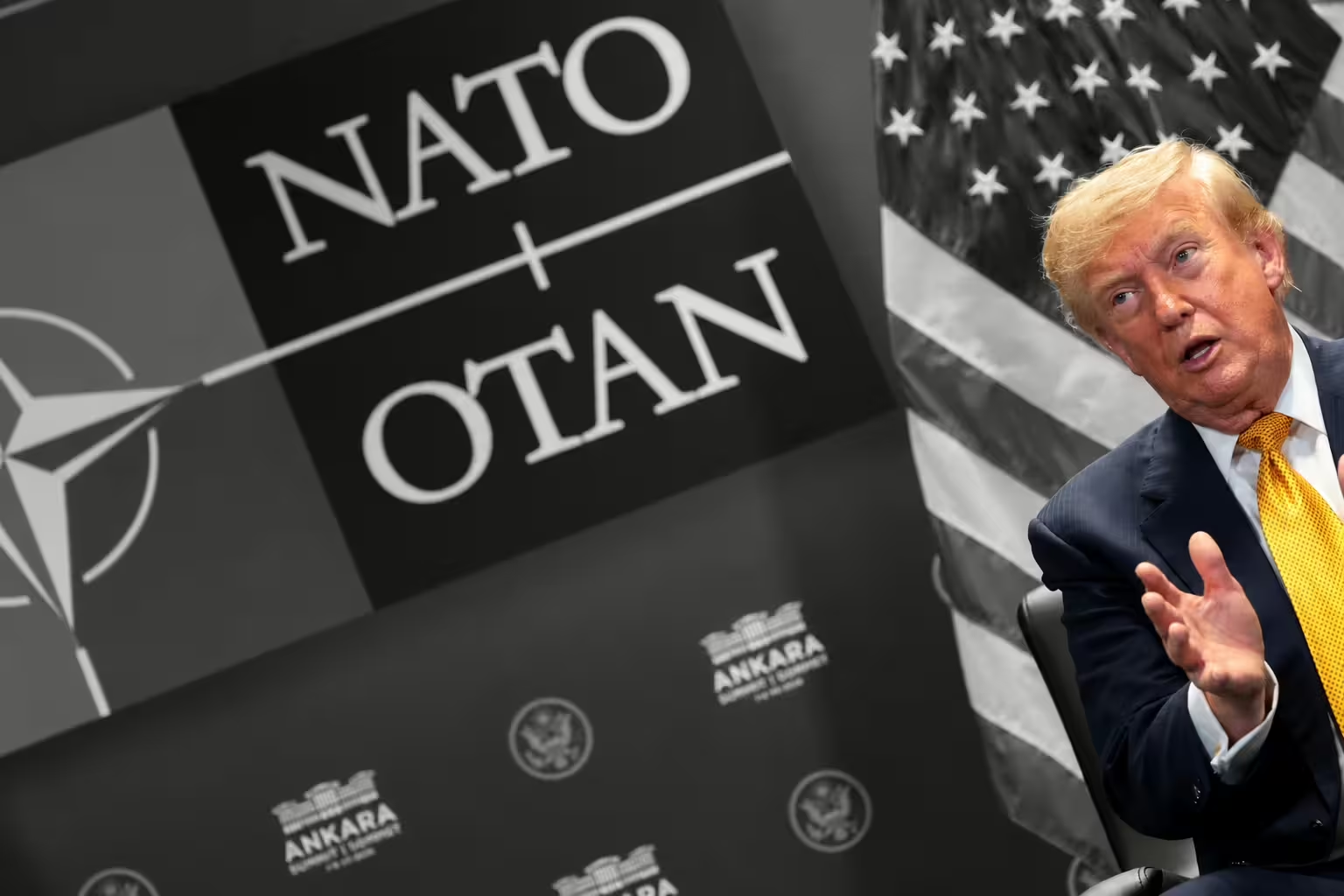
- Washington’s position: President Donald Trump has so far declined Saudi appeals for military support against the Houthis, who agreed to a ceasefire with the United States last year after a two-month American bombing campaign. Trump told reporters Wednesday he hoped the war was nearing its end and that Iran wanted a deal.
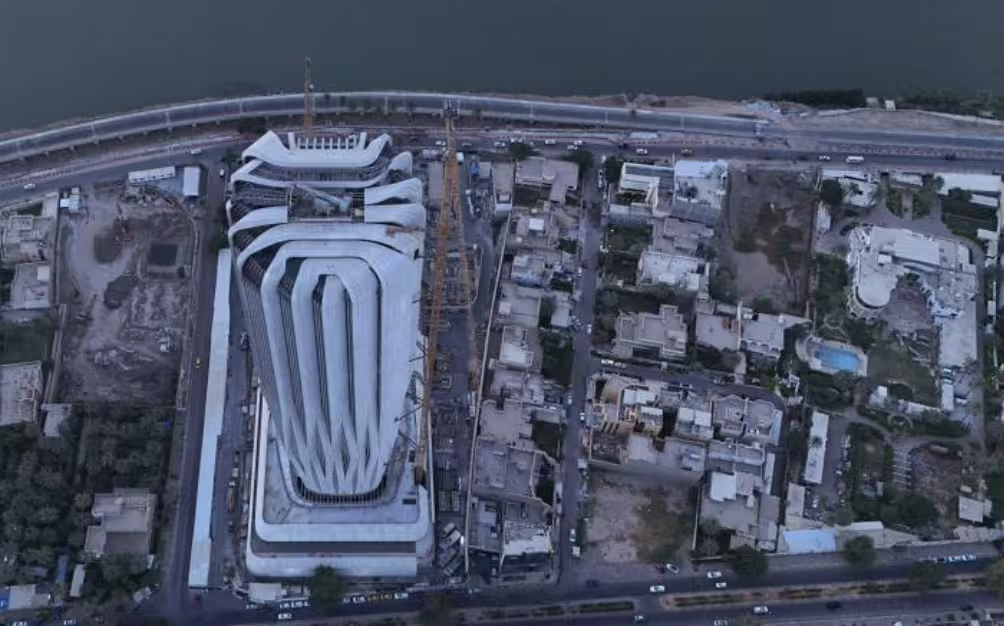
- Energy stakes: Reuters reported that Houthi control of the Red Sea coast and islands inside Bab al-Mandab has endangered the main alternative route for Gulf oil. Saudi Arabia’s east-west pipeline has been shut since an attack last week that Riyadh said originated in Iraq.
Background:
The Houthis seized Sanaa in 2014, and a Saudi-led coalition intervened but failed to remove them. Yemen has since split in practice, with the Houthis holding much of the north and the government based in Aden. Their last major push on Marib, in 2021, was defeated.
Between the lines:
April Longley Alley of the Washington Institute assessed that the Houthis hold the current advantage, citing deeply divided government forces whose morale suffered after losses on the western coast — which helps explain why Riyadh and the government are leaning on airstrikes rather than ground counterattacks. Nagi said the Houthi aim in Taiz is to besiege the city and sever its last highway link to Aden.
What’s next
Watch whether Marib’s defensive lines hold, whether the Taiz-Aden highway is cut, the pace of Saudi F-15 sorties, further cross-border drone casualties inside the kingdom, and any resumption of US-Iran talks after June’s collapsed interim deal.