Key Points
- War-related tourism declines and weaker confidence are pressuring Dubai property after years of exceptional growth.
- Prices have fallen around 10 percent since the conflict began, while May transaction volumes dropped sharply.
- Large developers remain expansionary as smaller rivals face financing, staffing and construction pressures.
The latest
Dubai’s property boom is entering a more selective phase as war-related disruption hits international tourism, investor confidence and developer finances, widening the divide between well-capitalized groups and weaker competitors. The strain is visible at the $6 billion Heart of Europe resort on the World Islands, where lower visitor numbers, rising operating costs, project delays and legal disputes are testing an ambitious development built around foreign demand.
Details
- Market reversal: Dubai residential prices declined about 10 percent from the beginning of the conflict, while transaction volumes fell sharply in May. The reversal follows several years of exceptional growth fueled by international investors, wealthy expatriates and strong luxury-housing demand.
- Resort strain: Heart of Europe, a French Riviera-themed destination on Dubai’s artificial World Islands, has faced years of delays plus technical and regulatory challenges. The largely off-grid site now carries higher diesel costs, while Kleindienst Group has faced investor and former-employee lawsuits. Dozens of workers were reportedly laid off or placed on unpaid leave.
- Staycation pivot: Josef Kleindienst said the resort is shifting toward domestic and regional staycations. Occupancy rose from 27 percent in March to 56 percent in May, with an 80 percent target. Five hotels are expected to operate by 2027, although the Venice-themed resort remains largely on paper.
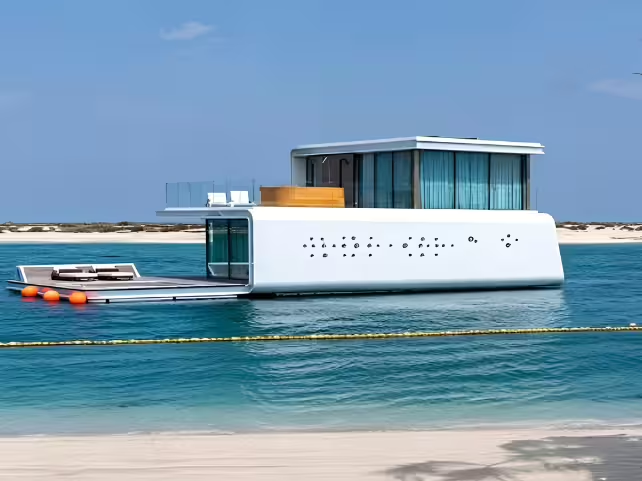
- Island legacy: Floating Seahorse villas required redesigns after regulatory changes. The wider World Islands archipelago, launched more than two decades ago, had stalled after the 2008 financial crisis before Heart of Europe was revived with hotels, villas and floating properties.
- Consolidation pressure: Developers including Sobha and Azizi have reportedly cut hundreds of jobs. People familiar with the matter said authorities have informally warned larger developers they could eventually be required to absorb smaller, financially vulnerable rivals, potentially concentrating market share among companies with stronger balance sheets. The pressure is expected to make project financing and construction timetables harder for smaller companies.
- Expansion continues: Emaar announced plans for a $55 billion urban development expected to house about 150,000 people. DarGlobal continues expanding luxury projects, while founder Hussain Sajwani said Damac’s liquidity and continued collections support further launches. DarGlobal chief executive Ziad El Chaar said those who treated real estate as an easy business would suffer. Other international investors are also maintaining their exposure to Dubai.
Between the lines
The slowdown is separating a broad market correction from company-level distress. Developers with liquidity and access to capital can continue building or acquire distressed assets, while late entrants face weaker demand, higher costs and difficulty maintaining construction schedules.
What’s next
Watch the resort’s progress toward 80 percent occupancy and five operating hotels by 2027, alongside monthly transaction volumes, residential prices and any formal consolidation move by Dubai authorities.