The latest:
Saudi Arabia’s crude stockpiles earmarked for export will run dry within days unless the kingdom restarts its main Red Sea pipeline, oil buyers and Saudi traders told Reuters, warning that up to 4% of global supply could disappear. Riyadh has not detailed the damage from Friday’s drone attacks or how long the East-West line will stay shut.
Details:
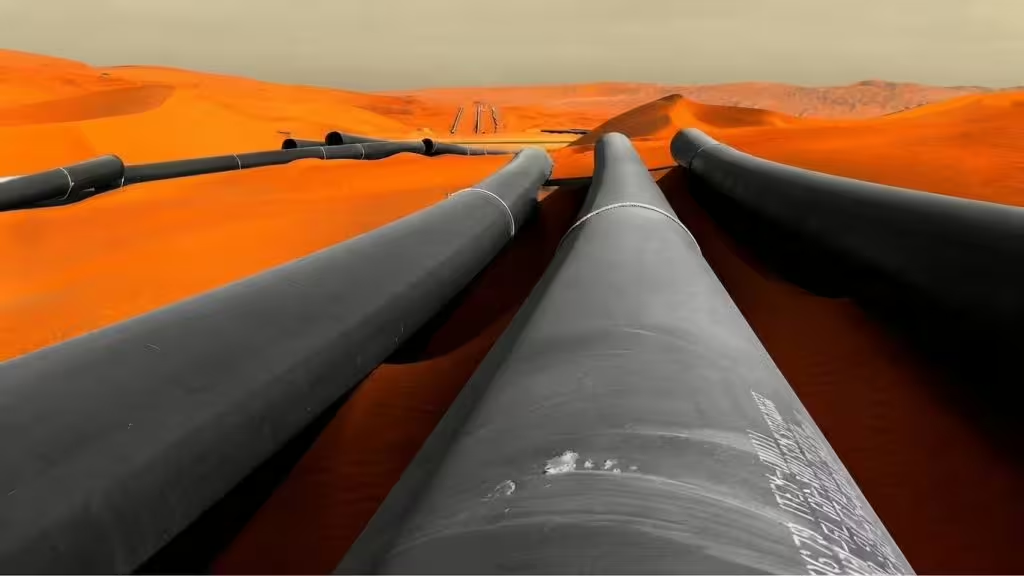
- The pipeline: The East-West line crosses the Arabian Peninsula and had allowed Riyadh to reroute about 4 million barrels per day to the Red Sea port of Yanbu, bypassing the Strait of Hormuz closure that paralyzed its neighbors’ exports over the past six months. Drone attacks forced its shutdown on Friday.
- Repair estimates: Sources gave Reuters conflicting timelines. One said repairs could take five to six weeks; another said the line could be fixed sooner, with pumping resuming partially during the work. Neither the Saudi government communication center nor the energy ministry responded to requests for comment.
- The storage math: Three industry sources said Yanbu now holds only enough crude to sustain exports for five to seven days. A fourth said volumes at Ain Sokhna on the Red Sea and Sidi Kerir on the Mediterranean could supply customers for several more days. All four said the tanks are not full.
- Egypt’s cushion: Industry estimates put Yanbu storage capacity near 35 million barrels, with 18 million at Ain Sokhna and 20 million at Sidi Kerir. The Sumed system linking the two seas holds roughly 40 million barrels, with line capacity around 2.8 million barrels per day, according to Attaqa platform.
- Sumed ownership: Egypt’s state petroleum authority holds 50% of Sumed, with Saudi Aramco, Kuwait and Abu Dhabi’s Mubadala each at 15% and QatarEnergy at 5%, according to Attaqa. The platform assessed that Egyptian storage buys Riyadh short-term breathing room but cannot replace the volumes the pipeline moved daily.
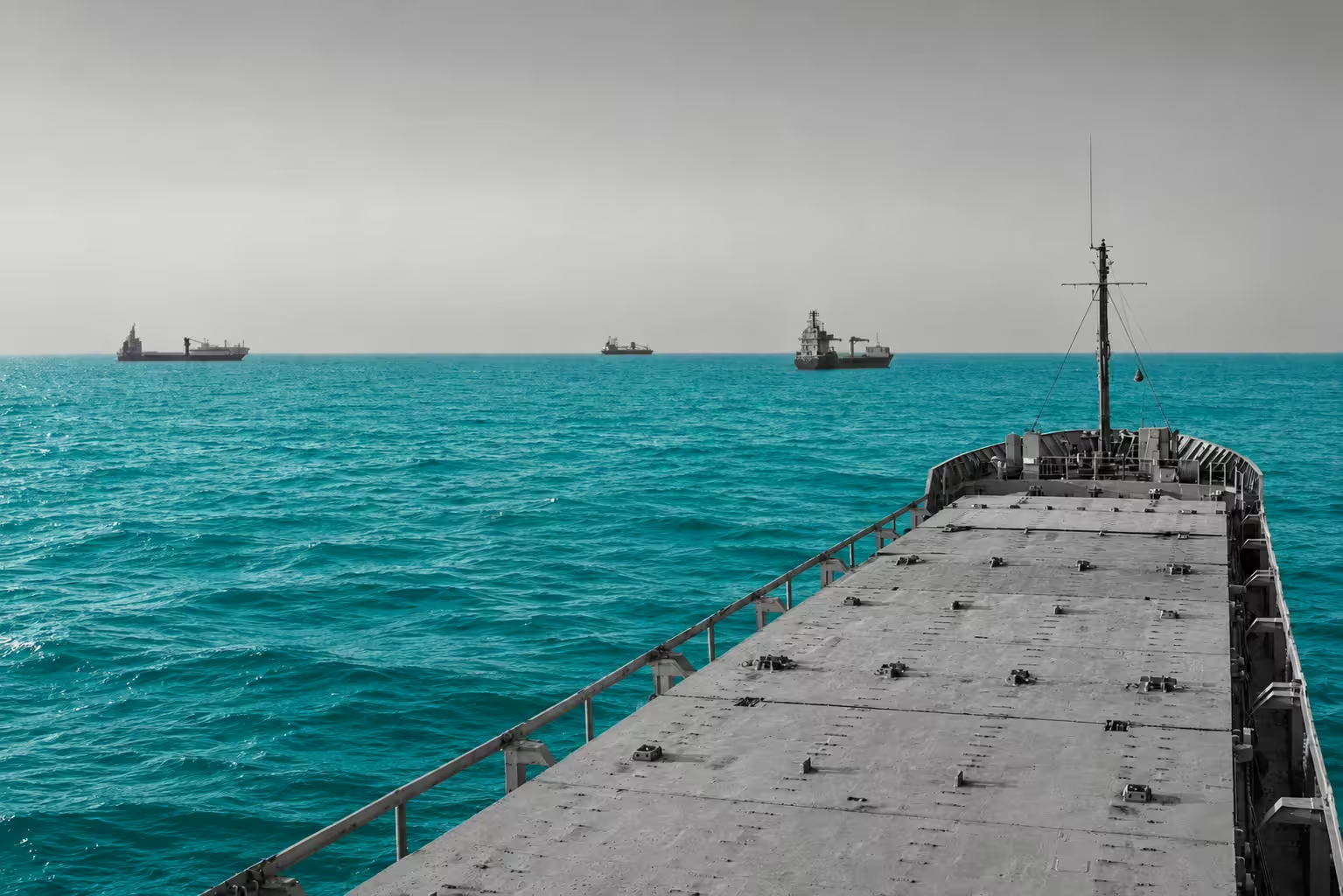
- Exports collapsing: Saudi oil exports fell last month to 3.2 million barrels per day, the lowest in at least 13 years, according to Kpler data cited by the New York Times. Kpler found only two Saudi cargoes crossed Bab al-Mandab into the Red Sea in the past week.
- Global impact: The International Energy Agency said Friday that Saudi supply had already dropped in August to its lowest level in more than three decades, and projected global oil supply falling 5.7 million barrels per day this year, about 6%. Hormuz flows have slowed to between 6 and 9 million barrels daily.
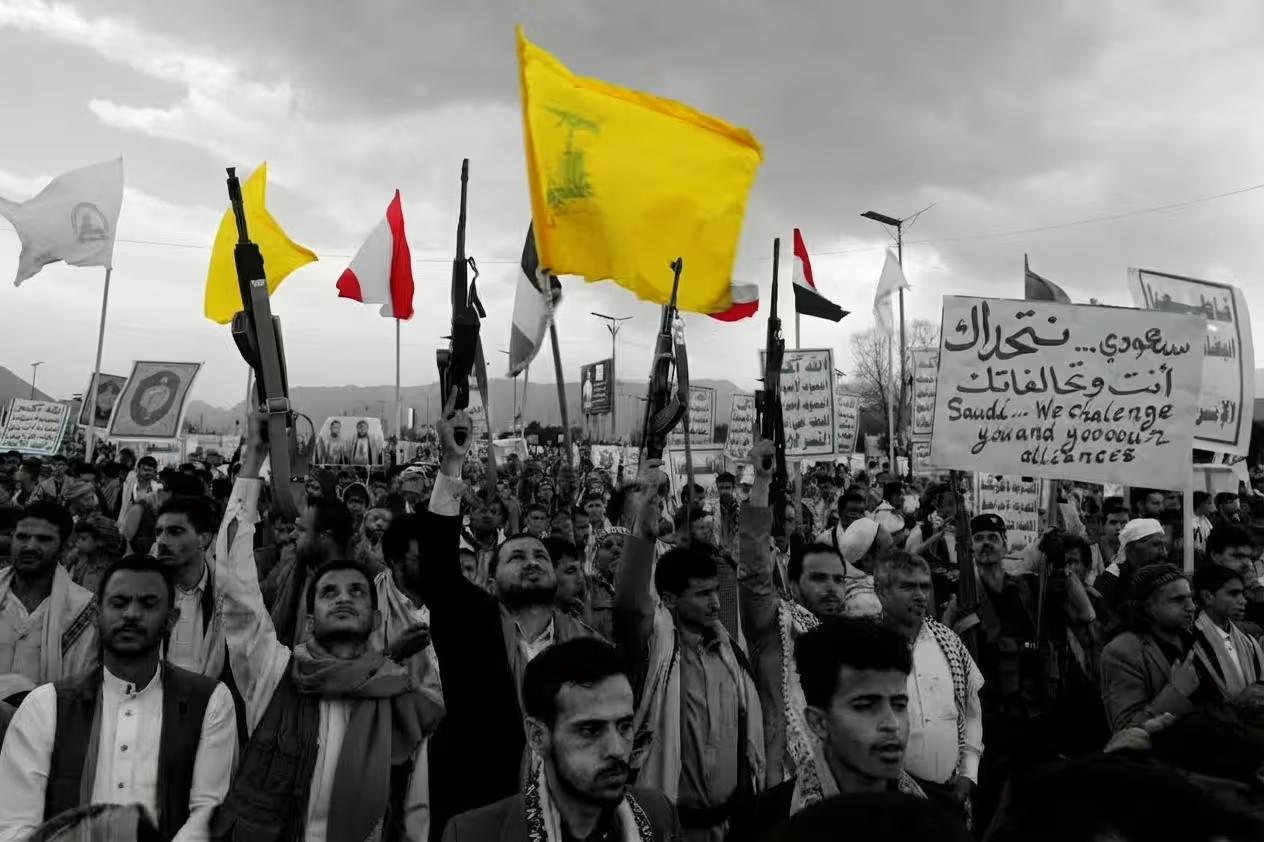
- The military picture: Houthi forces seized an island at the entrance to the Red Sea on Friday. Since declaring a blockade on Saudi shipping on July 20, the group has claimed at least seven attacks on vessels bound to or from Saudi ports, according to Alison Minor of the Atlantic Council.
- Saudi casualties: Saudi authorities said Tuesday’s attacks wounded 73 civilians in the south and pledged all necessary measures in response. The energy ministry said strikes on southern energy facilities caused fires at some sites and temporarily halted operations, without naming who carried them out.
- Price reaction: Brent crude rose above 99 dollars per barrel Tuesday, its highest since late July, and topped 100 dollars Wednesday. West Texas Intermediate reached about 94 dollars. Goldman Sachs warned prices could reach 120 dollars if attacks on Middle East shipping intensify.
Background:
The war began on February 28, when the United States and Israel struck Iran jointly. Tehran then closed the Strait of Hormuz, previously the route for 20% of the world’s oil and Saudi Arabia’s main export corridor. The Houthi-Saudi conflict in Yemen has run since 2014.
Between the lines:
Riyadh’s fallback options have closed in sequence: Hormuz, then the Red Sea, now the pipeline to Yanbu. Burcu Ozcelik of RUSI assessed that Bab al-Mandab need not actually close to inflict lasting economic damage. Fawaz Gerges of LSE said the Houthis view the Iran war as an opening to shift the balance of power with Saudi Arabia.
What’s next
Whether pumping resumes partially on the East-West line within the five-to-seven-day window Yanbu stocks allow, how Riyadh executes its promised response to the Houthis, and whether Brent holds above 100 dollars.