The latest:
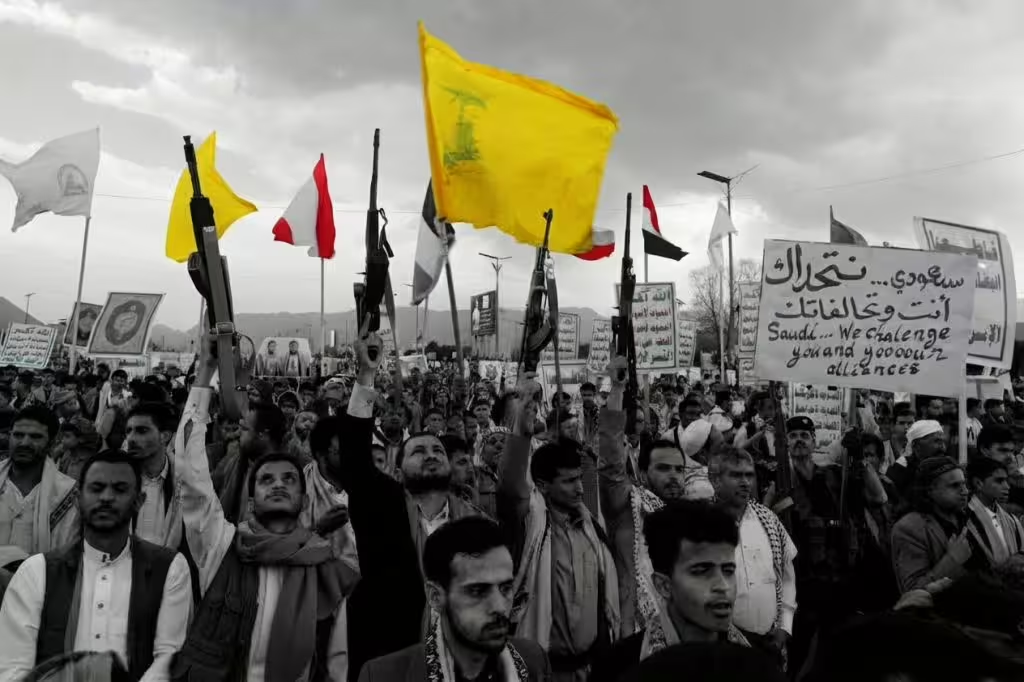
Yemen’s Houthis have seized Mayoun island in the middle of the Bab al-Mandab strait and the coastal city of Mokha, according to Yemeni military and Houthi officials, closing their grip on the waterway Saudi Arabia turned to after Iran shut Hormuz. Riyadh shut its east-west pipeline on Friday after a drone attack it blamed on aircraft launched from Iraq.
Details:
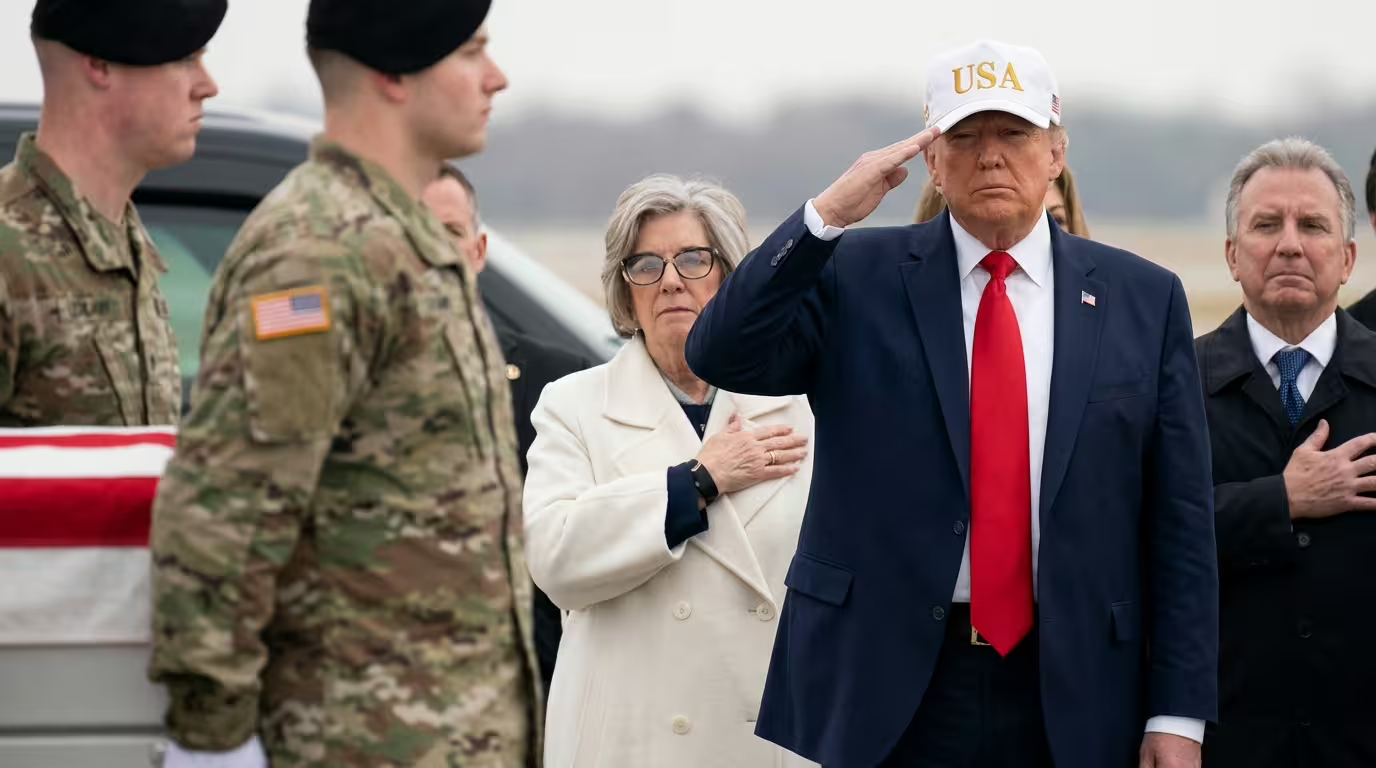
- The appeal refused: Axios, citing US officials, reported that Crown Prince Mohammed bin Salman called President Trump twice on Thursday urging strikes on the Houthis. Trump declined, and officials said the administration has no intention of direct military action against the group at this time. The White House did not respond to a request for comment.
- What Washington offered instead: A US official told Axios the administration would supply intelligence and targeting data, and said roughly 200 American military personnel are already in the kingdom providing support. A senior administration official said Washington is focused on freedom of navigation in the Red Sea and is in continuous dialogue with Riyadh and Yemen’s government.
- Trump’s calculation: Trump told Fox News he might not escalate pressure on Iran because of the elections, dismissing hawkish calls for more force. The war is deeply unpopular and has cost him support after he promised to keep the US out of Middle East conflicts. Speaking in Ireland, he said the Houthis had called Washington and did not want to fight.
- The oil numbers: Saudi crude exports to Asia collapsed from about 3.4 million barrels per day in June to 128,000 in August, recovering partially to 700,000 this month, according to Kpler data. Traffic through Bab al-Mandab is down roughly 60% since Houthi attacks began in late 2023, per Lloyd’s List Intelligence. Crude passed 100 dollars a barrel this week.
- Yemeni anger: A senior Yemeni military official told the Associated Press they were stunned the Saudi air force made no attempt to prevent the fall of Mokha, about 80 kilometers from the strait, and assessed Riyadh likely lacked American approval for a broad air campaign. He also blamed poor coordination between the army and allied militias.
- The Iraq front: Saudi Arabia’s foreign ministry blamed drones launched from Iraq for the pipeline strike and said it would not retaliate, giving Baghdad time to act. Prime Minister Ali al-Zaidi ordered an investigation into the Maysan operations command and dismissed its commander, spokesman Sabah al-Numan said. The Islamic Resistance in Iraq denied carrying out the attacks.
- The military option: Escalating carries heavy costs, Chatham House’s Neil Quilliam said, with every available course expensive and uncertain. Shirwan Hindren Ali of ACLED said Houthi weapons are far more advanced than during the earlier war, while Saudi interceptor stocks are likely depleted by the US-Iran conflict, exposing energy infrastructure.
- The diplomatic option: The Houthis demand the lifting of the Saudi-led blockade, a concession analysts say would leave them substantially stronger over time. Iran called Friday for an end to the blockade and a resumption of Saudi-Houthi talks, while a Revolutionary Guard spokesman said any settlement with Washington must include Yemen.
- Humanitarian toll: The UN migration agency said at least 46,000 people have fled since fighting escalated last week, with numbers rising by the hour. IOM Yemen chief Abdusattor Esoev said displacement more than doubled this week. Doctors Without Borders prioritized keeping Mokha hospital open after most staff left. The 2022 truce now risks collapse.
Background:
Houthi fighters took Sanaa in 2014. Saudi Arabia led a military coalition in 2015 to reverse that, but years of air strikes failed to dislodge them. An estimated 150,000 people were killed before a UN-brokered truce in 2022, which never produced a lasting settlement.
Between the lines:
Michael Ratney, former US ambassador to Riyadh, called the developments very frustrating for the kingdom and said this was a war the Saudis never asked for and deeply feared. The pattern points the same way: the crown prince built his economic transformation on regional calm, and every remaining path — escalation without interceptors, or talks that strengthen the Houthis — carries costs he spent a decade avoiding.
What’s next
Watch whether Iraq’s Maysan investigation names a perpetrator, whether the east-west pipeline reopens, and whether Saudi-Houthi negotiations resume. Admiral Brad Cooper’s reported Riyadh visit may signal the ceiling of US support short of strikes.