The latest:
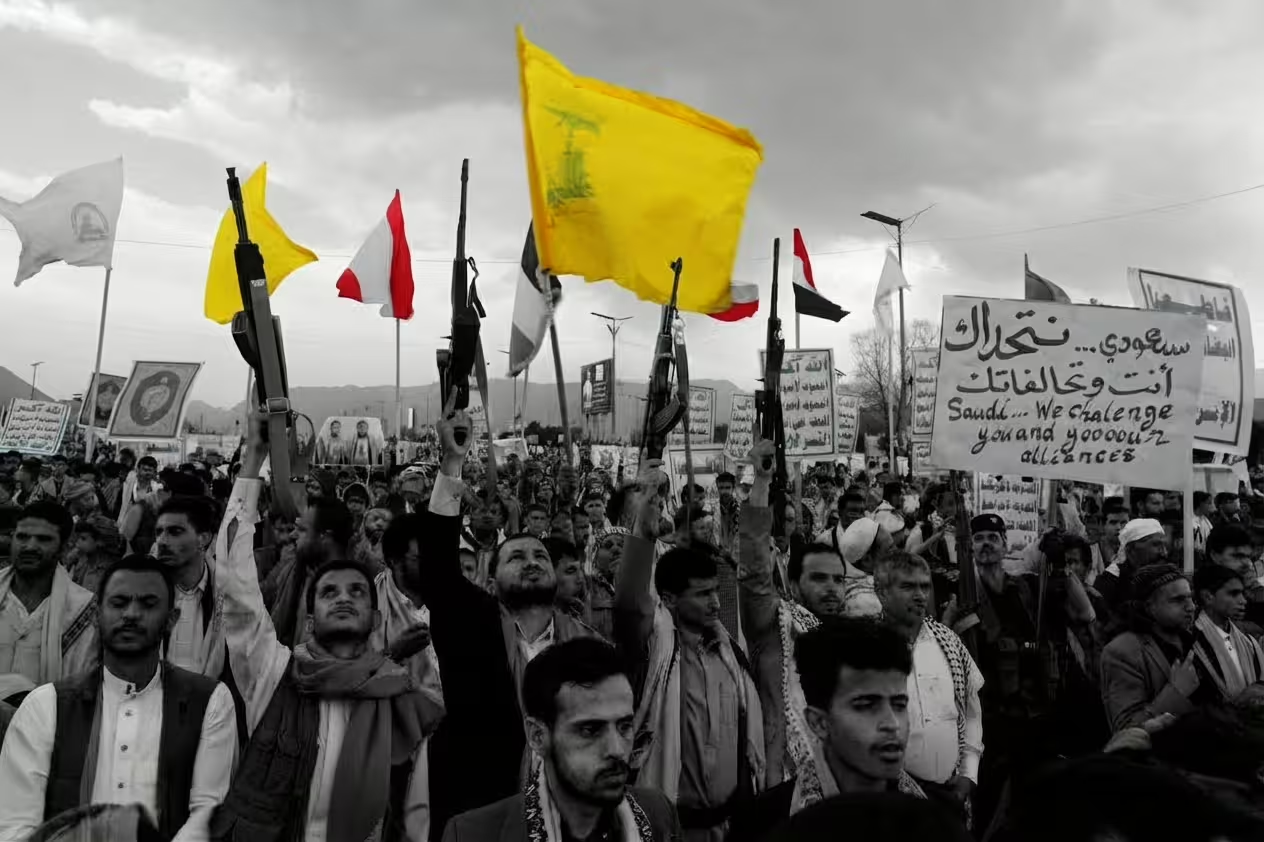
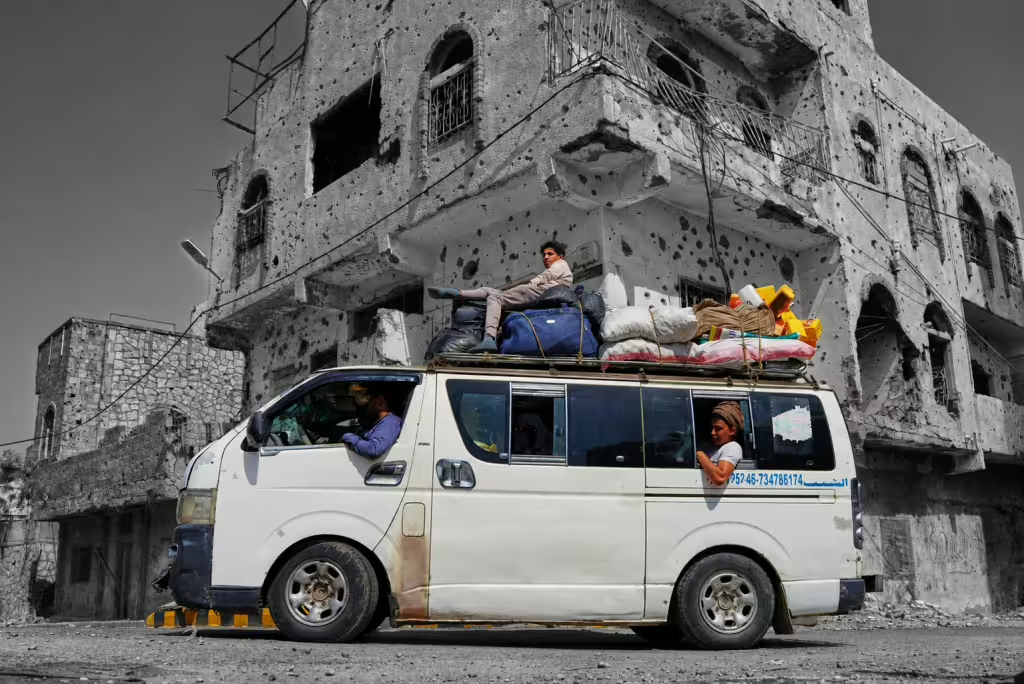
At least 76,000 Yemenis have fled their homes since July, the International Organization for Migration says, after revising its count upward by 30,000 in a matter of days. More than 46,000 were displaced in the past week alone as Iran-backed Houthi forces pushed south along the Red Sea coast. UN envoy Hans Grundberg warned that the renewed war should alarm everyone.
Details:
- The escape: Alaa Ali Salem told the Associated Press his family fled by motorcycle without knowing where they were going, until crowded roads caused the bike to overturn, injuring him, his wife and their children. Families interviewed in Aden said they left with only the clothes they were wearing.
- The casualties: The United Nations said Thursday at least 14 civilians, including two children, were killed in last week’s fighting. Al-Miqdad Hashem said shells landed near his home in contested Taiz province, wounding two people including his nephew; 34 relatives were evacuated on a truck normally used to haul construction materials.
- The medical toll: Durra Ali Hassan, sheltering with a relative in Aden, said soldiers were shouting to withdraw as bullets fell around her family. Her pregnant daughter, already bleeding, is now in a coma in hospital, her mother said.
- Hunger at scale: More than 18 million Yemenis face what the UN calls acute food insecurity, with 2.2 million children severely malnourished, and at least half the population goes hungry. Carl Skau, the World Food Programme’s acting executive director, said Yemenis told him they were selling their possessions to buy food.
- Aid in retreat: Skau said Thursday the WFP has suspended food distributions entirely for lack of funding and cut monthly cash assistance to once every two months. Yemen needs $2.2 billion in humanitarian aid, the UN relief agency says, and has received only 20% of it.
- Health system: The World Health Organization reported more than 17,600 measles cases in the first seven months of the year. At the main hospital in government-held Marib, maternity services were suspended to make room for trauma care, and the morgue is holding more bodies than its capacity allows.
- The battlefield: Houthi forces seized Mokha, a strategic Red Sea port city in Taiz, along with an island in the waterway, according to Yemeni officials, giving the militia a foothold at Bab al-Mandab. Saudi-backed government forces said they were striking Houthi positions, but no broad counteroffensive has surfaced.
- Cross-border strikes: Houthi military spokesman Yahya Saree said fighters launched ballistic missiles and drones at a Saudi base in Sharurah in response to Saudi air raids. Saudi authorities did not publicly address the claim but said a Houthi projectile hit a mosque in Jazan, wounding two.
- Aid workers targeted: Skau said a UN compound in Mokha was attacked Thursday morning and several vehicles stolen. A senior Houthi-aligned official there, speaking anonymously because he was not authorized to talk to media, said authorities knew militia members took the vehicles and had ordered them returned.
- The northern blackout: UN operations in Houthi-held northern Yemen have been suspended since October, when aid workers were detained and UN offices raided. The head of the UN relief office told the Security Council in August that 73 UN staff remain in Houthi detention.
Background:
A UN-brokered ceasefire in 2022 effectively partitioned Yemen between government and Houthi zones after a war that killed 150,000 people and pushed the country toward famine. Roughly 4.5 million Yemenis were already displaced before this escalation, and about half the country’s health facilities are non-functional.
Between the lines:
The humanitarian shock is arriving as response capacity shrinks. Skau linked rising food prices to disrupted regional shipping in a country that imports most of its food, and to drought and floods damaging farms. With WFP distributions halted, appeals 80% unfunded, major donors including the United States cutting budgets, and 73 UN staff detained in the north, displaced families are reaching cities like Taiz where flour, rice and tanker water prices have climbed sharply.
What’s next
Watch whether Saudi-backed forces mount a counteroffensive at Mokha, whether Lt. Gen. Tareq Saleh returns from Riyadh, and whether donors close the $2 billion funding gap before displacement figures are revised again.