The latest:
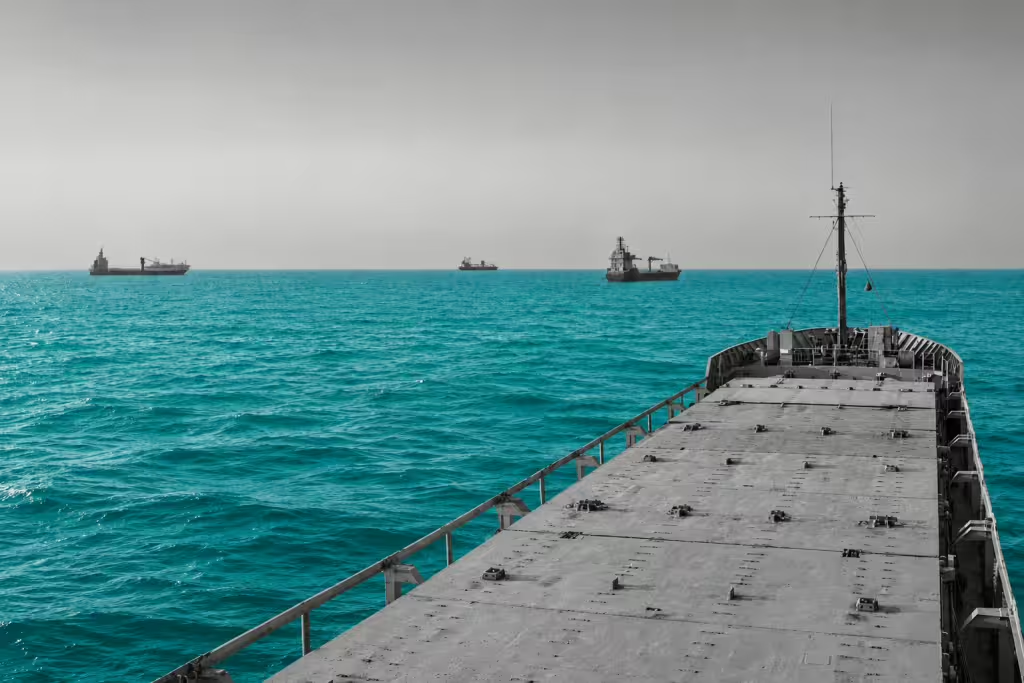
A ship was struck by a projectile while crossing the Strait of Hormuz on Sunday, the British navy’s UKMTO agency reported, a day after Saudi Arabia suspended its main cross-country oil pipeline following a drone strike. The agency said the extent of damage and the condition of the crew were not known as of Sunday morning. The two disruptions hit the region’s last functioning export routes simultaneously.
Details:
- The pipeline: The 1,200-kilometre East-West line across the Arabian Peninsula has been the main artery for Middle East crude reaching world markets over the past six months, while Hormuz stayed largely closed because of the war. It carried 4 to 5 million barrels per day, equal to 4% to 5% of global supply.
- The drone strike: Riyadh said the shutdown was precautionary after a drone attack that both Baghdad and Riyadh said originated in Iraq, where Iran-backed militias operate. No party claimed responsibility. Satellite imagery showed black smoke rising from a section of the pipeline south of Medina.
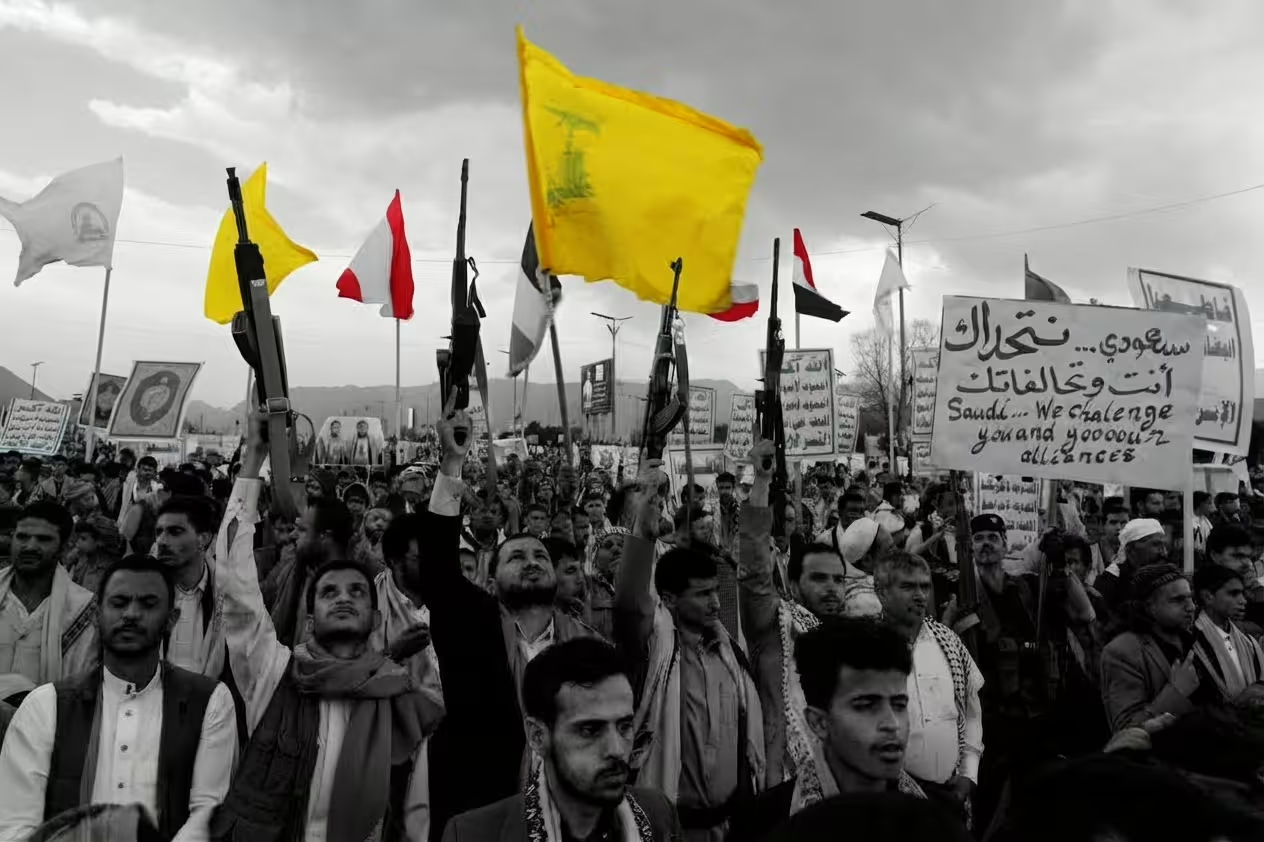
- Saudi damage: The Saudi foreign ministry said the attack caused some injuries and damage still being assessed, without addressing the impact on exports. Saudi civil defence said separately on Saturday that a Houthi projectile wounded two people in the Jazan area and damaged several buildings, including a mosque.
- Prices: Brent crude climbed back above $100 a barrel over the past week and US retail diesel passed a record $6 a gallon, as both American and Iranian forces fired on tankers and the Houthis advanced along the Red Sea coast.
- The strait: Hormuz has been the main flashpoint between Tehran and Washington since the US-Israeli war on Iran began on 28 February. Roughly 20% of global oil and LNG supply passed through it before the war. Washington has blockaded Iranian ports to deny Tehran control of the waterway.
- Iranian casualties: Iranian state media reported that an Iranian commercial vessel was attacked off the country’s southern coast early Sunday, killing one person and wounding three, without further detail. Tehran regularly targets ships that transit without its permission, while US forces intermittently shell the Iranian coastline.
- Riyadh’s request: Three sources told Reuters that Crown Prince Mohammed bin Salman phoned President Donald Trump on Thursday to request US military help against the Houthis, and was told Washington would not intervene directly for now but would provide intelligence support. Trump confirmed the call on Saturday.
- Bab al-Mandab: Four Yemeni government sources told Reuters the Houthis seized the strategic island of Perim in the middle of the Bab al-Mandab strait on Friday, at the southern entrance to the Red Sea, extending Tehran’s leverage over the region’s second main oil corridor.
- Talks: Iran’s foreign ministry said Tehran will attend a Monday meeting with Gulf Arab states in Oman on the future of Hormuz. A senior Iranian official told Reuters the Omani-initiated meeting was not expected to produce a signed agreement.
- Iran’s terms: A source told Tasnim news agency the strait would reopen only if seven conditions conveyed to Washington are met. Iran demands recognition of its sovereignty over Hormuz, allowing it to levy fees on transiting ships, which Washington rejects.
Background:
No US-Iran talks on ending the conflict have been held since a June agreement collapsed within weeks. Ships moved freely through Hormuz before the war began.
Between the lines:
With the East-West pipeline shut, Hormuz largely closed and the Houthis now holding Perim island, the three routes that carry Gulf energy to world markets are disrupted at once. Trump said Iran may be responsible for the pipeline strike, but no claim of responsibility has been made. Ibrahim Azizi, who heads Iran’s parliamentary national security committee, said negotiation is pointless unless Washington accepts all of Tehran’s conditions.
What’s next
Monday’s Iran-Gulf meeting in Oman, where a routes arrangement between Tehran and Muscat is expected to be tabled. Also watch Saudi export figures, the assessment of pipeline damage, and whether Washington shifts beyond intelligence support.