Key Points
- Houthi gains near Bab el-Mandeb and attacks on an east-west pipeline have narrowed Saudi oil export routes.
- Riyadh faces military escalation or diplomacy as Iran continues disrupting the Strait of Hormuz.
- Washington’s reluctance to widen the war leaves Saudi security and global energy flows exposed.
The latest
Saudi Arabia’s options are narrowing as Houthi forces seize positions near Bab el-Mandeb, while drone attacks originating in Iraq have forced Riyadh to close the pipeline carrying oil from eastern fields to the Red Sea. Iran’s disruption of the Strait of Hormuz has already constrained Gulf exports. A Saudi official said the kingdom would defend itself and work with partners, including the United States, to safeguard freedom of navigation in the Red Sea.
Details
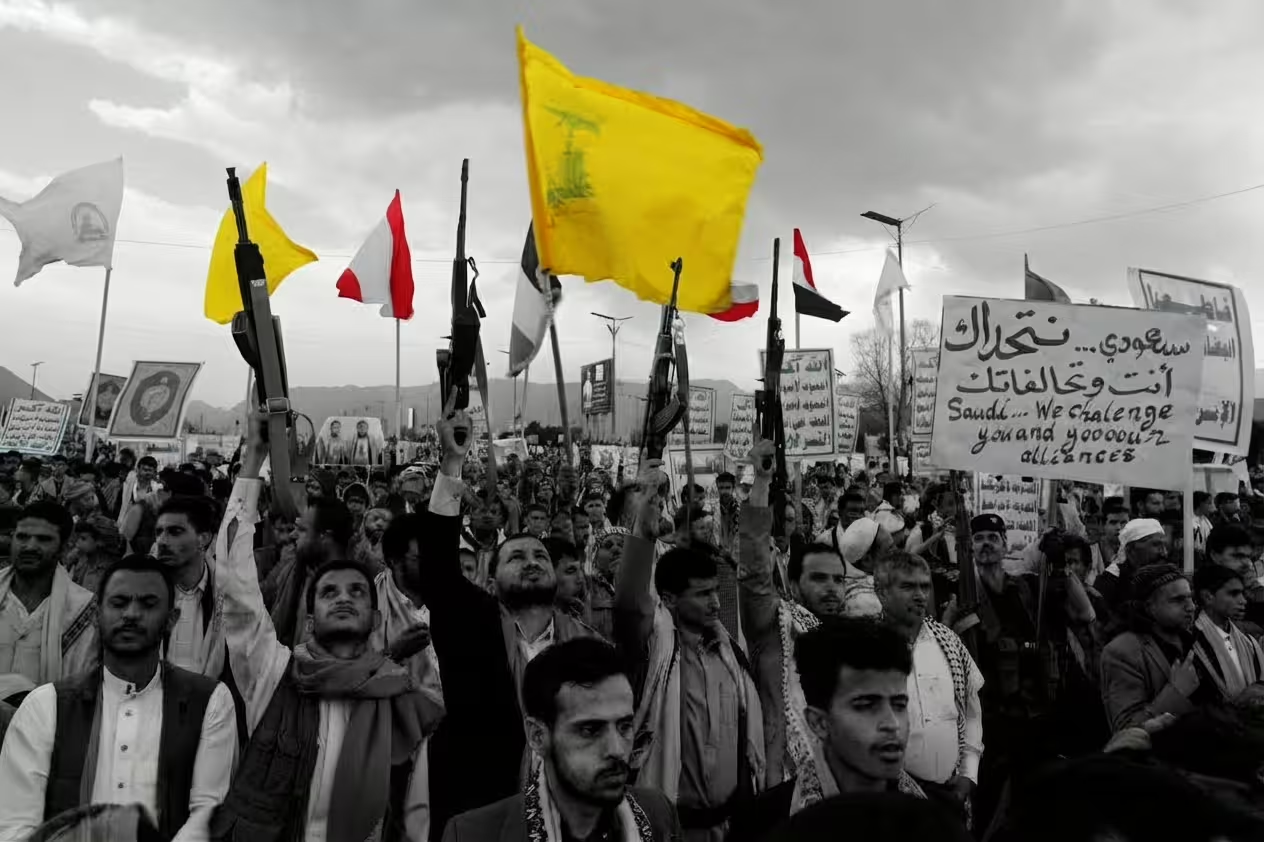
- Houthi advance: Over the last two days, the Houthis seized Mokha and a Red Sea island from Saudi-backed Yemeni government forces, strengthening their ability to obstruct shipping. The gains followed renewed tensions in July, when the group declared a blockade of Saudi shipping and resumed large-scale attacks after four years.
- Export collapse: Saudi oil exports to Asia fell from about 3.4 million barrels a day in June to 128,000 in August, before recovering to 700,000 this month, Kpler data showed. The western pipeline had allowed crude to reach Europe through Egypt’s SUMED pipeline and Suez Canal, or Asia through Bab el-Mandeb.
- Military risk: Saudi Arabia could intensify military action to dislodge the Houthis, but ACLED’s Sherwan Hindreen Ali said that would prolong the conflict and invite heavier attacks on energy infrastructure. He said Houthi weapons are now more sophisticated, while Saudi interceptor supplies are likely lower after the US-Iran conflict.
- Diplomatic barriers: Negotiations with the Houthis or Tehran offer another route. The Houthis demand an end to the Saudi-led blockade, which would allow them to strengthen over time, while Iran has little incentive to stabilize the region without major US concessions. Chatham House’s Neil Quilliam said every Saudi option carries high costs and uncertain outcomes.
- US hesitation: Trump said Iran was “probably” behind the pipeline attack, but suggested electoral considerations could deter greater military pressure. US forces are concentrated around Hormuz, where they are blockading Iran and protecting shipping, while fighting has strained personnel and interceptor stocks. Former ambassador Michael Ratney said the White House was not enthusiastic about intervening in Yemen.
Background
Saudi Arabia entered the Yemen war against the Houthis in 2015, but its allies made little ground. The conflict killed an estimated 150,000 people and at times pushed Yemen toward famine before a 2022 ceasefire. Riyadh later prioritized economic transformation and regional stability, central to Crown Prince Mohammed bin Salman’s effort to make the kingdom a global business hub.
What’s next
Concrete signals will be any White House decision on intervention in Yemen, Riyadh’s decision on military action or talks, and the reopening of the east-west pipeline. Saudi export volumes to Asia and safe passage through Bab el-Mandeb will show whether pressure is easing.
Source