Key Points
- Oman's foreign minister announced Sunday the postponement of Monday's Iran-Gulf meeting on a Hormuz corridor.
- Tehran had planned to formally announce a shipping-corridor deal after rare contacts with Abu Dhabi.
- Brent has topped $105 a barrel as attacks on shipping and pipelines intensify.
The latest:
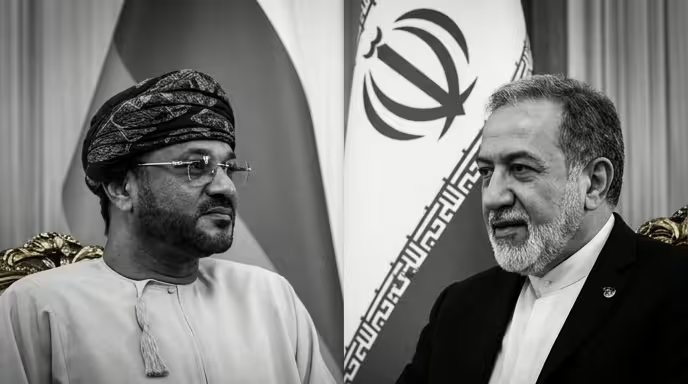
A meeting between Iran and several Gulf states on creating a temporary shipping corridor through the Strait of Hormuz was postponed hours before it was due to convene Monday. Omani Foreign Minister Badr al-Busaidi announced the delay Sunday on X, citing the pursuit of consensus. He did not name an alternative date or set out next steps.
Details:
- Oman’s framing: Oman’s foreign ministry said the aim is to secure suitable conditions for constructive dialogue leading to sustainable understandings supporting regional security and stability. Busaidi gave no replacement date for the ministerial meeting and outlined no follow-up process.
- Tehran’s account: Iran’s official news agency IRNA reported that the foreign ministers’ meeting was postponed at the request of regional states. Tehran had intended to formally unveil the shipping-corridor agreement after a run of diplomatic moves, including a rare meeting between senior officials from Tehran and Abu Dhabi.
- Attendance in doubt: It was unclear before the meeting which countries would attend. Bahrain ruled out participating, citing recent Iran-backed attacks on Gulf facilities, while escalating fighting in Yemen between Saudi-backed forces and the Houthis complicated arrangements.
- Iran’s conditions: Iran had signalled that any agreement would not mean fully reopening the strait, and that it would continue to decide which vessels may transit. Iranian Foreign Minister Abbas Araghchi called the proposed meeting a confidence-building step in an interview with Al-Araby Al-Jadeed.
- Still unresolved: People familiar with the talks said negotiations between Iran and Oman will continue over details such as fees that could be levied on ships passing through the corridor.
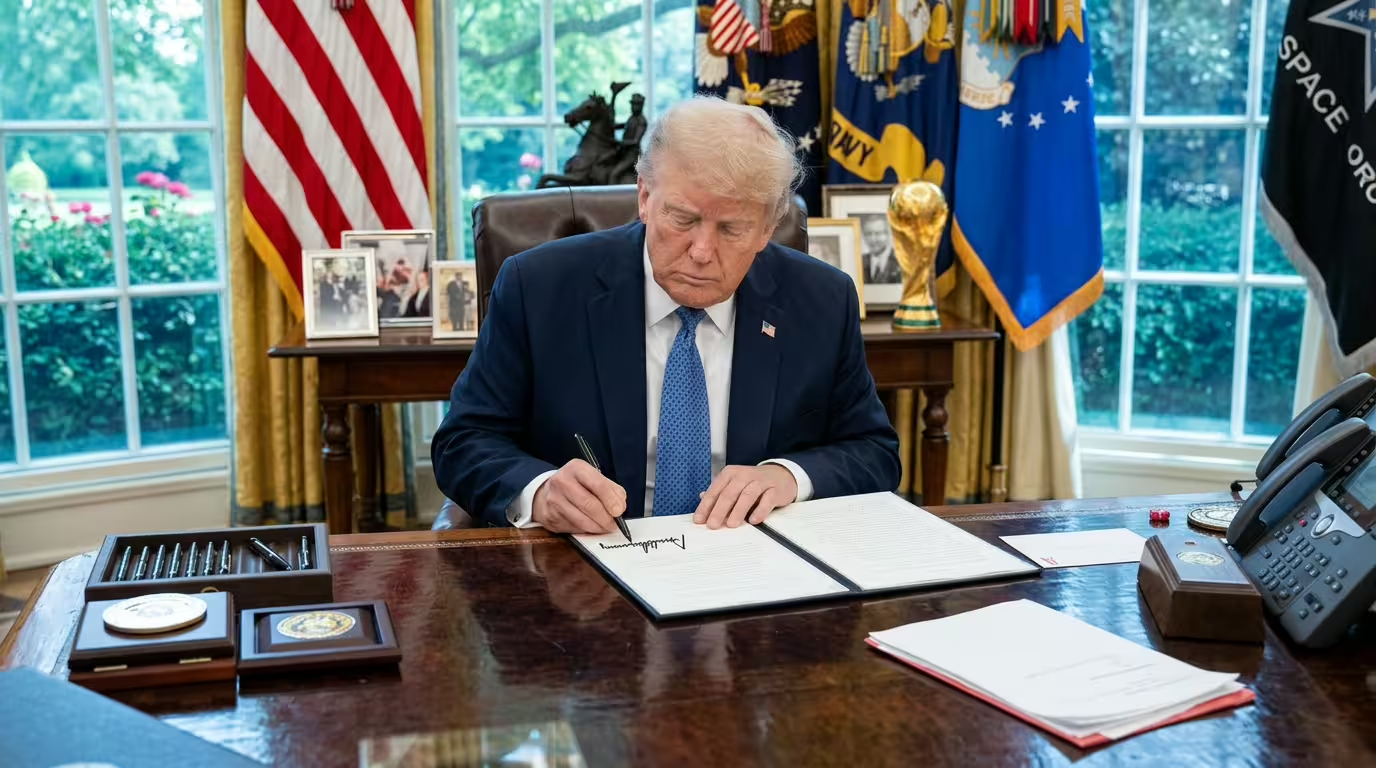
- Washington’s posture: Asked Sunday about the Gulf states’ meeting with Iran, President Donald Trump told reporters it did not concern him and was their business. Energy Secretary Chris Wright played down the chances of a Hormuz deal.
- The flows: Wright estimated roughly 10 million barrels a day of crude and petroleum products still cross the strait, and that flows including alternative pipelines had recovered to two-thirds of previous levels or more. He described oil markets as “tighter than we’d like but not excessively tight.”
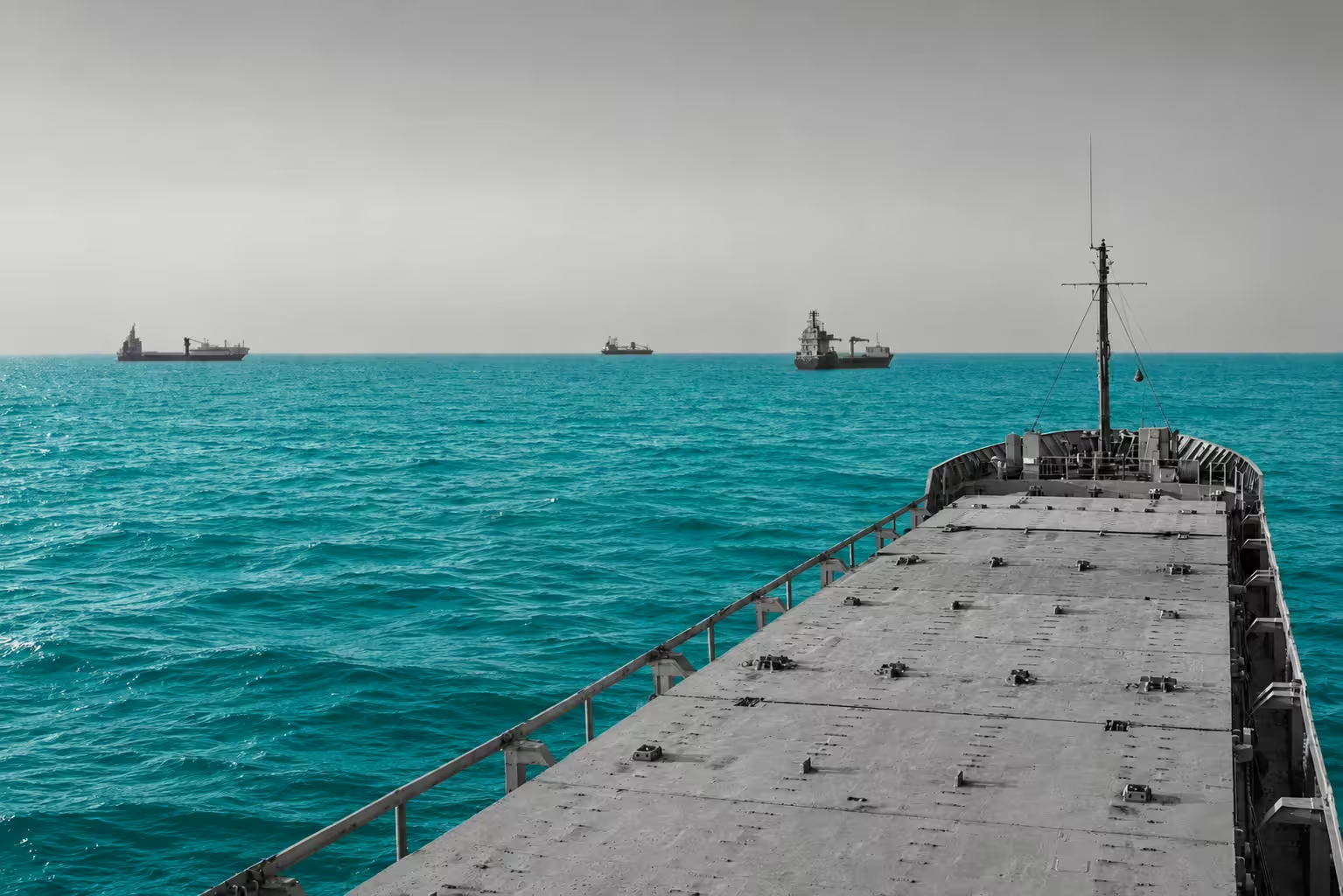
- Weekend incidents: The UK Maritime Trade Operations said Sunday a fire broke out on a vessel struck by a projectile the previous day. Iranian state television reported a hostile strike on a commercial ship off the islands of Qeshm and Hengam that killed one person.
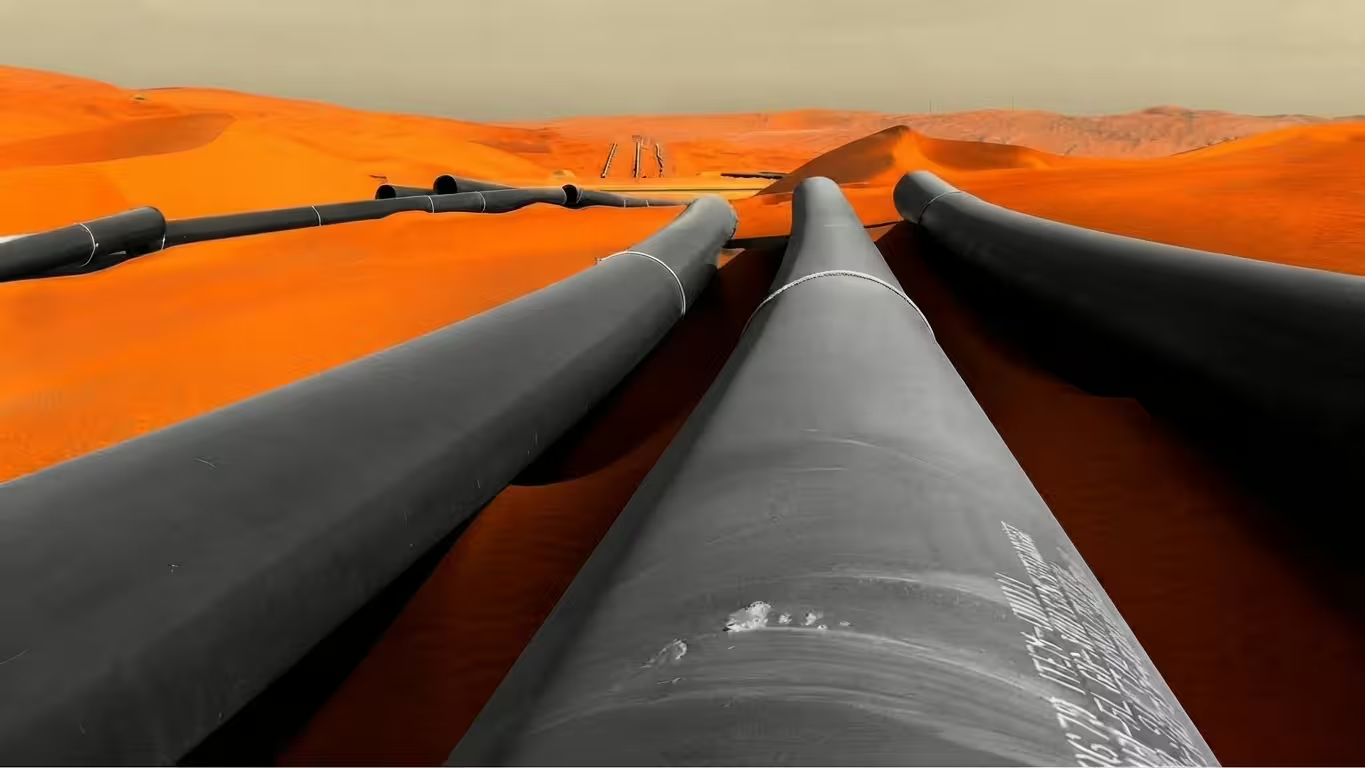
- Market impact: Brent crude has passed $105 a barrel in recent days as regional tension renewed. Saudi Aramco shares fell about 1.1% Sunday to their lowest since March after the kingdom shut the East-West pipeline, its main alternative to Hormuz, following drone attacks by armed groups operating from Iraq.
Background:
The Strait of Hormuz is the sole sea route out of the Gulf. The proposed temporary corridor would allow limited passage under terms Iran says it would continue to control, rather than a full restoration of normal traffic.
Between the lines:
The postponement came as Bahrain stayed away, Yemen fighting escalated and a ship was struck off Qeshm — the conditions Oman’s ministry says it wants in place before talks resume. With Iran insisting it decides which vessels pass, and fees still unsettled between Tehran and Muscat, the corridor remains a negotiating position rather than an agreed mechanism.
What’s next
Watch for a new date from Muscat, whether Bahrain shifts position, the outcome of Iran-Oman talks on transit fees, and the reopening of Saudi Arabia’s East-West pipeline.