Key Points
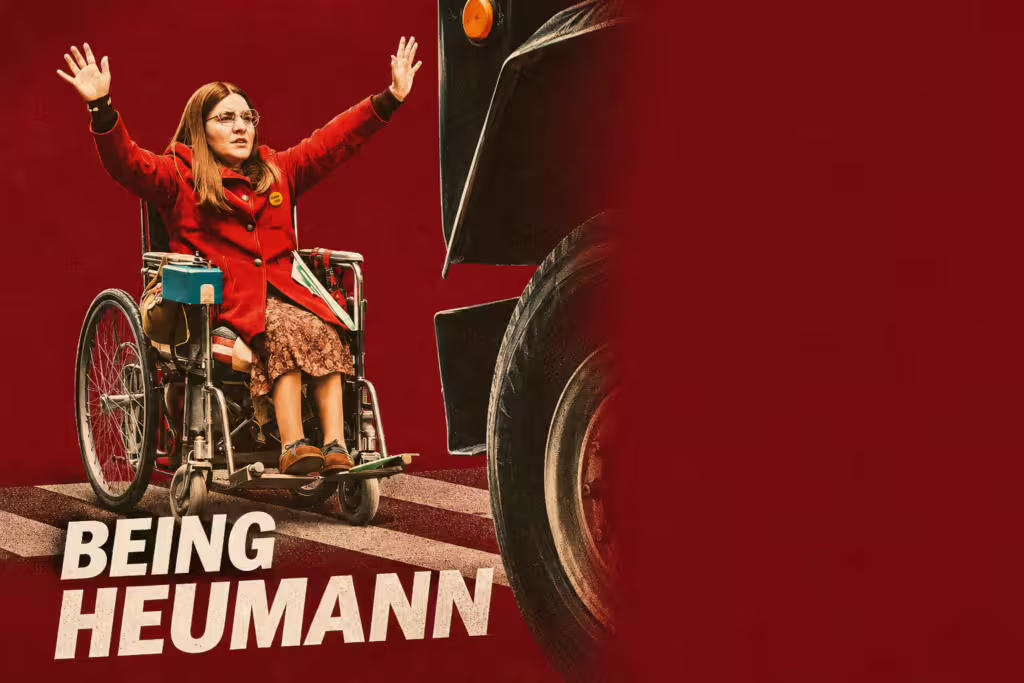
- Ruth Madeley plays US disability rights pioneer Judy Heumann in Apple TV's Being Heumann, premiering Friday.
- The film centres on the 1977 San Francisco sit-in that forced Washington to enforce anti-discrimination rules.
- Madeley, who has spina bifida, says disability and determination go hand in hand for her and Heumann.
The latest:
British actress Ruth Madeley takes the lead role in Being Heumann, the Apple TV film about American disability rights activist Judy Heumann, premiering globally on Friday. Directed by Coda’s Sian Heder, the film places Madeley alongside Mark Ruffalo and Dylan O’Brien. Madeley, diagnosed with spina bifida in the womb, told The National that being trusted with the film was the biggest privilege of her life.
Details:
- The film: Being Heumann is directed by Sian Heder, whose previous film Coda won the Oscar for best picture. Madeley leads an ensemble cast that includes Mark Ruffalo and Dylan O’Brien. Apple TV premieres the film globally on Friday.
- The 1977 sit-in: The story centres on the occupation of a federal building in San Francisco by disability rights activists. They demanded the US government implement Section 504 of the Rehabilitation Act, which barred discrimination against disabled people by organisations receiving federal funding.
- The outcome: Section 504 had been passed four years before the protest, but the regulations needed to enforce it remained unsigned. Following the occupation, those enforcement regulations were signed on April 28, 1977.
- The actress: Madeley, from Greater Manchester, earned a Bafta nomination for the 2015 drama Don’t Take My Baby and has appeared in Years and Years and Doctor Who. She says life experience with a disability feeds directly into her acting.
- The voice: Madeley spent months speaking with a Brooklyn accent off set. She said Brooklyn was a large part of Heumann’s identity, and that landing the accent unlocked much of the performance for her.
- Physical difference: Both women used wheelchairs, but Madeley says she can manage a few steps, while Heumann, who contracted polio as a child, could not walk and had little core strength. Madeley sought to capture the freedom Heumann had moving independently.
- A harder scene: One sequence shows Heumann waiting to use the bathroom because her attendant is late. Madeley said showing “the realities of having to rely on other people when your body doesn’t work in a certain way” mattered as much as the larger personality.
- Heumann’s global work: In 2016, while a senior adviser at the US Department of State, Heumann addressed a UN discussion on the rights of women and girls with disabilities, convened by the UAE and US missions with UN Women and World Enabled. She died in 2023, aged 75.
- The UAE link: In 2017, the year after that UN discussion, the UAE adopted the term people of determination as part of a national strategy on the needs and rights of people with disabilities.
- Madeley’s message: She said a disability can leave people feeling isolated, and she wants viewers to reach out rather than carry it alone. She described herself as committed to carrying on Heumann’s legacy, adding that the work is not done.
Background:
Heumann spent her career pushing against barriers that kept disabled people from full participation in society, in the US and internationally. Madeley says her own mother fought for her as Heumann’s mother had, and that she gradually found her own voice.
Between the lines:
The film’s framing links two eras of the same campaign: the 1977 occupation that forced Washington to sign regulations already four years overdue, and Madeley’s insistence that the work is not finished. Her decision to stage an unglamorous waiting scene alongside the protest signals a portrait of dependence as well as activism.
What’s next
Being Heumann premieres Friday on Apple TV globally, the first measure of whether the film broadens recognition of Heumann’s work beyond disability rights circles.