Key Points
- EU leaders meet in Dublin Friday for the bloc's first dedicated summit on artificial intelligence.
- Europe's Chips Act and seven planned AI gigafactories are both falling behind their targets.
- Ukraine was added as a second agenda item after US envoys met Zelenskiy in Dublin.
The latest:
European Union leaders convene in Dublin on Friday for their first summit devoted entirely to artificial intelligence, Reuters reported, with the agenda built around how the bloc closes the gap with the United States and China. European Council President Antonio Costa wrote to leaders last week that the pace of AI development now requires a dedicated discussion at leaders’ level on both the opportunities and the disruption.
Details:
- The convening: Reuters reported that the Dublin meeting is the first time EU heads of state and government have gathered specifically on artificial intelligence. Leaders are set to examine funding shortfalls, regulatory red tape and the design of guardrails for the technology, according to the agenda described by Reuters.
- Costa’s framing: In his invitation letter, sent last week, the European Council president said a first leaders-level discussion is “now needed” on AI’s opportunities and its transformative effect on European economies and societies. Costa did not set out a specific policy outcome for the summit.
- Who briefs leaders: Mistral AI chief executive Arthur Mensch and Nobel Prize-winning AI pioneer Geoffrey Hinton will brief EU leaders in Dublin, Reuters reported. Hinton has been among the most prominent voices warning about the technology’s risks, while Mistral is Europe’s highest-profile homegrown model developer.
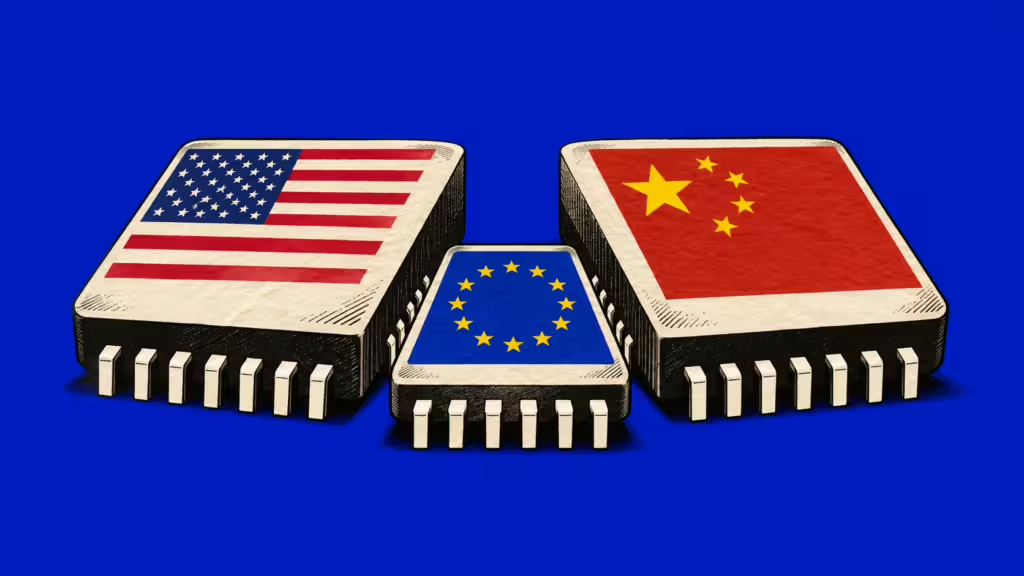
- The chips gap: The Chips Act, implemented three years ago, looks likely to fall short of its goal of attracting advanced manufacturing and doubling the bloc’s share of the global chip market to 20% by 2030, according to Reuters. No revised target has been announced.
- Gigafactories stalled: A plan for seven AI gigafactories, combining advanced processors, software, cloud technology, high-speed connectivity and data centres under one roof, has yet to fully take off. Reuters attributed the delay to a fight among member states over competitiveness spending in the 2028-2034 EU budget.
- Industry turbulence: The summit follows months of alarm over incidents involving rogue AI agents, Reuters reported, and further turmoil this week with the resignation of Nvidia chief executive Jensen Huang, which leaves the industry without its biggest champion. No successor was named.
- Ukraine added: Ukraine was added as a second major topic after US envoys Steve Witkoff and Jared Kushner flew into Dublin to meet Ukrainian President Volodymyr Zelenskiy, following their talks with Russian President Vladimir Putin in Moscow.
- Security guarantees: A senior EU official said leaders are likely to discuss European involvement in peace negotiations and the security guarantees the bloc could offer in the event of a ceasefire. The official did not describe what form those guarantees might take.
Background:
The Chips Act was the EU’s flagship attempt to rebuild semiconductor capacity on European soil. The gigafactory programme was meant to follow it by concentrating compute, data and connectivity in single sites, but both depend on budget decisions member states have not yet settled.
Between the lines:
Both of the EU’s hardware bets are stuck for the same reason: money. The Chips Act is tracking below its 20% target and the gigafactories are held up by the 2028-2034 budget fight, which puts a spending argument, not a technology argument, at the centre of Friday’s talks. The Ukraine item arriving after Witkoff and Kushner landed in Dublin also narrows the time available for AI itself.
What’s next
Watch whether leaders emerge with any funding commitment for the seven gigafactories, how the 2028-2034 budget negotiation on competitiveness spending moves, and what the summit says about European participation in Ukraine peace talks.