Key Points
- SMIC's co-CEO said AI-related chip supply will remain tight through 2027 on data-centre demand.
- Zhao Haijun said the AI industry is still early-stage, rejecting the premise of a bubble.
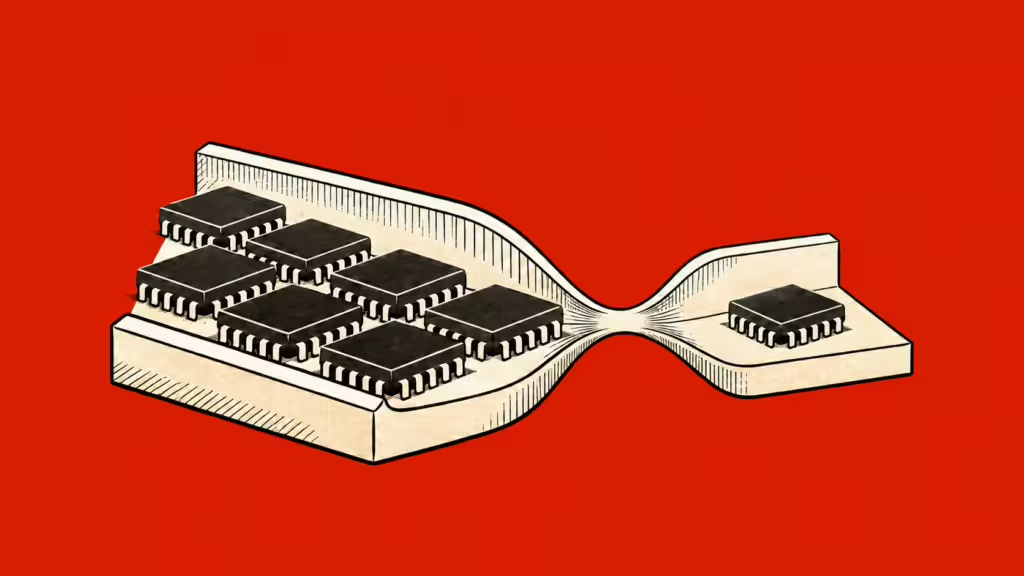
- Tight supply and 24-month equipment lead times point to sustained pressure on chip buyers.
The latest:
The semiconductor supply chain serving artificial intelligence applications will stay tight through 2027, driven by demand from data centres and private clouds, SMIC Co-CEO Zhao Haijun said on Friday. He added that the AI industry remains in its early stages and that many customers needing computing resources still face shortages. China’s largest contract chipmaker expects full-year revenue above $1.2 billion.
Details:
- The bubble question: Zhao made his remarks in response to a question on whether the AI industry was forming a bubble, according to Reuters. Rather than address the framing directly, he argued the sector is still at an early stage and that demand remains strong, pointing to customers who cannot secure the computing resources they need.
- The timeline: Zhao put 2027 as the horizon for tightness in the AI-related chip supply chain, attributing the pressure to data centres and private clouds. He drew a separate line for memory chips, saying supply and demand in that segment should reach balance only toward the middle to end of 2028.
- The revenue: SMIC expects full-year revenue to exceed $1.2 billion, with the company citing a capacity utilization rate that continues to rise. Zhao did not break out how much of that utilization is tied to AI-related orders versus the firm’s broader customer base.
- Equipment delays: The company faces longer lead times for manufacturing equipment, with some orders taking more than 24 months to deliver, Zhao said. He indicated the delays would affect SMIC’s capital spending this year, though the company did not quantify the revision to its investment plans.
- The cost side: SMIC’s depreciation expense will rise about 30% year-on-year in 2026, Zhao said — a direct consequence of the capacity SMIC has been adding, and a charge that lands on margins whether or not utilization keeps climbing at the current pace.
- The company: SMIC is China’s biggest contract chipmaker and trades in Hong Kong under 0981.HK. Its commentary on supply conditions carries weight because it sits at the manufacturing layer, where shortages become visible before they reach end customers and cloud operators.
- What was not said: Zhao did not name the customers facing computing shortages, nor the suppliers behind the two-year equipment waits. The company also gave no figure for the capacity utilization rate itself, only that it continues to rise.
Between the lines:
The two timelines Zhao gave do not move together. AI-related chips stay tight through 2027, while memory rebalances a year later, in 2028 — meaning the squeeze outlasts the current build-out cycle. Equipment waits beyond 24 months reinforce that: capacity ordered now does not arrive in time to relieve the shortage he describes, and the 30% depreciation jump lands first.
What’s next
Watch SMIC’s capital spending guidance, given Zhao’s warning that equipment lead times will affect it this year, and whether rising capacity utilization shows up in quarterly results against the 30% depreciation increase flagged for 2026.