Key Points
- U.S. forces hit three crude carriers after the IRGC launched ballistic missiles toward two Navy warships.
- Both warships evaded multiple attacks without casualties; two tankers were disabled and an empty third was destroyed.
- The action extends a retaliation policy linking maritime attacks to losses across Iran’s oil fleet.
The latest
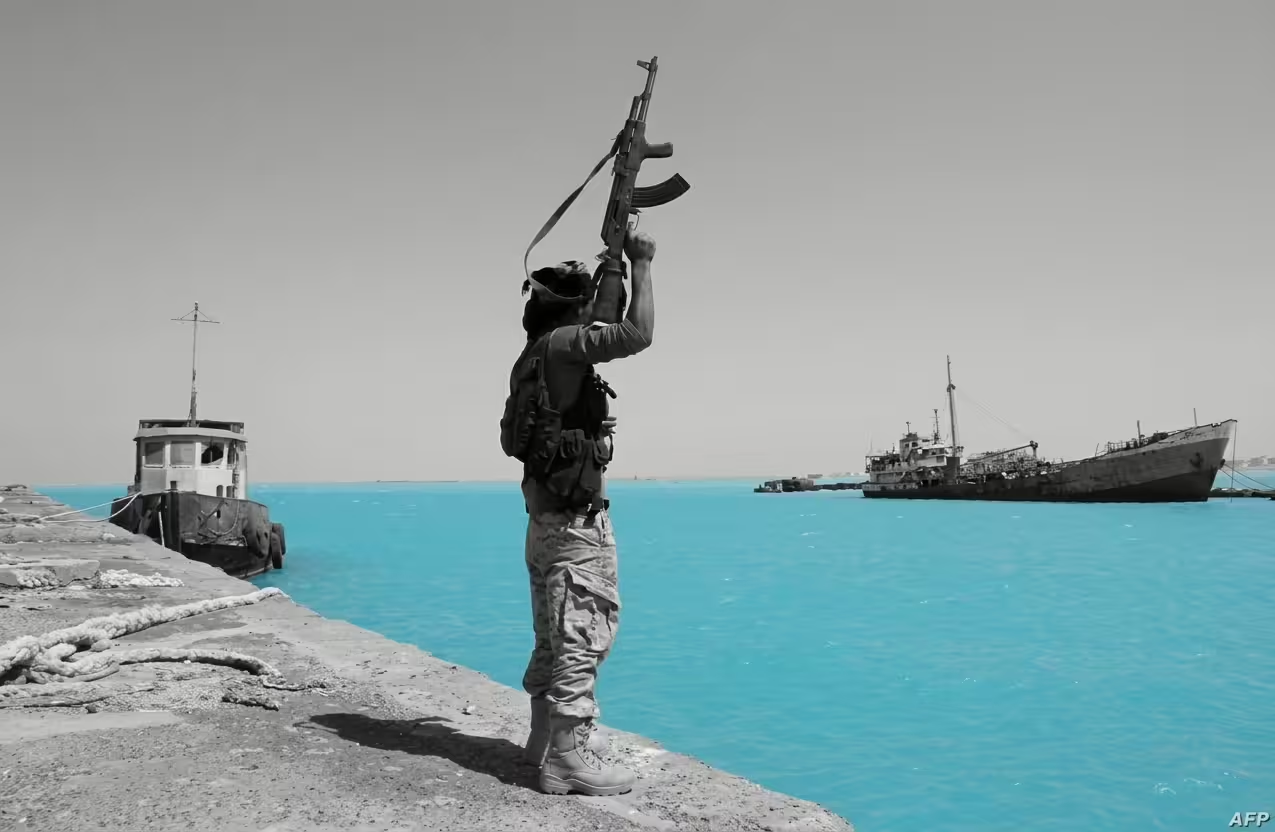
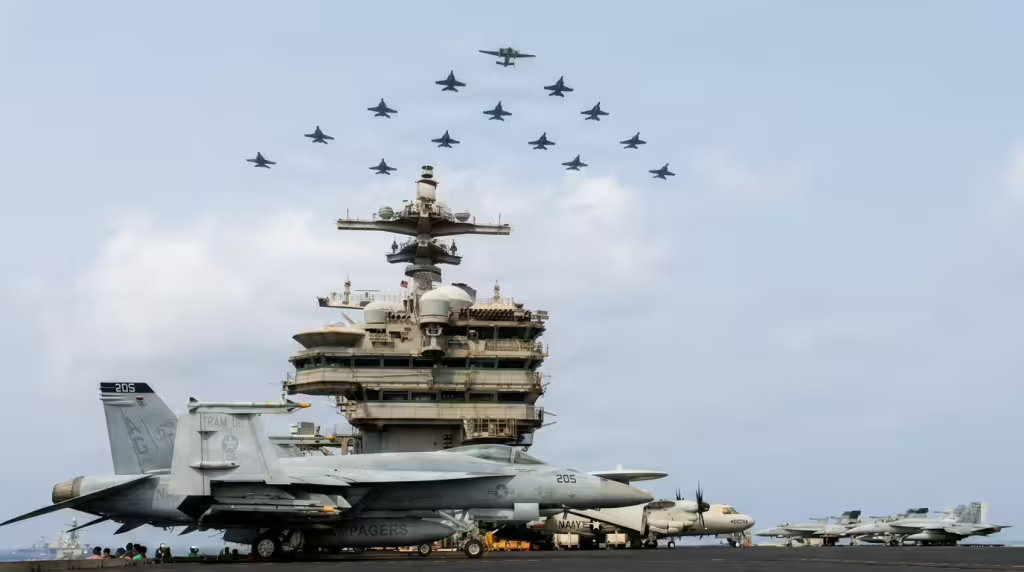
U.S. forces struck three Iranian crude carriers on Sept. 5 after the Islamic Revolutionary Guard Corps fired ballistic missiles toward two U.S. Navy warships in regional waters. U.S. Central Command said both ships evaded multiple attacks and no American personnel were injured. The military described the tankers as part of a network financing the IRGC. The Associated Press said two were permanently disabled, while a third, which was unladen, was destroyed.
Details
- Retaliation policy: Axios reported that President Donald Trump approved a “tanker-for-tanker” policy permitting attacks on Iranian government oil carriers in retaliation for Iranian strikes on shipping in the Strait of Hormuz. U.S. officials said two government tankers were hit on Sept. 1, the first such attacks framed as retaliation rather than blockade enforcement.
- Blockade scale: CENTCOM said U.S. forces began implementing the maritime blockade on April 13. By May 23, more than 15,000 personnel had redirected 100 commercial vessels, disabled four and allowed 26 humanitarian ships through. More than 200 aircraft and warships supported the operation, which was reimposed against Iran-related shipping in mid-July.
- Earlier operations: U.S. aircraft disabled the Sea Star III and Sevda in May before they could enter an Iranian port in the Gulf of Oman. The tanker Hasna had its rudder disabled two days earlier. Those operations were presented as blockade enforcement rather than retaliation for Iranian attacks.
- Iranian account: Iran separately accused the United States of firing four missiles at an Iranian tanker near Kharg Island. Iranian reports said the incident caused no casualties. The United States had not confirmed that specific account.
- Hormuz disruption: Only four commodity vessels were observed crossing the Strait of Hormuz on Sept. 4, compared with a 10-day average of 15. Before the war began on Feb. 28, about 125 commercial vessels crossed daily. Some ships are now sailing with tracking transponders switched off, while Iranian crude exports have halted under the blockade.
- Commercial shipping: Iran attacked at least 13 commercial vessels during August, USNI News reported. In the latest cited incident involving the crude tanker MT Sidr, two seafarers were killed. The U.S. military also warned it could destroy Iran’s remaining “limited and exposed oil fleet” if necessary.
Between the lines
The retaliation policy makes oil carriers part of the direct military equation: attacks on U.S. warships or commercial shipping can be answered by destroying assets used to move Iranian oil. Tankers are large, exposed and economically valuable, bringing the confrontation closer to infrastructure underpinning regional exports and global energy flows.
What’s next
The next indicator will be daily vessel traffic through the Strait of Hormuz and whether another Iranian attack triggers further U.S. tanker strikes under the new retaliation policy.