Key Points
- Israel's military says troops seized Hezbollah's underground complex at Ali al-Taher weeks before Iran's reported warning.
- Reuters reported Tehran warned Washington via Oman in mid-August against a large-scale Israeli attack there.
- The timing gap suggests Iran's message targeted the complex's destruction, not Israel's initial entry.
The latest:
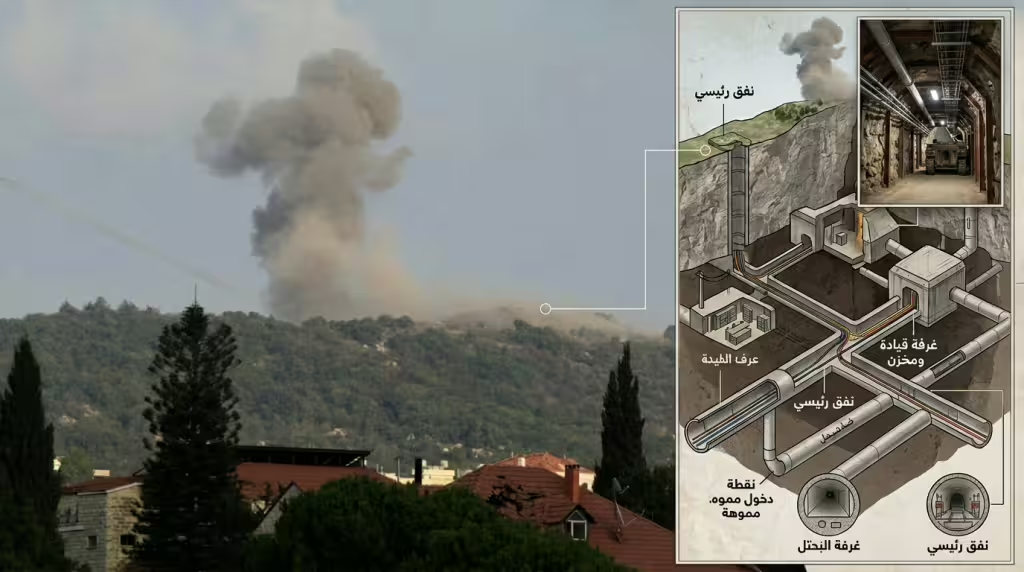
Israeli soldiers had already been operating inside Hezbollah’s underground complex on the Ali al-Taher Heights for several weeks, the Israel Defense Forces said, reframing a reported Iranian warning against an assault on the southern Lebanon ridge. The military said troops from its 36th Division established operational control above and below ground, and are now preparing to destroy the tunnel infrastructure.
Details:
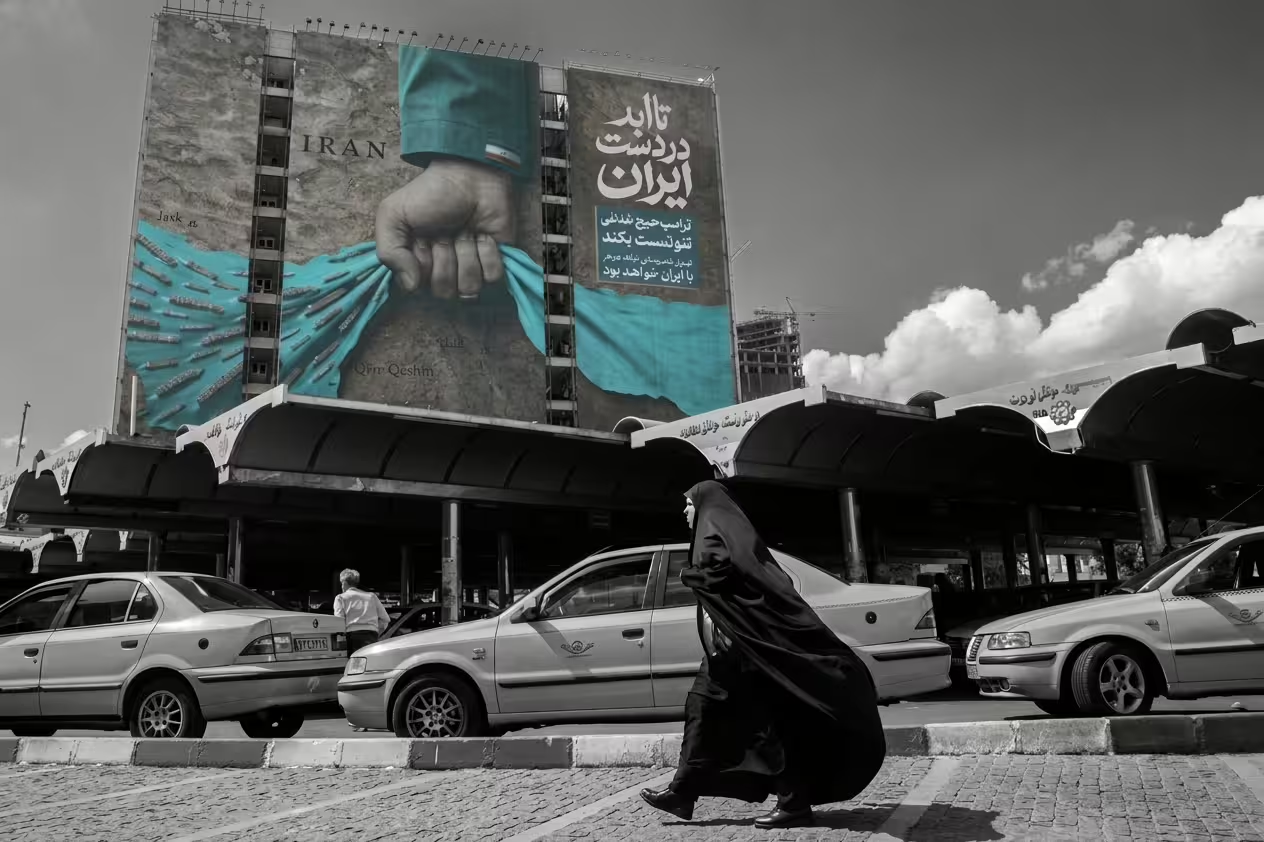
- The Iranian message: Reuters reported that Tehran warned the United States through Oman in mid-August that it would launch a major response if Israel carried out a large-scale attack on the strategically important ridge. The warning underlined the value Iran attaches to the site and raised concern that an operation there could widen into a broader confrontation.
- The military account: According to the IDF, troops from the 36th Division entered and cleared two underground routes belonging to Hezbollah, killing operatives at the site while others fled the area. The military said its forces have held operational control of Ali al-Taher, above ground and below it, for several weeks.
- Inside the complex: The Israeli military described a major Hezbollah installation built over roughly two decades with Iranian planning and funding. It said the network contained command centers, weapons-storage rooms and electricity generators, along with living quarters, showers and a kitchen designed to keep personnel underground for extended periods.
- Israel’s reading: Israel says the scale and design of the site show Ali al-Taher was not a defensive position but a long-term strategic military installation. The military is now preparing to destroy the underground infrastructure, though it has not set out a timeline for the demolition.
- The dispute: Emanuel Fabian, military correspondent for The Times of Israel, sharply criticized the Reuters report, arguing Israeli troops had already been inside the tunnels for weeks by the time the controversy emerged. That criticism does not by itself contradict Reuters’ account of the Iranian message being sent.
- The timing question: The gap between the two accounts turns on scope as much as sequence. Tehran’s warning may have been aimed at stopping Israel from expanding an existing operation or demolishing the whole complex, rather than at preventing the initial entry of Israeli forces into the tunnels.
- What it costs Hezbollah: For Iran and Hezbollah, destroying a complex constructed over roughly two decades would mean losing infrastructure that required considerable time, financing and planning. For Israel, dismantling it is another attempt to limit Hezbollah’s ability to rebuild military capabilities close to its northern frontier.
- The wider stake: The reported Iranian warning indicates Tehran was closely tracking developments around the ridge, while the underground network Israel describes suggests Hezbollah treated Ali al-Taher as a significant military position in southern Lebanon rather than a local outpost.
Between the lines:
If both the Reuters account and the Israeli timeline hold, Iran issued its warning after Israel had already penetrated one of Hezbollah’s most important underground positions, but before Israel moved to eliminate it. That would make the consequential question not whether troops entered, but whether Tehran can deter the demolition of a complex the Israeli military says Iran helped fund and design.
What’s next
Watch whether Israel proceeds with destroying the tunnel network, whether Iran responds as its reported warning threatened, and whether Hezbollah publicly acknowledges the loss of the Ali al-Taher complex.