The latest:
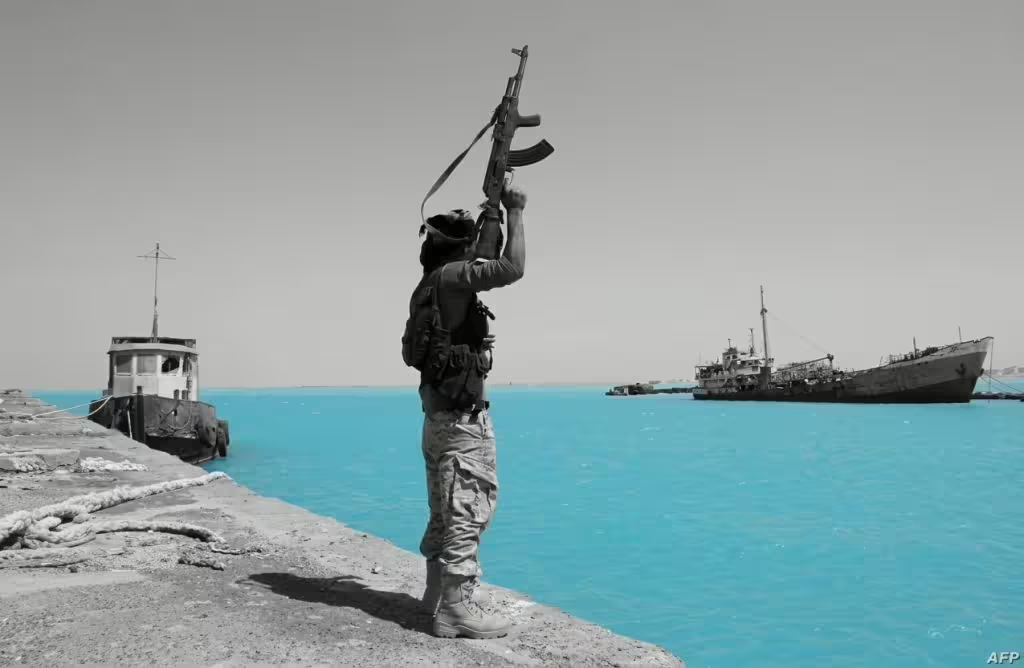
Fighting on Yemen’s western front has killed more than 120 people in two days, sources told AFP, in some of the heaviest clashes in years. The New York Times, citing local security sources, reported that Houthi forces escalated operations to seize territory that would give them greater control over the Bab al-Mandab strait, the chokepoint at the entrance to the Red Sea.
Details:
- The casualty count: A Yemeni military official, speaking on condition of anonymity, said 66 government soldiers had been killed since Thursday. Medical and military sources close to the Houthis put the group’s losses at no fewer than 62 fighters, according to AFP.
- The military objective: Colonel Abdul Basit al-Baher, an army officer with the internationally recognized government, told the New York Times that fighting intensified west of Taiz as Houthi forces tried to reach Mokha, a coastal city less than 50 miles from the strait. Analysts cited by the paper said reaching Mokha would let the group exert greater control over transiting ships.
- The strategic stakes: Military sources told AFP that Houthi forces seized elevated positions overlooking government-held areas near the coast and Taiz, positions that could give the group direct command of the strait’s approaches. The waterway links the Red Sea to the Gulf of Aden and carries about 10% of global oil shipments.
- The supply lines: A second security official in Taiz, who asked not to be named, confirmed to the New York Times that violent clashes were underway and said Houthi forces were trying to cut supply routes into Mokha. The government has accused the group of seeking to isolate the city and advance toward the Red Sea coast.
- The air campaign: The armed forces media center said Friday evening that warplanes carried out more than 15 strikes on Houthi positions, gatherings and vehicles along the western coast in Taiz and Hodeidah. It was the first announced use of government air power on these fronts in the current round, alongside continued artillery shelling.
- The counterattack: National Resistance forces, backed by Giants Brigades units, launched a counteroffensive south of Jarahi district in Hodeidah, according to the resistance’s military media. In southeastern Taiz, a military source said troops retook the Wathra and Said Taha hills, plus the Dhiban, Khudhaira and Najdain heights in Hayfan.
- The Houthi account: A military source cited by the Houthi-run Saba news agency claimed Saudi-backed forces were attacking civilians and denounced the targeting of a house in Jarahi. The source warned that military deployments by those forces would be treated as legitimate targets and pledged a harsh response to the ground assault.
- The civilian toll: Local and medical sources said Houthi shelling of the Hayjat al-Abd road linking Taiz and Aden killed four civilians and wounded nine. The Ministry of Planning and International Cooperation appealed to donors for urgent aid for displaced families, citing shelter, food, medicine and water needs, and asked for field hospitals.
- The prior escalation: Mokha port was hit by more than 25 missiles within days in early August and suspended operations. The Houthis said then they had targeted a buildup of weapons and warships belonging to Saudi-backed forces, defending the attacks as preemptive and accusing Riyadh and the government of preparing a ground offensive.
- The political framing: Presidential Leadership Council chairman Rashad al-Alimi accused the group of pursuing what he called “Iran’s objective of controlling the Bab al-Mandab strait,” holding it responsible for the displacement of hundreds of families. Analyst Anwar al-Ashwal assessed the operations go beyond hit-and-run tactics, arguing the group is testing government forces’ resilience.
Background:
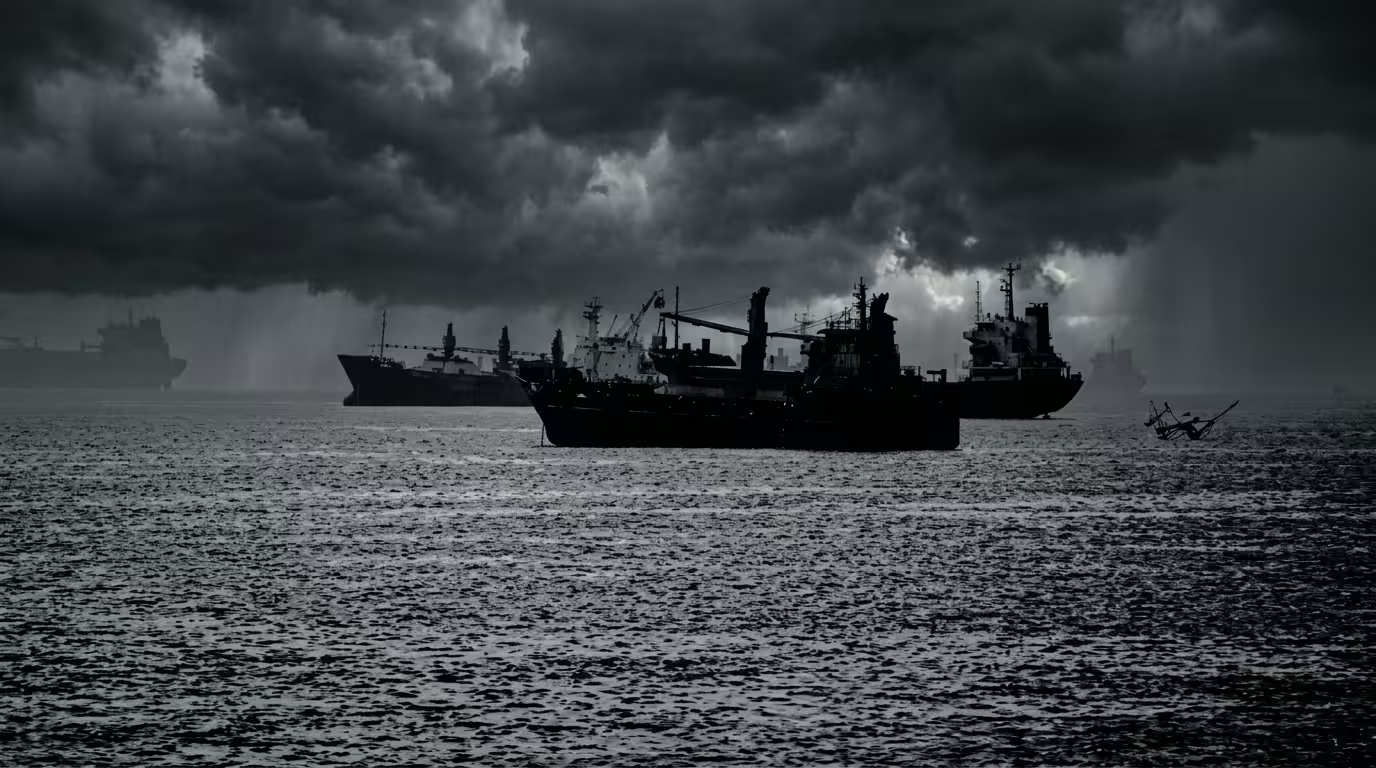
The Houthis announced a blockade in July on Saudi oil tankers transiting the Red Sea, the route for most Saudi crude exports, and have since launched missile and drone attacks on passing ships and Saudi facilities from northern Yemen.
Between the lines:
Until this week, Houthi operations consisted mainly of missile and drone strikes without major ground battles, according to the New York Times. The shift to a broad ground assault aimed at Mokha’s supply lines, alongside the first announced government air strikes on these fronts, marks a change in how both sides are fighting. Al-Ashwal argued the decisive test is whether either side can hold gains and protect supply routes.
What’s next
Watch whether government forces hold the Hayfan heights they retook, whether Houthi reinforcements reverse the counterattack south of Jarahi, and whether Mokha port resumes operations after August’s strikes.