
Key Points
- Trump called the Iran conflict “small potatoes,” supporting Vance’s refusal to describe the fighting as war.
- The six-month conflict has involved intermittent U.S. strikes and an Iranian attack against Kuwait.
- The operations have cost U.S. taxpayers $37.5 billion and killed 18 American service members.
The latest
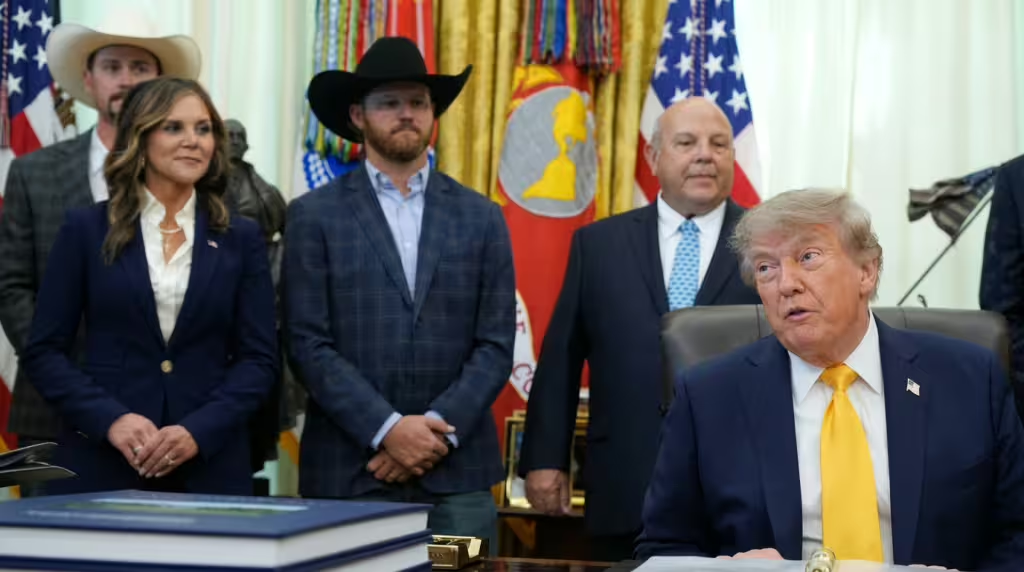
President Donald Trump described the U.S. military conflict with Iran as “small potatoes” on Friday, defending Vice President JD Vance’s position that months of intermittent attacks do not constitute a war. Speaking during an Oval Office exchange, Trump said American strikes were now intermittent and that many people would not use the term “war,” despite the conflict’s financial and human cost and continued exchanges involving Iran and U.S. forces and allies.
Details
- Trump’s description: Asked about Vance’s remarks from the previous day, Trump said he understood the vice president’s position. “I call it a military conflict because it’s small potatoes for us,” Trump said, adding: “It’s not a big thing.” He also said “a lot of people don’t call it a war.”
- Vance’s position: Vance rejected the term “war” during a White House press briefing on Thursday. Asked whether the fighting might end before voters cast ballots in the November midterm elections, he said: “I wouldn’t call it a war.” Vance added that there was no active shooting at that moment.
- Kuwait attack: Vance’s comments came on the same day that Iran fired at Kuwait, a U.S. ally in the Gulf. The Iranian action was retaliation for rounds of American strikes against Iran earlier in the week, underscoring the continuing cycle of attacks during the six-month confrontation.
- Financial toll: The conflict has cost U.S. taxpayers more than $37.5 billion. It has also left 18 U.S. service members dead. Trump characterized the latest American strikes as intermittent rather than continuous while distinguishing the military confrontation from what he and Vance would call a war.
- Election timing: Vance avoided predicting whether the conflict would be over before the Nov. 3 midterm elections. Republicans will enter that vote seeking to retain their narrow majorities in Congress, making the duration of the fighting part of the political environment surrounding the election campaign.
- Six-month conflict: The confrontation has continued for six months through on-and-off attacks in the Middle East. Trump’s comments aligned him with Vance on the terminology used to describe the fighting, with the president choosing “military conflict” and the vice president explicitly rejecting “war.”
Background
Trump made the remarks in the Oval Office while announcing action intended to help farmers and ranchers with meat processing. His response followed a question about Vance’s briefing, shifting attention from the domestic announcement to the administration’s description of military operations against Iran.
What’s next
The next fixed political deadline is the Nov. 3 midterm election. Vance declined to say whether the conflict would end before voting, while Republicans seek to protect their narrow congressional majorities. Continued or halted U.S. strikes before then will indicate the confrontation’s immediate course.