Key Points
- Police have closed dozens of cafes across Iran, often citing violations of mandatory hijab rules.
- Mixed-gender cafe gatherings have become an affordable refuge for young Iranians facing war, inflation and political unrest.
- The closures threaten youth employment while intensifying the struggle over control of Iran’s public spaces.
The latest
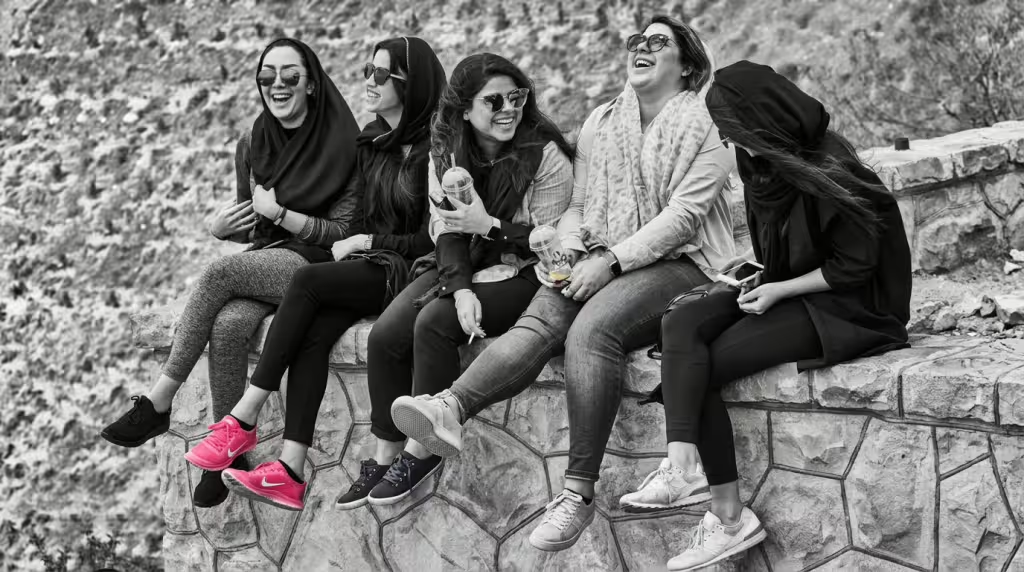
Iranian police have shut dozens of cafes in recent weeks, with the crackdown also reaching restaurants and boutiques across several cities, although some businesses later reopened. Authorities have generally cited breaches of the mandatory hijab law, regulatory violations or conduct deemed contrary to Islamic values. The targeted cafes draw young, mixed-gender crowds who gather indoors and on sidewalks to talk, smoke and socialize, with women frequently appearing unveiled and some establishments discreetly serving alcohol despite its prohibition.
Details
- Sidewalk gatherings: Cafe owners, employees and customers in Tehran said authorities appeared to focus on clusters of neighboring cafes. Their small premises frequently leave patrons gathering outside, creating spontaneous afternoon crowds. Mona, a 36-year-old artist, said officials seem to view these gatherings as potential protests, although they consist of young women and men spending time together.
- Official justifications: Authorities have cited routine regulatory breaches, failure to enforce hijab requirements, “social and moral misconduct,” disregard for Islamic values and “norm-breaking.” Three Tehran residents, including a cafe owner, said many establishments in the city center were known to serve beer. Alcohol consumption in Iran is punishable by lashing. The foreign ministry did not respond to a request for comment.
- Social transformation: Public attitudes shifted after Mahsa Amini, 22, died in custody in 2022 following her detention by the morality police. Her death triggered the months-long “Woman, Life, Freedom” protests. Women have since increasingly appeared in public with uncovered hair and revealing clothing, despite the continuing compulsory hijab law.
- Enforcement strategy: President Masoud Pezeshkian’s government has largely refrained from arresting individual women for appearing without hijabs. Officials have said full enforcement could trigger another eruption of unrest. Instead, pressure has moved toward businesses, which face closure if they fail to impose the rules. Human rights lawyer Omid Shams linked the periodic enforcement drives to pressure from religious authorities and hard-line conservative factions.
- Economic damage: Closures halt sales while rent and other expenses continue, depriving young employees of income and affecting coffee roasters and other suppliers. Reza, a Tehran barista, said cafe work had served as a fallback for young people unable to find other jobs. Amir, a 45-year-old cafe owner, described repeated shutdowns as waves that businesses endure before reopening.
Background
Author and researcher Haleh Mir Miri describes cafe culture as both a respite from family and social restrictions and a rejection of official ideology. The campaign follows nationwide protests that began in January over the spiraling economy and were suppressed with lethal force. During the continuing war with the United States, authorities have also organized nighttime pro-government rallies intended to display public support and deter dissent.
What’s next
The next indicator will be how many closed businesses are permitted to reopen and whether enforcement continues around cafe clusters where customers gather on sidewalks.