Key Points
- Yuval Noah Harari warns of economic and political dangers in surrendering human decisions to intelligent machines.
- His work traces change through human history, religion, information control and the emergence of artificial intelligence.
- The warning places control over humanity’s future at the centre of the debate about AI’s expanding role.
The latest
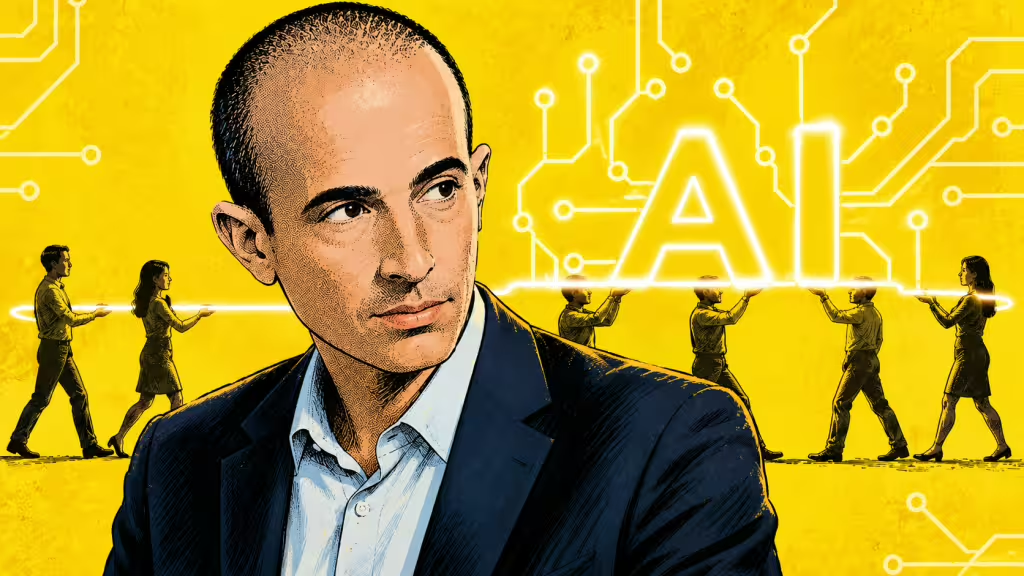
Humanity must not entrust its fate to intelligent machines, bestselling historian Yuval Noah Harari warns as he examines the economic and political perils of artificial intelligence. The argument extends his long-running study of historical change, culminating in “Nexus”, which explores how control of information has altered the course of history and how AI could shape the future. His concern shifts the focus from the capabilities of machines to the consequences of allowing them to determine humanity’s direction.
Details
- Studying change: Harari describes himself as a historian who studies change rather than the past. That distinction provides the organising principle for his work, allowing him to move across broad periods and subjects while concentrating on the forces that transform societies, institutions and humanity’s understanding of itself. History supplies the terrain, while change remains his subject.
- Human history: His first blockbuster book, “Sapiens”, applied this approach to the broad sweep of human history. It established the expansive scale of his project, examining humanity across a long historical span rather than concentrating on a single period, event or political system. That breadth reflects his central interest in transformation.
- Religion’s role: Harari’s second book, “Homo Deus”, turned to religion’s role in building humanity. The subject continued his examination of large forces shaping human development while moving beyond the historical range of “Sapiens” to consider one of the structures involved in humanity’s formation.
- Information control: His most recent work, “Nexus”, examines the relationship between information and power through history. Its central focus is how control of information has changed the course of events, connecting earlier transformations with the growing significance of artificial intelligence. It forms the bridge between his historical inquiry and his warning about the future.
- Future focus: By extending the history of information control into the age of AI, “Nexus” considers how intelligent systems could influence what comes next. The book places artificial intelligence within a longer historical pattern rather than treating it solely as a new technical development.
- Political stakes: Harari’s warning identifies both economic and political perils in allowing clever machines to assume control over decisions affecting humanity. The central issue is not simply whether AI becomes more capable, but whether people continue to determine their own collective direction as those capabilities advance.
Background
Across the three books, Harari’s focus moves from the broad course of human history to religion’s contribution to building humanity, and then to information as a force capable of redirecting history. Artificial intelligence emerges as the latest element in that continuing study of change.
What’s next
The key indicator will be whether consequential economic and political decisions remain under human control as artificial intelligence assumes a larger role in processing information and shaping choices.