Key Points
- President Masoud Pezeshkian says Iran has withstood a “total war” spanning economic, military and security fronts.
- Newspaper front pages highlight medicine shortages, wage pressure, shrinking jobs and mounting energy costs.
- Disrupted oil corridors and falling purchasing power are turning external confrontation into a domestic social test.
The latest
Iran is approaching Donald Trump’s planned economic “D-Day” with its leadership presenting national cohesion as proof that war has failed to break the country, even as Persian newspapers chart deepening pressure on everyday life. Concerns over medicines, salaries, employment and energy now sit alongside military confrontation and sanctions, while tanker movements through Hormuz and threatened Saudi routes in the Red Sea show how the struggle is reshaping both households and oil logistics.
Details
- Resilience message: Pezeshkian said Iran’s enemies wanted to turn it into another Venezuela, but resilience, solidarity and cohesion instead made it a power that stunned the world. He described the confrontation as a “total war,” placing economic pressure alongside military and security threats.
- Medical strain: Jahan-e Sanat linked medicine shortages to currency constraints, while Abrar said shortages were expanding daily. Quds examined the absence of future specialists, and Farhikhtegan focused on medical careers and professional migration, bringing pressure on essential services into the broader war narrative.
- Household squeeze: Kar va Kargar and Ebtakar highlighted a 90 million toman cost-of-living basket. The former called for wages to be raised more than once a year; the latter depicted incomes trapped below the poverty line. Hambastegi covered car-repair costs, while Iran cited research on inequality in vehicle ownership.
- Energy fault lines: Taadol raised concerns over oil stocks and unwanted austerity, while Jahan-e Eqtesad examined the cost of cheap energy. Iran compared gasoline subsidies, Arman Melli connected smuggling and structural distortions to social pressure, and Haft-e Sobh focused on the environmental price paid by marshlands.
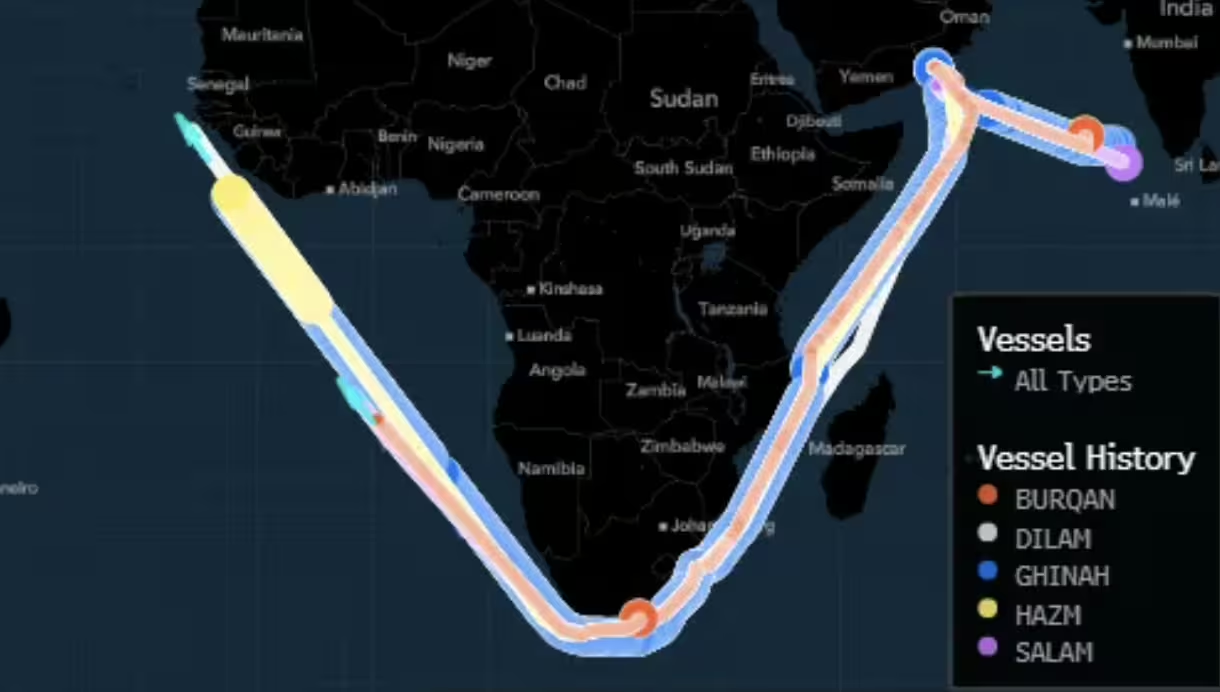
- Oil corridors: About 40 tankers crossed Hormuz’s southern deep-water channel on Friday night carrying roughly 16 million barrels, Axios reported, citing three U.S. officials. Reuters reported that Saudi tankers increasingly switched off tracking signals on Red Sea voyages to reduce exposure to Houthi threats, putting pressure on the Yanbu alternative to Hormuz.
- Internal warning: Former economy minister Ehsan Khandouzi was quoted warning that next month could bring a popular uprising and war simultaneously. A circulated image attributed to Mohammad Bagher Ghalibaf’s account criticised responses to meat prices, bonds, housing and wages, declaring: “A frozen foreign policy delivers a frozen economy.”
Between the lines
Hambastegi called the confrontation a comprehensive economic war, Quds described the economy as a field of resistance, and Kayhan urged work, management and no display of weakness. Their mobilisation language sits beside headlines on shortages and incomes, making the economy the central domestic front.
What’s next
Trump’s economic decision is the next formal test. Over the following month, medicine prices, wage demands, jobs data and tanker traffic through Hormuz and the Red Sea will show how pressure is passing through Iran’s economy and regional oil routes.