The latest:
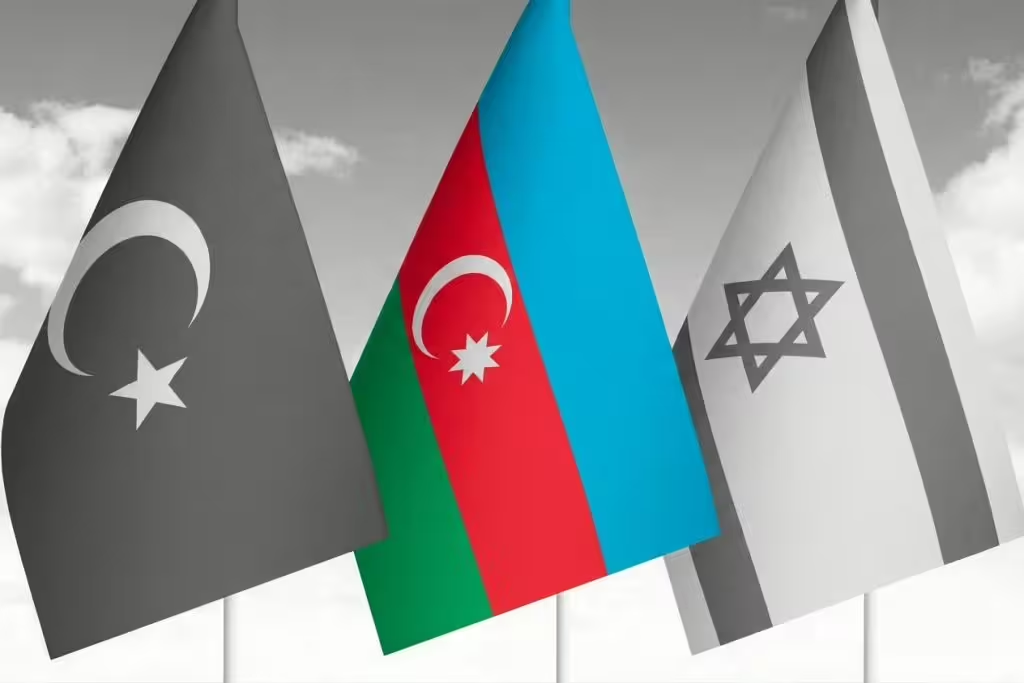
Azerbaijan is working behind the scenes to lower tensions between Israel and Turkey after last week’s Israeli strike on Syria’s Abu al-Duhur airbase, Israeli sources said. Baku previously convened the direct Israeli-Turkish talks that produced a working deconfliction mechanism in Syria, and officials there now want that channel revived to prevent a miscalculation between two of Azerbaijan’s own allies.
Details:
- The mediator: Israeli sources said Azerbaijan is acting covertly to calm the crisis, and that Baku is alarmed because both Israel and Turkey are its allies. A source familiar with the matter said the Azerbaijanis want tensions reduced immediately to avoid any miscalculation that could escalate the confrontation.
- The precedent: President Ilham Aliyev opened the direct Israel-Turkey channel a year and a half ago. In April 2025, a Turkish delegation led by intelligence chief Ibrahim Kalin and an Israeli team led by then-national security adviser Tzachi Hanegbi met in Baku, agreeing on an operational deconfliction mechanism in Syria that has since proven effective.
- Baku’s own stake: Azerbaijan is already sending humanitarian aid to Syria, wants to normalize relations with Damascus, and views it as a potential energy market. That interest gives Baku a direct reason to prevent an Israeli-Turkish clash, according to sources familiar with its thinking.
- The Azerbaijani message: An Azerbaijani official conveyed the message bluntly, according to a source familiar with the exchange: “You and Turkey are our friends.” The official warned of the consequences if the two allies came to blows and pressed for an immediate de-escalation.
- The American track: Washington is also working quietly to cool the crisis, but Israel visibly lacks confidence in US special envoy Tom Barrack, whose interview remarks drew an unusual public response from Defense Minister Israel Katz on Saturday. Barrack said Tuesday that Washington is building a mechanism to prevent conflict between Israel, Turkey and Syria.
- The trigger: Israel bombed Abu al-Duhur airbase near Idlib on Tuesday, claiming Damascus was about to let Turkish forces deploy there. Syria condemned the strike and Turkey denied any deployment plans. Ankara subsequently issued an arrest warrant and a red notice against Prime Minister Benjamin Netanyahu.
- The Syria channel: Mossad chief Roman Gofman met Syrian Foreign Minister Asaad al-Shaibani on Sunday, a source told i24NEWS, describing the meeting as good. Israeli sources said the encounter was productive despite Shaibani’s statement that contacts had been suspended after the airbase strike.
- Damascus’s position: Shaibani told Reuters on Saturday that Syria expects security-agreement talks to resume soon and urged Israel to seize what he called a historic opportunity. He said Syria does not currently trust Israel but sees no alternative to engagement, and no date has been set.
- The unresolved deal: Shaibani said the two sides had agreed on paper on almost everything early this year: a halt to Israeli strikes tied to withdrawal from territory seized after Assad’s fall, plus security zones near the border including a UN-only buffer. He accused Israel of evading implementation.
- The Turkish factor: Turkey plans to deploy air-defense systems at the struck airbase, according to reports Saturday, raising Israeli concern that its freedom of operation in Syria and its air corridors toward Iran could be constrained. Shaibani said Damascus relies on Turkish military training and will not give it up.
Background:
Israel seized territory in southwestern Syria and struck dozens of military sites after Assad’s fall in late 2024. Washington has pushed for more than a year for a security agreement between Israel and President Ahmed al-Sharaa’s government, without result.
Between the lines:
Baku’s leverage rests on something Washington currently lacks: standing with both parties. Israel’s public friction with Barrack, and Shaibani’s insistence that any US mechanism must halt strikes rather than entrench Israel’s presence, leave the American track contested by both sides. Azerbaijan’s 2025 mechanism, by contrast, was built by the two militaries themselves and has held.
What’s next
Watch whether Israeli-Syrian security talks resume and whether a date is set, whether Turkey proceeds with air-defense deployment at Abu al-Duhur, and whether Baku convenes a new Israeli-Turkish meeting.