The latest:
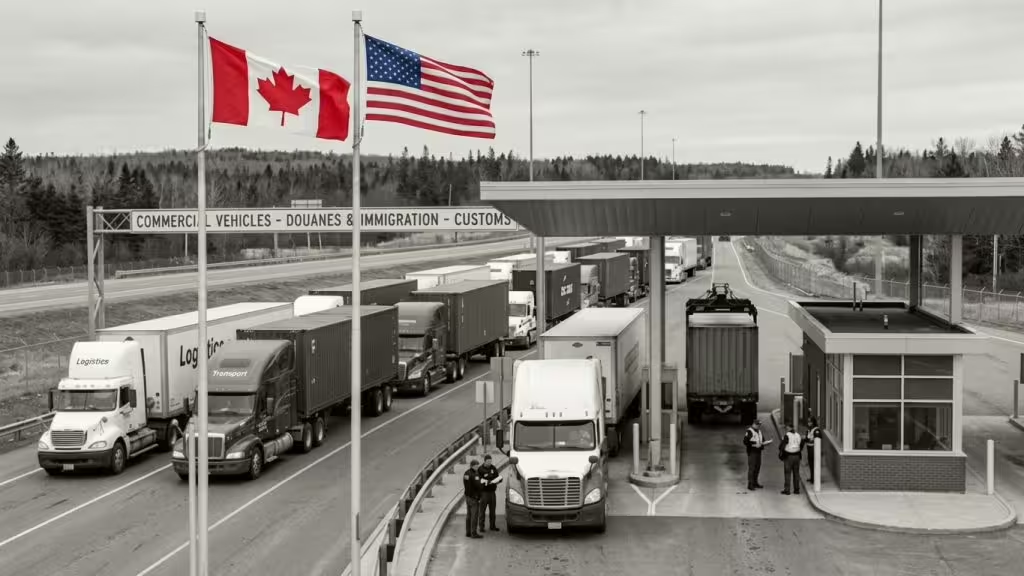
Duties of 50% took effect just after midnight Saturday on close to $20 billion of Canadian exports, from cheese and cement to clothing and hockey equipment, after last-minute talks in Washington broke down. US Trade Representative Jamieson Greer said Canada walked away from terms agreed earlier in the week. Prime Minister Mark Carney suspended negotiations and promised matching tariffs on American goods.
Details:
- The scope: CNBC reported the new tariffs hit roughly $20 billion in Canadian goods, slightly more than 5% of Canada’s exports to the United States, layered on top of existing US duties on steel, aluminum, autos and lumber. The affected list includes alcohol, dairy, cement, clothing, fishing rods and hockey sticks.
- The legal basis: The measure rests on Section 338 of the Tariff Act of 1930, a Depression-era provision never previously used, according to the New York Times, which reported the duties could face legal challenges in the coming weeks. A Supreme Court ruling in February struck down most of Trump’s tariffs but left these statutes untouched.
- Washington’s case: Greer said the US had offered Canada the best treatment of any major exporter to the American market, and that new Canadian demands upset a delicate balance reached over recent days. He called it a lost opportunity for Canada to partner with what he described as the fastest-growing G7 economy.
- Ottawa’s case: Carney said the American side introduced last-minute changes that were unfair, uneconomic and cast doubt on the credibility of any agreement. He said negotiators had made important progress but not enough to meet Canada’s objectives, and that Ottawa would act to protect its workers and companies.
- The deal that died: Sources cited by the New York Times said the draft would have cut steel and aluminum duties from 50% to 25%, but only on a limited quota, with the rest still taxed at 50%. Auto tariffs would have fallen to 15%, which executives and analysts said would still leave Canadian assembly plants unprofitable.
- What Washington wanted: US negotiators pressed eight provinces to end the boycott blocking American wine and spirits from state liquor systems, demanded Canada drop its retaliatory tariff on American cars, and sought changes to how US dairy enters Canada’s tightly controlled market. Canada wanted relief on softwood lumber duties dating back decades.
- Business warning: Canadian Chamber of Commerce head Candace Laing called the outcome a knockout blow to North American competitiveness, saying Americans will see costs rise while Canadians see customers, investment and small businesses disappear. US automakers are warning of a hard hit after exports to Canada fell 23% last year.
- Canadian politics: A recent Leger poll found 56% of respondents opposed further Canadian trade concessions. Ontario Premier Doug Ford backed the walkout, saying all options must be on the table. British Columbia’s David Eby said Canada would keep fighting; Alberta’s Danielle Smith urged Carney to return to the table.
- No next round: A senior Trump administration official said no further talks are scheduled, and that Trump would be given options to rebalance the playing field if Canada retaliates. The impasse is expected to complicate the broader negotiations to renew the US-Mexico-Canada free trade agreement.
Background:
Relations have deteriorated sharply since Trump returned to office, targeting Canada with tariffs and repeatedly suggesting it become the 51st state. Carney was elected on a promise to stand up to Washington and has pursued new partnerships in Asia and Europe.
Between the lines:
Carney’s walkout puts Canada on a path no major US ally has taken: Britain and the European Union accepted smaller deals rather than refuse permanent tariffs outright. The polling and the cross-party premiers’ support suggest domestic politics reward resistance, even as the chamber of commerce warns the cost lands on households and small firms on both sides of the border.
What’s next
Watch the size and timing of Canada’s dollar-for-dollar retaliation list, the legal challenges expected against the Section 338 duties, and whether the USMCA renewal talks can proceed with no further bilateral meetings scheduled.