Key Points
- Israeli and Lebanese reports point to preparations for broader action around Ali al-Taher near Nabatieh.
- High ground overlooking key routes is paired with an extensive Hezbollah tunnel and military complex.
- Control could deny Hezbollah a fortified position and expand Israeli leverage north of the border.
The latest
Israeli preparations for possible expanded operations in southern Lebanon are increasingly centered on the Ali al-Taher Heights, where reports describe plans to establish full control without an official Israeli announcement approving a large-scale operation or setting a timetable. Israel Hayom cited Lebanon’s Al Jadeed as linking the timing to Washington’s position. Ynet cited a Lebanese security official saying the United States had told Beirut it could not prevent an Israeli operation there, while seeking to limit its scope and civilian casualties.
Details
- Strategic terrain: Ali al-Taher rises near Nabatieh and faces the Beaufort Castle area, giving forces on the heights observation advantages over surrounding approaches. The position also overlooks movement corridors toward the Litani River and Iqlim al-Tuffah, supporting surveillance, fire control and monitoring of military movement.
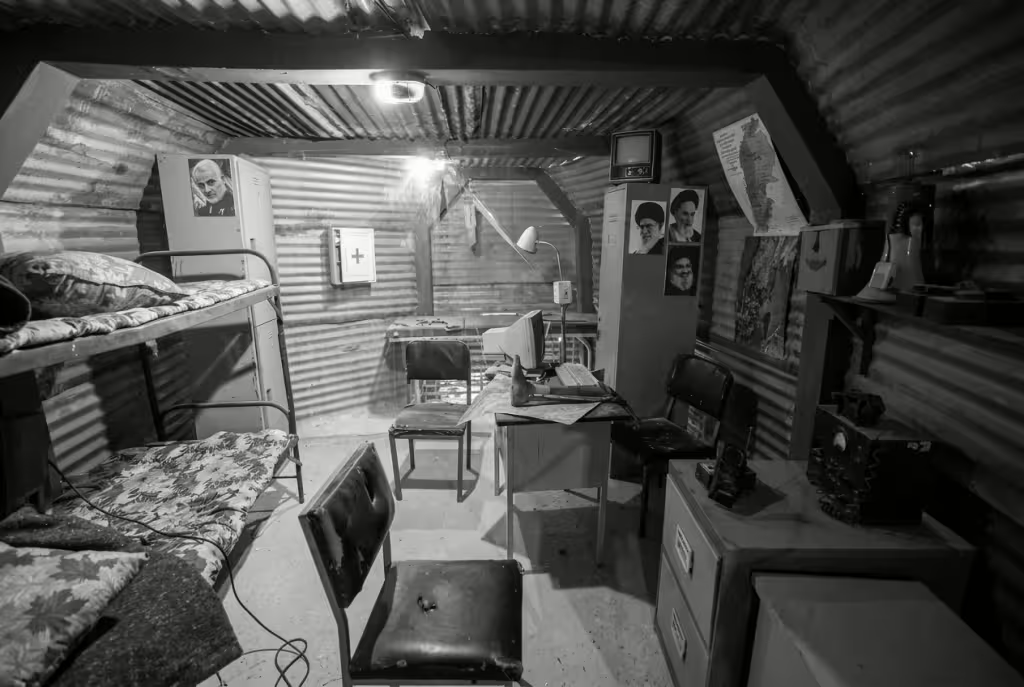
- Underground network: Israeli, Lebanese and Arab media describe fortified Hezbollah tunnels and military infrastructure beneath the heights. The underground complex is central to the area’s military value because it combines protected facilities below ground with a commanding position above it.
- Israeli objective: The reported aim extends beyond taking the surface. Neutralizing the infrastructure would require identifying concealed entrances, tunnel sections and protected facilities, explaining the focus on full control rather than another limited strike or temporary advance.
- Operational challenge: Holding a hilltop does not necessarily eliminate forces or infrastructure underneath it. Entrances can remain hidden, underground sections may survive bombardment, and parts of a network can potentially continue operating after surface positions are lost, making clearance different from airstrikes alone.
- Continuing pressure: Israeli strikes and military activity around Ali al-Taher have continued despite earlier reports of advances near the heights. That persistence keeps the sector an active operational focus and underscores the distinction between surface gains and dismantling underground infrastructure.
- US constraint: Walla cited an Israeli security source saying friction with Hezbollah around Ali al-Taher was increasing while US pressure tied to Israeli-Lebanese negotiations was restricting Israel’s freedom of action. The account aligns with Washington’s effort, described by the Lebanese official, to narrow any operation and reduce civilian casualties.
Between the lines
Ali al-Taher’s significance lies in the combination of elevation and underground fortification, not in another commanding position alone. For Hezbollah, losing a major underground node near Nabatieh could weaken infrastructure protecting movement and military activity deeper in southern Lebanon. For Israel, clearing it would require a substantially different operation from airstrikes or temporary surface advances.
What’s next
The clearest next indicators will be additional Israeli troop movements in the sector, intensified strikes on tunnel entrances and access routes, or evacuation warnings for nearby communities. Political authorization for expanded ground action would mark the decisive shift from reported preparations toward implementation.