The latest:
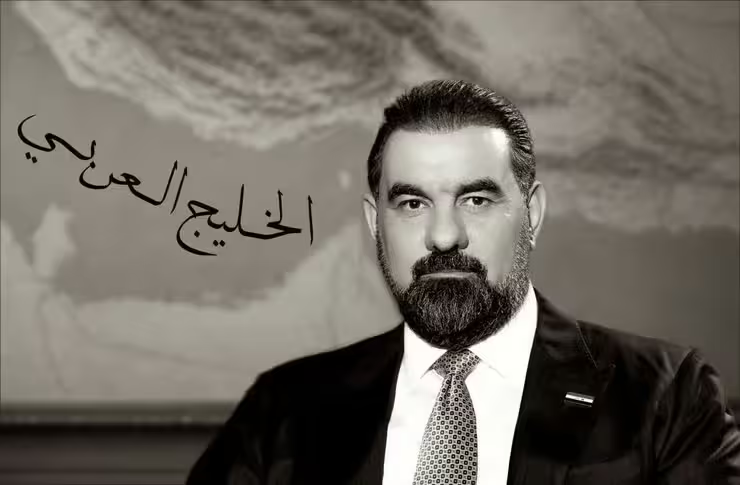
A photograph posted from Baghdad by Iranian parliament speaker Mohammad Bagher Ghalibaf, taken in front of a Gulf map and captioned Persian Gulf, triggered a two-day online fight over the waterway’s name. Iraqi parliament speaker Haibat al-Halbousi replied with a near-identical photo captioned Arab Gulf and the hashtag Arab Gulf. Iranian officials have been visiting Iraq repeatedly in recent weeks.
Details:
- The sequence: Ghalibaf, in Iraq for a three-day visit, published the post on X on Wednesday evening, its first day. Al-Halbousi’s response came Thursday. The naming dispute is long-running: Iran uses Persian Gulf, the form more common in international bodies’ references, while several Arab littoral states prefer Arab Gulf.
- The official meeting: Hours before the post, the two speakers met and exchanged gifts. According to Iraq’s official news agency, talks focused on strengthening bilateral ties, with al-Halbousi stressing cooperation across sectors and describing Iraq as among the countries most damaged by regional war.
- Hormuz request: Al-Halbousi asked Ghalibaf to secure special status for Iraqi oil exports through the Strait of Hormuz to protect Baghdad’s economic interests, the agency reported. It said Ghalibaf affirmed Iran’s commitment to deeper cooperation, particularly in trade and the economy.
- Online reaction: The exchange spread widely on social platforms, with users splitting between the two officials. One account uploaded an AI-generated video showing al-Halbousi throwing Ghalibaf to the ground in front of a Gulf map, captioning it a lesson he will never forget and asserting Iraq’s Arab roots.
- A commentator’s read: A well-known Iraqi commentator wrote that Ghalibaf posted a photo with no clear purpose beyond the background caption, and that the Iraqi speaker’s reply followed within a short time, describing it as an intended point met by a fast answer.
- Militia deadline: Iraq has set end-September as the deadline for disarming militias, the same period the US-led international coalition formed against ISIS is expected to leave. Some militias have announced dissolution and handed over weapons; others refuse outright.
- July strikes: Washington, with Saudi Arabia, struck Popular Mobilization Forces sites in July, according to the raw account. The New York Times reported roughly 20 Iranian advisers were killed, some Revolutionary Guard members, others technical advisers.
- Ghalibaf’s message: Reports said the Iranian speaker met families of those killed in the recent Saudi-American strikes on the PMF, and was quoted saying the axis of resistance is stronger than ever against global arrogance, and that Iranian-Iraqi unity would never fracture.
- Baghdad’s position: Iraqi Prime Minister Ali al-Zaidi said all political forces agree weapons must be concentrated in state hands, mechanisms for handover are being drafted, and arms outside state control repel investment in a way unacceptable to Iraqis.
- Weapons proposal: Asharq Al-Awsat reported that Ghalibaf discussed proposals in Baghdad to avert a clash between the government and Iran-aligned militias, centered on freezing or concealing heavy weapons, including moving a large share temporarily to Iran pending a future agreement.
Background:
Iran-aligned Iraqi factions operate inside the country and are embedded in official security bodies, while other Iraqi actors reject Tehran’s involvement. Al-Zaidi’s government has spent recent months balancing ties with Iran against its relationship with Washington.
Between the lines:
The naming fight is small next to what surrounds it. Iran’s leverage in Iraq rests on the militias now facing a September disarmament deadline and a departing coalition, which explains the intensity of senior Iranian visits, including Quds Force commander Esmail Qaani, and the proposal to relocate heavy weapons rather than surrender them. Al-Halbousi’s Hormuz request shows the same asymmetry in economic form.
What’s next
The end-September deadline for militia disarmament and the expected departure of the US-led coalition are the two dates to track, alongside whether Baghdad publishes the weapons-handover mechanisms al-Zaidi said are being drafted.