Key Points
- Iraq denies September 30 is the final deadline for armed factions to surrender weapons.
- The shift coincides with Qalibaf’s visit and reported Iranian proposals to prevent confrontation.
- Negotiated integration could preserve the state-control objective while avoiding military conflict.
The latest
Iraq’s government has softened its language on disarming armed factions, explicitly separating September 30 from any final deadline for surrendering weapons. The shift accompanied Iranian Parliament Speaker Mohammad Bagher Qalibaf’s Baghdad visit and reported Iranian proposals intended to prevent a confrontation between Prime Minister Ali al-Zaidi’s government and Tehran-aligned groups. Baghdad is instead emphasizing negotiated mechanisms, gradual disengagement and eventual state control of armed command structures.
Details
- Deadline redefined: Government spokesperson Haider al-Aboudi said September 30 marks the withdrawal of US forces, “not the final deadline for factions to surrender their weapons.” The statement removes factional arms from a fixed public timetable while leaving intact the government’s declared objective of restricting weapons to the state.
- Mechanism dispute: Al-Zaidi said political forces agree on state control of weapons but differ over implementation. He said most involved parties had become convinced of the need to surrender their arms, adding: “There is no problem with this dispute as long as the goal is ultimately achieved.”
- Managed sequence: The prime minister outlined a process beginning with an end to military activity, followed by weapons surrender and the loss of independent mobilization or command powers. Those authorities would move to the federal government through the Popular Mobilization Forces, indicating integration rather than immediate dissolution.
- No military showdown: Al-Zaidi said his government does not intend to enter a military confrontation with any faction over weapons. His position puts negotiations over sequencing and enforcement ahead of coercion, while retaining the stated endpoint of ending independent armed activity and bringing command authority under federal control.
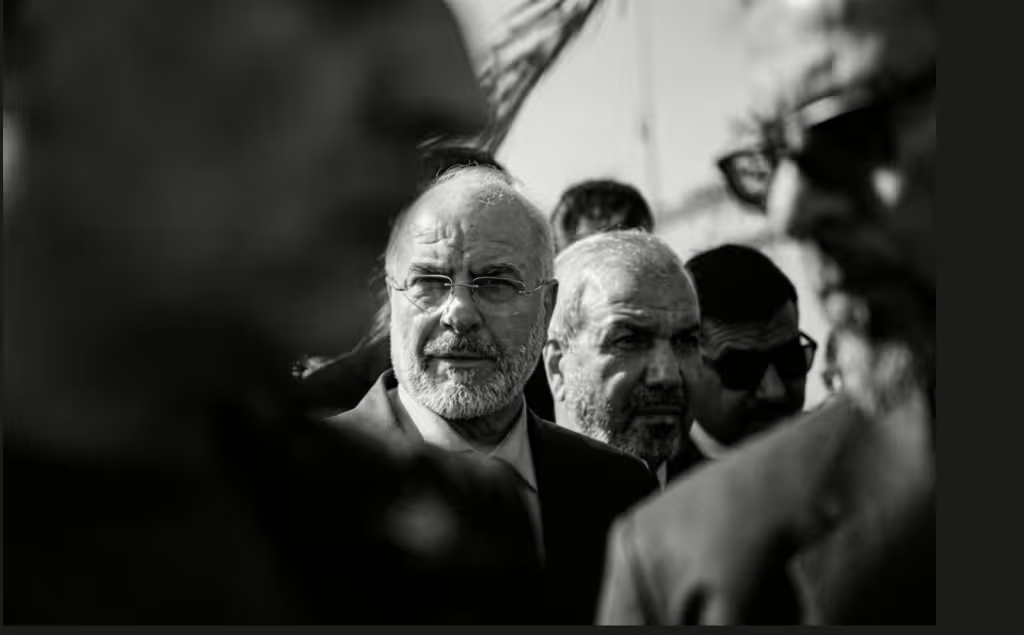
- Qalibaf’s message: Qalibaf arrived in Baghdad on Wednesday as pressure over weapons grew from factions and figures in the ruling Shiite Coordination Framework. He praised Iraq’s armed “resistance” as an important element of global power and said Iraqi-Iranian relations were moving toward a “new order” free from foreign interference.
- Iranian options: Sources said Qalibaf carried proposals aimed at preventing the arms dispute from escalating into direct conflict. Options included “freezing” or concealing heavy weapons until a broader political settlement determined their future. Tehran and Baghdad have not officially announced the proposals, which remain presented as reported options rather than adopted policy.
Between the lines
The central change is in timing and method, not Baghdad’s stated destination. By replacing a fixed deadline with negotiations and phased disengagement, the government gives factions room to negotiate what surrender means in practice. It also creates a route for al-Zaidi to pursue state control without the confrontation the reported Iranian options sought to avert.
What’s next
The next test is whether Baghdad announces a new disarmament timetable or adopts a mechanism requiring heavy weapons to be transferred, frozen or concealed. The decision will be measured against the US force withdrawal set for September 30 and any government rules issued around that date.