Summary
Key Points
- Iran’s president and parliamentary speaker called for ending the six-month war and rebuilding an economy battered by pressure.
- Talks have stalled over Strait of Hormuz traffic as Washington intensifies sanctions and its naval blockade.
- Currency losses and rising hardship are sharpening concerns among moderate leaders about Iran’s domestic stability.
The latest
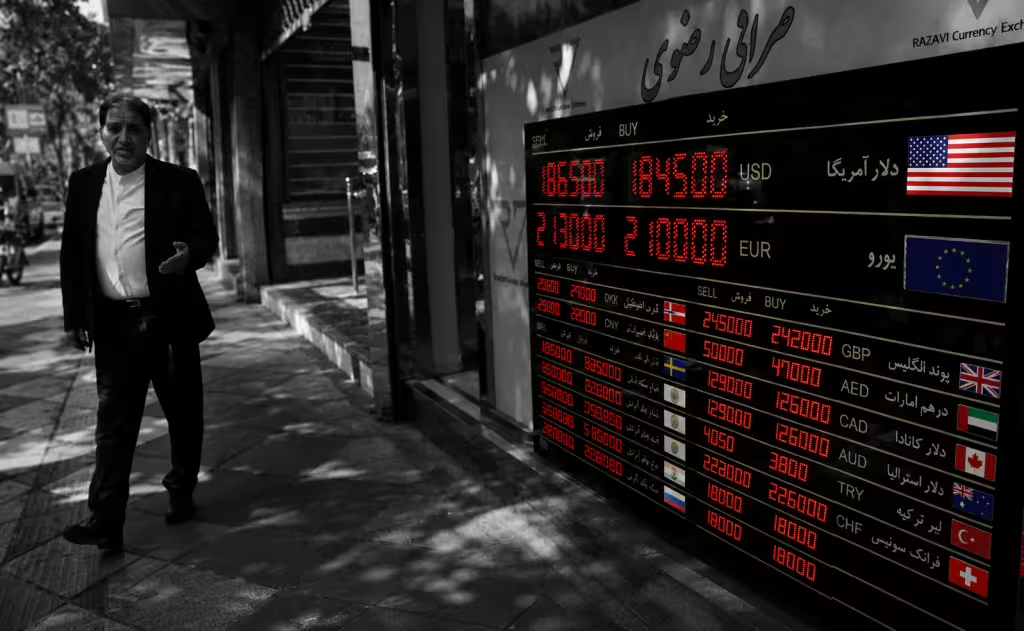
President Masoud Pezeshkian and parliamentary speaker Mohammad Bagher Ghalibaf publicly urged Iran to prioritize ending the war and shoring up its economy, challenging hard-liners advocating a more defiant course. Their comments came with diplomacy stalled and the Trump administration increasing economic pressure through sanctions and a naval blockade of Iranian ports. The conflict and restrictions have further weakened the currency and made daily necessities harder for Iranians to afford.
Details
- Peace appeal: Pezeshkian said Friday that every war must eventually end. He argued Iran should demonstrate strength and dignity while it still has leverage, tell the world it has won, and bring the conflict to a close. The statement placed a negotiated exit at the center of Iran’s internal political debate.
- Economic warning: Ghalibaf said military strength could not deliver progress while citizens struggled and the country lacked financial circulation and economic growth. “As someone who has experienced war, we understand the true value of peace,” he said, adding that Iran could not achieve security while ignoring its economic crisis.
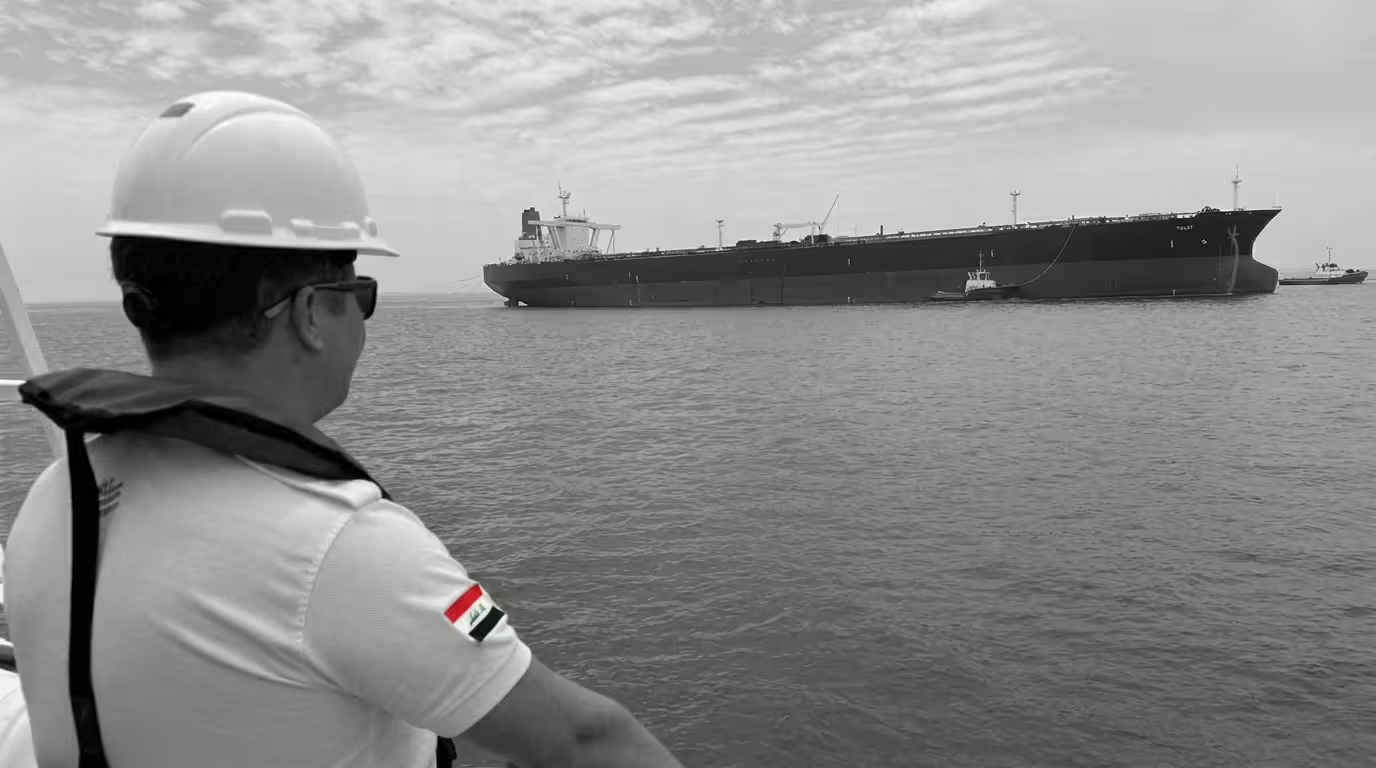
- Diplomatic breakdown: A memorandum of understanding Trump signed in June to wind down the war collapsed over Iran’s attempts to govern Strait of Hormuz traffic. Talks early this month also stalled after Washington rejected an agreement that did not guarantee unimpeded passage. Both efforts faced U.S. criticism for being too favorable to Tehran, increasing pressure on the administration to harden its position.
- Competing demands: Iranian hard-liners recently set tough demands for reopening the strait and remain deeply distrustful of Washington. They have used the lull in fighting to prepare for further rounds. The Trump administration is seeking deep concessions and again called this week for the regime’s collapse. “They would love to make a deal, but they’re not ready to make the right deal,” Trump said Friday.
- Escalation risk: Iran analyst Hamidreza Azizi said Trump appeared ready to use Iran’s economic troubles to seek deeper concessions, while that pressure made a humiliating Iranian retreat harder to avoid, creating a “vicious circle.”
Between the lines
Moderate leaders see economic relief as inseparable from national security: continued conflict is draining household purchasing power and could undermine stability. Yet stronger U.S. pressure raises the political cost of concessions for Tehran, even as the country’s economic need for an exit becomes more acute.
What’s next
The next concrete indicator will be whether Tehran and Washington resume talks and decide how Strait of Hormuz traffic will be governed. Any renewed framework must address Washington’s demand for unimpeded passage, the issue that derailed the June memorandum and early-August negotiations.