The latest:
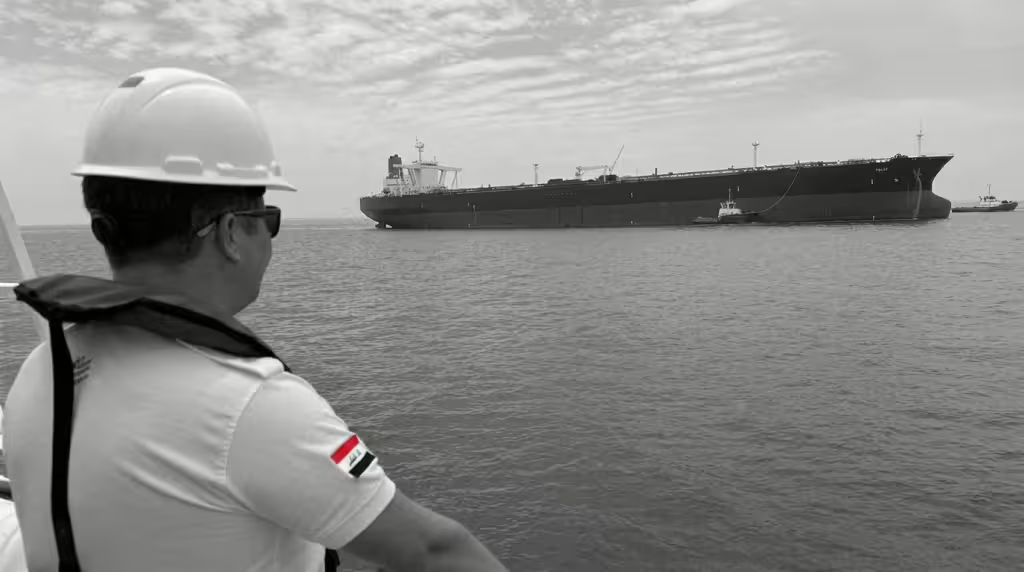
A number of Iraqi crude tankers have been granted special permission to transit the Strait of Hormuz, Iran’s official IRNA news agency said Saturday, after what it described as repeated requests from Baghdad through various channels. Iraqi President Nizar Amidi confirmed Tehran had eased passage for ships carrying Iraqi oil in recent days, while cautioning that the file remains unresolved.
Details:
- The Iranian framing: IRNA said Tehran allowed some Iraqi tankers through despite what it called intense military activity and security problems in the strait caused by American hostilities. The agency said securing the permit was among Baghdad’s principal demands during the three-day visit of Iranian parliament speaker Mohammad Bagher Ghalibaf.
- Iraq’s caution: President Nizar Amidi told the eighth Baghdad Dialogue conference that Iran had facilitated the passage of ships carrying Iraqi oil recently, and that Iraqi officials had discussed continued exports through the waterway with the Iranian side. He described the issue as “still complicated.”
- The visit: Ghalibaf arrived at Baghdad International Airport on Wednesday for a three-day trip beginning 19 August, meeting a number of senior Iraqi officials. Economic, security and regional files topped the agenda, according to the reporting on the visit.
- The export collapse: Iraqi seaborne exports averaged about 1.31 million barrels per day over the first seven months of 2026, against roughly 3.33 million in the same period of 2025 — a drop of close to 60%, according to official estimates.
- The floor and rebound: Exports hit their lowest point in May 2026 at about 98,000 barrels per day, down 97% year-on-year. July seaborne shipments recovered to roughly 39 million barrels from about 15 million in June, a monthly gain exceeding 153%.
- Why Iraq is exposed: Reuters ranks Iraq among the countries hardest hit by the closure of Hormuz, a corridor that carried around a fifth of global oil and LNG supply before the war. Iraqi production stood near 4 million barrels per day before the conflict began.
- The alternatives: Prime Minister Ali al-Zaidi said Friday that Iraq is working to raise exports through Turkey’s Ceyhan and to open routes via Syria’s Banias and Jordan’s Aqaba. Reuters notes the Iraq-Turkey pipeline to Ceyhan, currently the only operating export line, carries just 170,000 barrels a day.
- The timeline problem: Sources told Reuters the Banias pipeline project could take about four years and cost no less than 15 billion dollars, which is why short-term guarantees for crude passage through the strait carry outsized weight for Baghdad.
- The denial: Iraq’s oil ministry moved quickly to deny foreign and local agency reports about crude shipments being exported to Turkey via Iran, insisting exports follow ministry and SOMO mechanisms through outlets disclosed in advance, and urging media to rely on official sources.
- The disputed claim: Iran’s semi-official Fars news agency reported on 19 August that Iraqi oil had begun moving by rail through Kermanshah toward Turkey and Afghanistan, with an initial shipment of 50,000 tons.
Background:
The United States and Israel began a war on Iran on 28 February 2026; Tehran struck Israeli and American targets before an April ceasefire. Washington and Tehran signed a Hormuz navigation memorandum on 18 June, but implementation stalled over security disputes, and attacks resumed between 8 and 24 July.
Between the lines:
The permit is discretionary, not contractual — Tehran granted it to some tankers after repeated Baghdad requests, days after Ghalibaf’s visit, which is why Amidi calls the file complicated rather than settled. With one pipeline moving 170,000 barrels a day and Banias four years and 15 billion dollars away, Iraq’s leverage is thin. The June memorandum already showed that Hormuz commitments can stall.
What’s next
Watch whether the permission extends beyond the named tankers, monthly export volumes after July’s 39 million barrels, progress on the Ceyhan, Banias and Aqaba routes, and any revival of the stalled June navigation memorandum.