Key Points
- Used-book sellers are receiving huge mystery orders suspected of supplying physical texts for AI model training.
- ISBN preferences and shipment routes to scanning facilities have intensified concerns that books are cut apart after purchase.
- Record sales are colliding with fears that scarce or inscribed copies could disappear permanently from circulation.
The latest
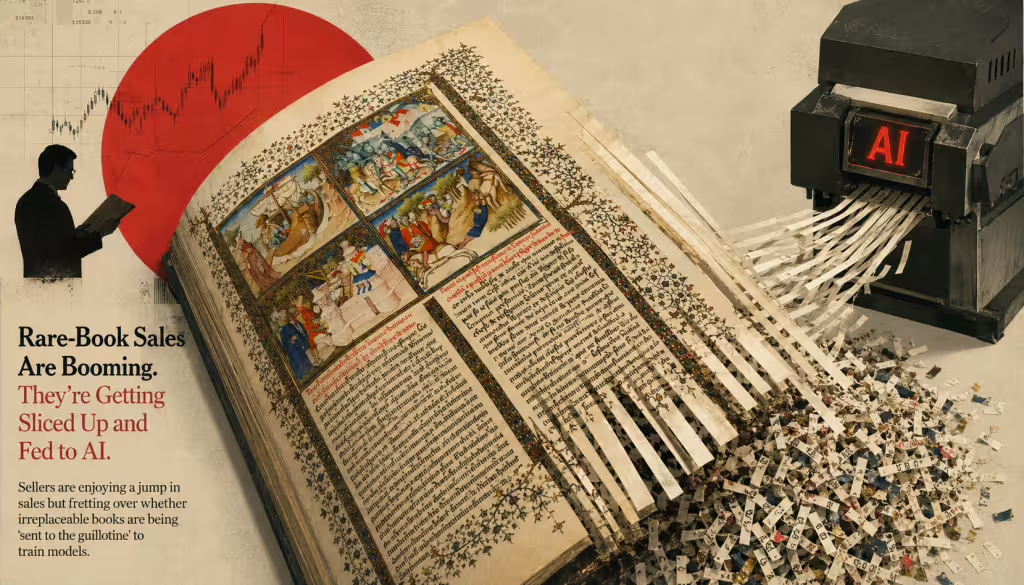
Mystery buyers ordering dozens or hundreds of unrelated titles have delivered a sales windfall to used- and rare-book dealers worldwide, while fueling concern that purchased volumes are being dismantled, scanned and destroyed to feed artificial-intelligence systems. James Payne, a Brooklyn-based dealer, has roughly doubled his revenue from its level at this point in 2025, helped by sales of highly specialized titles through Alibris, Biblio and Amazon.com.
Details
- Unusual buyers: Orders arrived under names including Red Sparrow Project, Blue Finch Project and Green Parrot Project. Buyers selected unrelated subjects, routed purchases through logistics warehouses and did not haggle over prices. Second Story Books, which has 75,000 titles online and more in its Washington-area store, is discussing direct sales with one bulk buyer.
- ISBN clue: The buyers’ strong preference for books carrying an International Standard Book Number helped dealers connect the orders with large language model training. ISBNs uniquely identify editions published since the late 1960s and allow AI companies and data vendors to track which books they have ingested.
- Shipment tracking: A Pacific Northwest seller hid trackers in two shipments. One traveled through an Alibris warehouse in Ohio to an Illinois complex matching a company with a large book-scanning business. The other passed through Wisconsin and northern Las Vegas before reaching Mexicali, Mexico, near a recycled-paper manufacturing facility.
- Amazon facility: 404 Media tracked another shipment to Amazon’s VGT3 facility in Las Vegas. An Amazon-employee forum post said workers there scan barcodes and some cut books. Amazon said it buys books through commercial channels to help develop and improve products and services used by customers.
- AI legal history: Court filings in a 2024 authors’ copyright case said Anthropic bought millions of physical books, removed their bindings for scanning and destroyed them, while also using pirated digital copies. A federal judge ruled the purchased books qualified as fair use partly because digital versions replaced destroyed print copies. Anthropic agreed to pay $1.5 billion to settle claims tied to pirated works. It said its acquisition programs do not buy or destroy rare or antiquarian books.
- Seller limits: Texas dealer Mike Floreani recorded sales highs for three consecutive months as bulk orders cleared “dead stock” that had sat for years. Portland dealer Scott Brown refused to send an inscribed Ray Bradbury volume to a buyer whose shipping information included “SCAN,” arranging instead for another seller to supply an unsigned copy.
What’s next
Second Story Books’ talks on a direct sale to one bulk buyer are the next concrete decision point, including whether the shop completes the transaction.