Key Points
- Iran's president publicly urged ending the war while Tehran still holds strength and dignity.
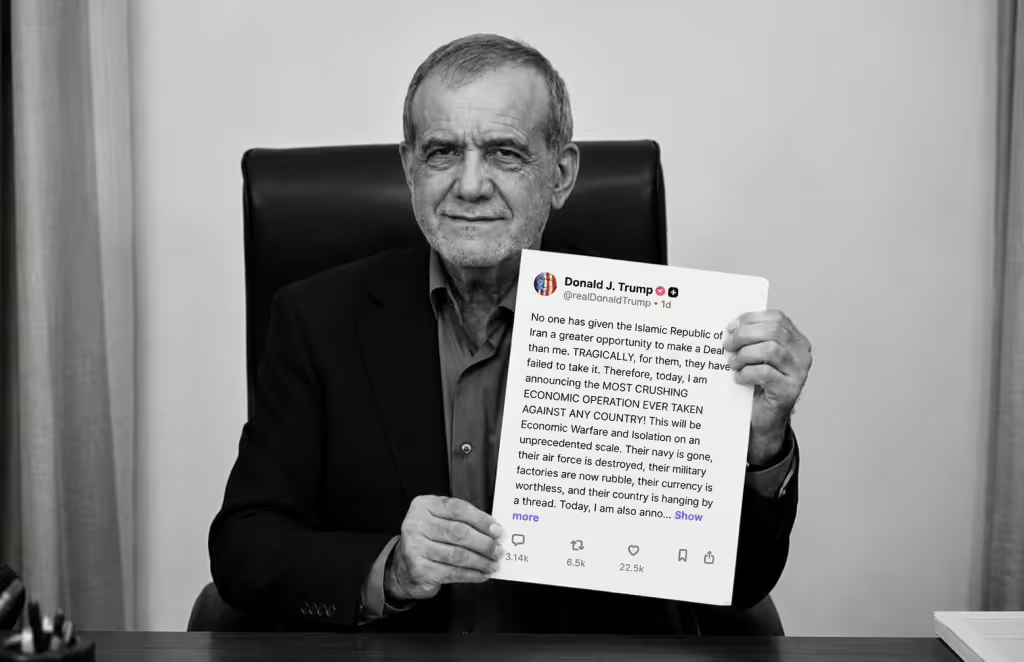
- Trump said a day earlier that Iran squandered an unprecedented chance at a deal.
- The split exposes a leadership divided between economic rescue and prolonged confrontation.
The latest:
Ending the war with the United States now, while Iran still retains power and dignity, is the course Iranian President Masoud Pezeshkian publicly urged, putting him at odds with hardliners pressing to keep fighting. His argument lands a day after Donald Trump said Tehran had repeatedly refused chances at a deal, and alongside a widening economic squeeze on the Iranian currency.
Details:
- Pezeshkian’s message: The Iranian president said it would be better to end the war today, while the country retains strength and can present the outcome as a victory rather than a defeat. He did not specify terms, a mechanism, or any channel through which talks would resume.
- Trump’s warning: On August 20, Trump said he had given Iran an unprecedented opportunity to reach a deal and that Tehran failed to take it. The remarks were posted on Truth Social and framed the collapse of diplomacy as Iran’s own choice.
- Economic squeeze: Trump announced what he described as a massive economic operation against Iran, warning of consequences for countries and institutions that provide Tehran with financial lifelines. No list of targeted entities or a start date accompanied the announcement.
- The damage at home: Bloomberg reported that the conflict has worsened Iranian inflation and pushed the currency to record lows against the dollar. Those pressures, according to the same reporting, predated the war and have deepened since the ceasefire collapsed.
- Hardliners resist: Bloomberg reported that Iranian military figures believe the country is winning and should keep fighting. An IRGC official announced a shift toward what he called an “offensive doctrine,” signaling escalation rather than any move toward negotiations.
- The rival camps: Bloomberg places Pezeshkian in the faction that has prioritized economic recovery and a return to diplomacy since the ceasefire broke down. His opponents inside the security establishment see prolonged confrontation as the safer path for the system.
- An analyst’s reading: Bloomberg Opinion columnist Marc Champion assessed that continued war may serve the IRGC and other hardliners, because wartime conditions help the leadership contain domestic pressure and justify tighter internal controls.
- Champion’s assessment: He also judged that IRGC leaders expect the confrontation to run long, while the government still lacks effective answers to inflation and the structural economic problems that preceded the fighting.
Between the lines:
Two facts already on the record point the same way: Pezeshkian argues Iran should exit while it can still call the outcome a victory, and the currency is at record lows. That framing concedes the clock is working against Tehran. Trump’s claim of missed opportunities and Champion’s assessment that war suits the IRGC describe the same deadlock from opposite ends — one side measuring cost in economics, the other in regime cohesion.
What’s next
Watch Treasury Secretary Scott Bessent’s expected plan to economically isolate Iran and its trading partners, and whether Pezeshkian’s push for diplomacy shifts a leadership Bloomberg describes as increasingly oriented toward a long war.