

Key Points
- Bessent says Washington will impose its toughest sanctions on Iran and coordinate economic isolation with allies.
- The move follows an expired 60-day ceasefire and a blockade that failed to reopen the Strait of Hormuz.
- Pressure on Iran’s trading partners could reshape energy flows and test Washington’s economic relationship with Beijing.
The latest
The United States will impose what Treasury Secretary Scott Bessent called the toughest sanctions against Iran, pairing them with a naval blockade and a campaign to enlist allies in economic isolation. Bessent said he would detail Washington’s plan at a Monday news conference, as negotiations to end the conflict remain at an impasse and the 60-day ceasefire between the two sides expired this week.
Details
- Allies pressed: Bessent told CNBC Washington would approach every ally for “the greatest co-ordinated economic isolation in the history of the world”, telling governments they were either with the US or against it. President Donald Trump promised “economic warfare and isolation on an unprecedented scale” and warned governments and financial institutions supporting Iran that they would face economic consequences.
- Blockade strategy: The stronger measures follow the failure of a US naval blockade in the Strait of Hormuz to force Tehran to reopen the waterway. Bessent described the approach as a “one-two punch” of blockade and sanctions, arguing maximum pressure could, for now, reduce the likelihood of a large-scale war. He also said the campaign would collapse Iran’s regime.
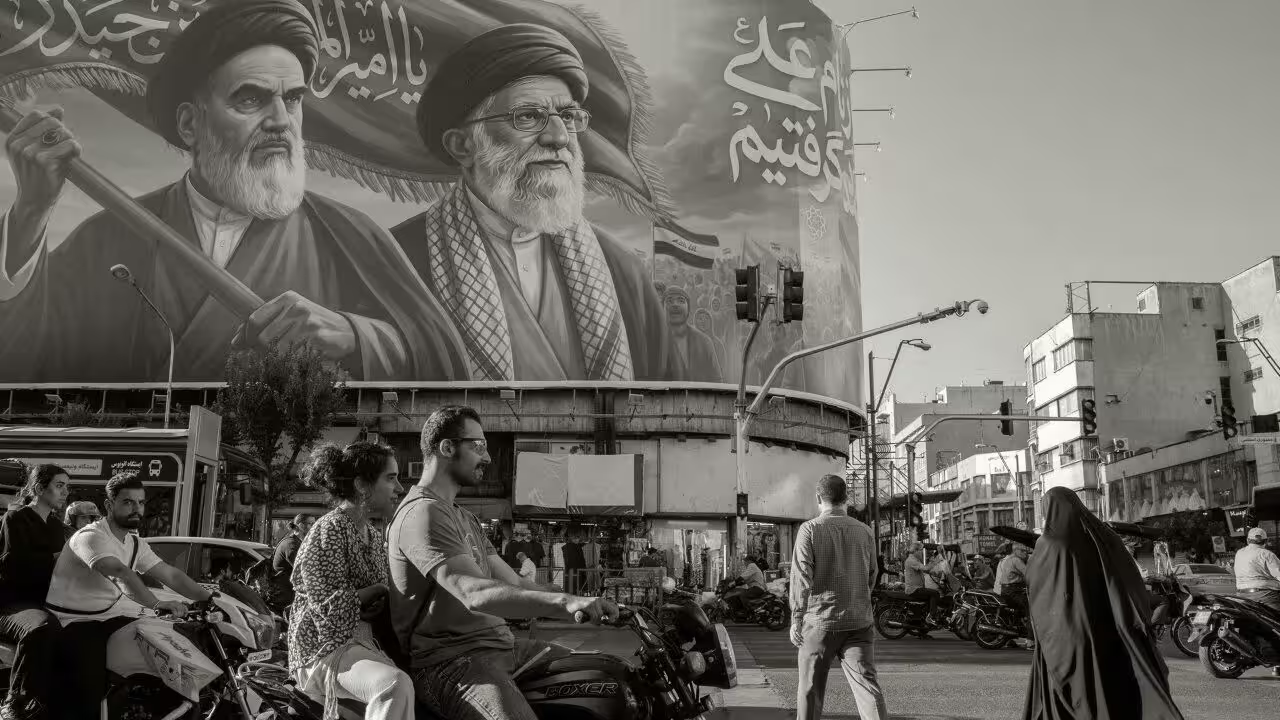
- Iranian economy: Iran’s central bank governor said the country was not exporting any oil, while the economy faces runaway inflation and a plunging currency. More than 6,000 sanctions cover the financial, banking, aviation, energy and cryptocurrency sectors. US economic pressure dates to Jimmy Carter’s administration after the 1979 seizure of the American embassy in Tehran.
- UAE cuts ties: The UAE announced this week that it was severing all trade and financial ties with Iran after Tehran fired two missiles at the Emirates. Foreign Ministry strategic communications director Afra Al Hameli said the UAE was committed to safeguarding the integrity of the international financial system in line with international law and the highest global standards.
- Foreign currency: Tehran depends on Turkey, India and China for access to foreign currency, placing Beijing’s economic links with Iran under scrutiny. Bessent said China obtains 50 per cent of its energy from inside the Gulf and would benefit from reopening the strait and lowering energy prices. Beijing remains a major importer of Iranian crude and one of the few governments willing to bypass sanctions.
- China options: Washington has sanctioned China’s independent “teapot” refineries but has not taken escalatory action against major Chinese banks. Such measures could provoke Beijing before President Xi Jinping’s White House visit next month and ahead of Chinese rare-earth export restrictions due two months later. Bessent did not say whether China would be a focus, saying many conversations were best held privately.
What’s next
Bessent’s Monday news conference will set out the sanctions plan and show whether Washington will target major Chinese banks. Xi visits the White House next month, two months before China’s rare-earth export restrictions take effect.