The latest:
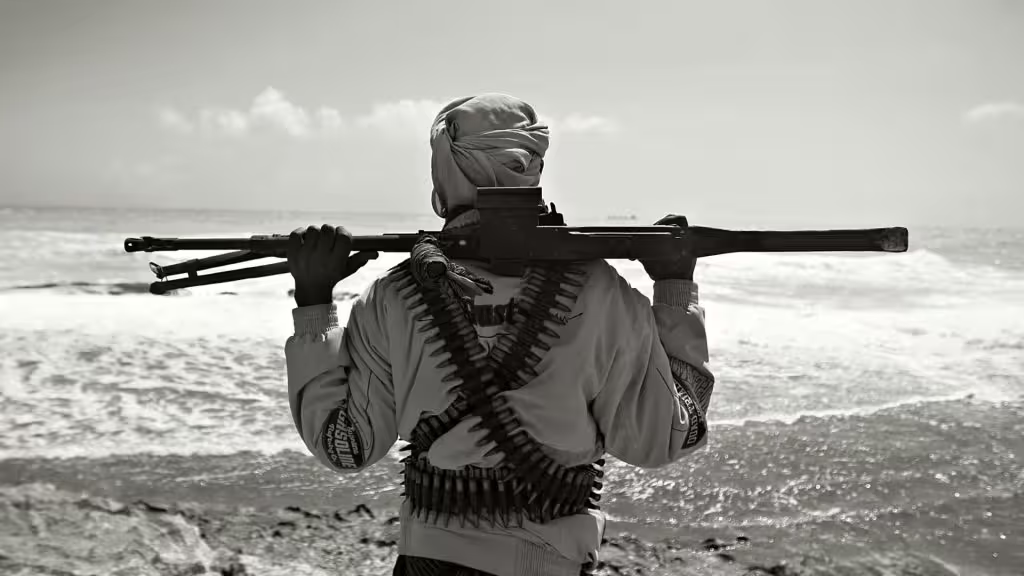
Somali pirates boarded and diverted a tanker suspected of belonging to Iran’s shadow fleet off Yemen on Thursday, the second commercial vessel seized in four days. The UK Maritime Trade Operations centre said six armed men took control of a tanker in the Gulf of Aden and were steering it toward Somalia. Local officials say more than 100 crew are currently held hostage.
Details:
- The vessel: The tanker Sebo 1 flies the Eritrean flag but is most likely part of Iran’s covert oil-export fleet, according to TankerTrackers.com. The tracking firm said the ship regularly delivers fuel to an oil terminal at Yemen’s Ras Issa port, which is controlled by the Iran-backed Houthi militia.
- The seizure: Colonel Mohamed Jama, a senior officer in Puntland’s marine police, said seven armed pirates boarded Sebo 1 roughly 130 nautical miles off the Yemeni coast and rerouted it into Somali waters. He said the condition of the 20-member crew remains unknown.
- The other ship: Abshir Hashi Ali, director general of the ports ministry in neighbouring Galmudug state, said pirates seized the Cameroon-flagged cargo vessel Lutof off semi-autonomous Puntland days earlier. He said the ship was carrying weapons and was sailing from Turkey to Mogadishu.
- The numbers: Hashi said six ships are currently held by Somali pirates, including the two taken this week, with over 100 crew members aboard as hostages. The Maritime Security Centre documented more than 17 piracy-related incidents in Somali waters and the Gulf of Aden in the first five months of the year.
- The assessment: Ian Ralby, head of the maritime governance non-profit I.R. Consilium’s global group Auxilium, said the most frequent wave of successful piracy attacks in nearly a decade and a half is passing almost unnoticed “because of how bad the wider region’s maritime security situation is.”
- The Houthi layer: The Houthis halted attacks on shipping last year but resumed threatening navigation this summer after declaring a blockade on Saudi Arabia in the Red Sea. On Wednesday the group claimed it had struck eight Saudi oil tankers since late July, three of them in the Gulf of Aden and the Arabian Sea, according to the Houthi-run Saba agency.
- The overlap: A series of attacks near Yemen’s coast has raised suspicion of cooperation between Somali pirates and the Houthis, experts and local officials say. Analysts say the militia has at times supplied technological and military support, and that higher fuel prices now offer both sides a profit motive.
- The airstrike: Hashi said air strikes hit a suspected pirate boat hours after the Lutof hijacking, after the vessel had interacted with the pirates aboard the seized ship. He said at least four people were killed. The source of the strike was not identified.
- Ships still held: Joint Maritime Information Centre data showed four commercial vessels still detained as of 11 August: MT Honour 25 and MV Sward, both taken in April off northern Somalia; MT Eureka, seized in May off Qana port; and MT Asana, hijacked in July off Mukalla.
- Yemen’s limits: Two Yemeni coast guard sources told Erem News that the force contacted international naval units about a possible intervention, since it lacks the capability to operate on the high seas. They said some merchant ships had ignored earlier advisories to embark armed guards.
Background:
Somali piracy peaked around 2010, when hundreds of ships were seized at a cost of billions of dollars to shipping and insurance firms, partly in ransoms. Numbers fell as NATO and EU naval coalitions deployed, vessels sailed farther offshore, and operators added deterrents such as water cannon.
Between the lines:
Two threats now sit on the same sea lane. Vessels rerouting away from the Hormuz conflict take longer courses that, as CNN noted, push them into the pirates’ operating range, while the Houthi blockade already covers Bab al-Mandab. Experts also point to slower-burning drivers: Chinese and Spanish fishing competition eroding local incomes, and thinning maritime patrols that armed gangs exploit.
What’s next
Watch whether international naval forces intervene to track Sebo 1, whether the 20-member crew’s condition is disclosed, and whether the Houthis add new Saudi-linked tankers to their claimed target list.