Key Points
- Masdar and ScottishPower finished installing all 95 foundations at East Anglia Three off England's Suffolk coast.
- The 1.4-gigawatt project, 69km offshore, is due to be fully operational by the end of the year.
- Once running, it is intended to power more than one million British homes and strengthen UK energy security.
The latest:
Abu Dhabi Future Energy Company “Masdar” and ScottishPower have completed a major construction phase at the £4 billion ($5.42 billion) East Anglia Three offshore wind farm project off the English coast. The development is set to become one of the world’s largest offshore wind projects when it becomes fully operational by the end of the year.
Details:
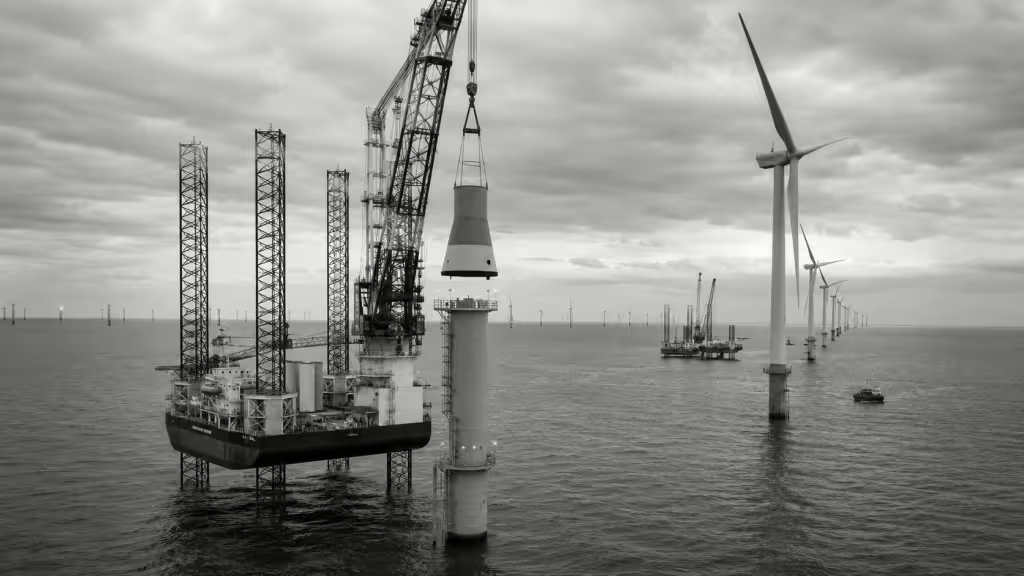
- The structures: Each of the 95 foundations stands 20 metres high, measures eight metres wide and weighs more than 400 tonnes, according to Masdar. They sit on monopiles weighing between 1,200 and 1,800 tonnes, standing 67 to 84 metres tall with a diameter of up to 10.6 metres.
- The engineering claim: Masdar said the monopiles are the largest installed from a jack-up vessel — a type of floating barge — anywhere in Europe. Transition pieces placed on top of the foundations provide levelling and access platforms for the turbines now going in.
- The scale: Charlie Jordan, chief executive of ScottishPower Renewables, pointed to more than 200,000 tonnes of steel anchored into a seabed area he said was close to the size of 43,000 football pitches, calling the achievement “mind-blowing”.
- Masdar’s position: Husain Al Meer, Executive Director of Global Offshore Wind and the UK at Masdar, described the completion of the foundation installation as a “significant milestone and a remarkable engineering achievement”.
- The partnership: ScottishPower is a subsidiary of Spanish utility group Iberdrola. East Anglia Three is the second project under a €15 billion ($17.39 billion) strategic partnership between Masdar and Iberdrola.
- The output: The wind farm is intended to generate 1.4 gigawatts of clean power, enough for more than one million British homes, and to support UK economic growth alongside energy security.
- The policy backdrop: The project lands as the UK government works to expand renewables and cut reliance on fossil fuels, while facing pressure — most prominently from US President Donald Trump — to issue new North Sea drilling licences.
- North Sea decisions: Reports on Monday suggested Prime Minister Andy Burnham was leaning towards approving the Jackdaw gasfield to lift domestic supply, after a consultation closed last week. The government is expected to reject a second field, Rosebank.
Between the lines:
The project’s significance extends beyond its generation capacity, as it reflects the role of UAE investment in supporting Britain’s energy transition and developing large-scale clean infrastructure.
What’s next
Attention will turn to completing turbine installation and bringing the wind farm into full operation by the end of the year. Meanwhile, the British government’s decision on the Jackdaw gasfield is awaited amid reports that Prime Minister Andy Burnham is leaning towards approving it, while the Rosebank oil and gas project is expected to be rejected.