Key Points
- Iran says Qatari forces captured three of its bomber pilots on March 2.
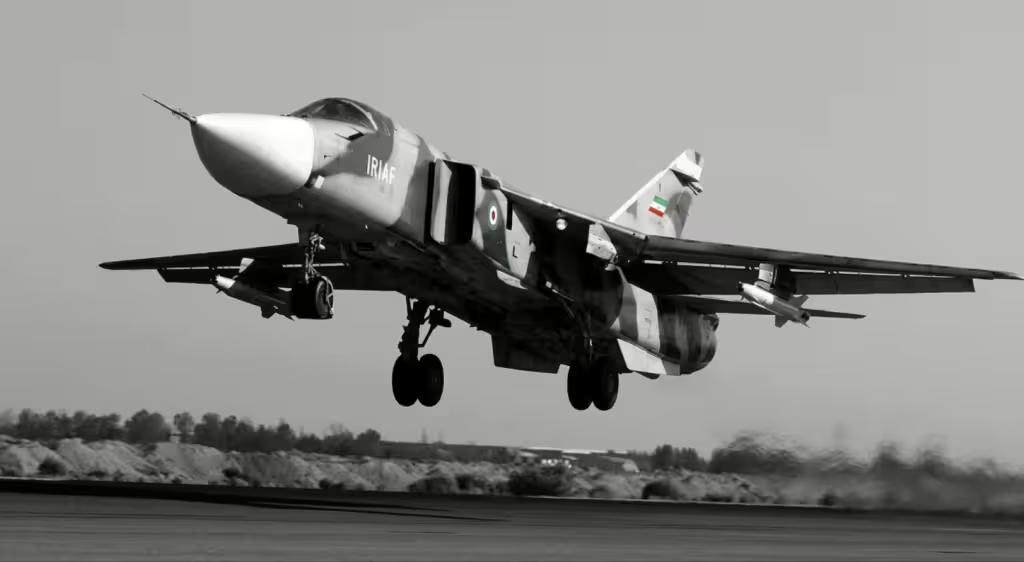
- Qatar announced that day it had shot down two Iranian Su-24 jets.
- The letter is Iran's most specific account yet of the airmen's fate.
The latest:
Three Iranian bomber pilots have been held by Qatar since the second day of the war with the United States and Israel, according to a letter from the commander of Iran’s armed forces missing-persons committee published by Iranian media. Gen. Seyed Mohammad Bagherzadeh asked the International Committee of the Red Cross on Saturday to visit the men, assess their condition and press for their release.
Details:
- The letter: Bagherzadeh wrote that the three were flying Su-24 fighter jets in an operation on March 2, days after the war began, when their aircraft were hit by what he described as enemy defenses. The pilots ejected and survived, he said, before being taken by Qatari authorities.
- The names: The general identified the men as Javad Salehi, Abdolmajid Dashtian and Omran Behraveshian. He added that a fourth pilot, Majid Kazemi, died. Iranian authorities had previously said only that the fate of the airmen was unknown, making the letter their most precise account so far.
- The complaint: Qatar “has not allowed the prisoners to meet or speak with their families or with officials handling their cases,” Bagherzadeh wrote, according to the published letter. He asked the Red Cross to facilitate their release as soon as possible.
- No response: The Red Cross and a Qatari government spokesman did not immediately respond to requests for comment. Qatar, a close U.S. ally that hosts a major American military base, said on March 2 that its Air Force had downed two Iranian Su-24 bombers.
- The wider war: Iran struck at its Persian Gulf neighbors soon after being attacked by the United States and Israel. An Iranian missile attack on Doha in March sent smoke over the Qatari capital.
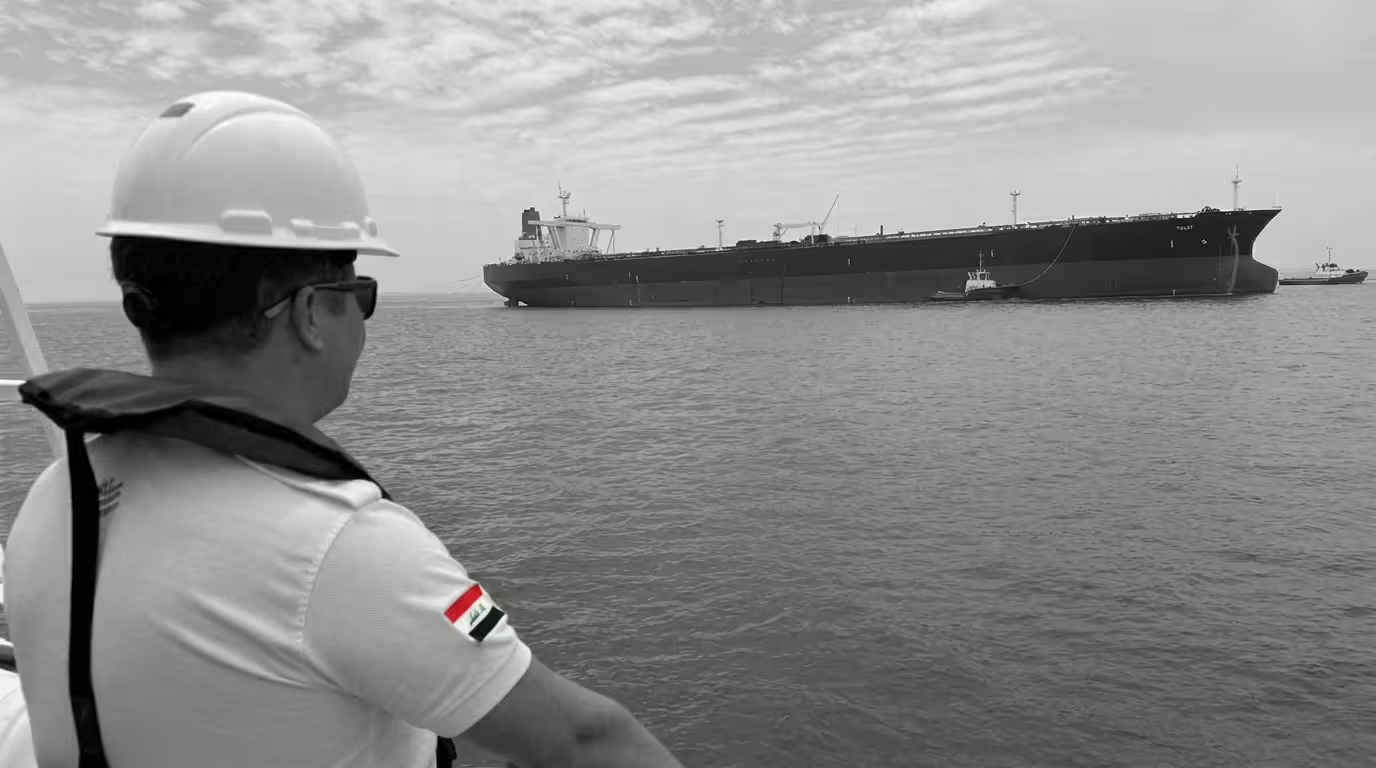
- Hormuz standoff: Iran attacked two United Arab Emirates ships in the Strait of Hormuz late Thursday, Emirati officials said, bringing the total to six vessels struck in August. The ships were affiliated with Abu Dhabi National Oil Co.
- The numbers: Ship-tracking firm Kpler counted 13 crossings on Thursday, against more than 130 a day before the war, with nine using the northern route administered by Tehran. July averaged 26 crossings a day. Oil has oscillated below $90 a barrel.
- U.S. pressure: Treasury Secretary Scott Bessent said new measures would be announced next week, describing them alongside the naval blockade of Iranian ports as a one-two punch. Defense Secretary Pete Hegseth said Thursday the Navy could sustain the blockade indefinitely.
- Iran’s demands: Tehran says Washington must end the war, lift the blockade and provide relief from sanctions and asset freezes before Hormuz reopens. Miad Maleki, formerly of the Treasury Department, said Iranian oil exports have fallen from 2 million barrels a day before the April blockade to near zero.
Background:
A June agreement offered Tehran financial rewards for reopening Hormuz and opening nuclear talks, ending an earlier blockade. Weeks later, Iran objected to U.S. efforts to guide ships through the waterway and resumed attacks on vessels.
Between the lines:
The prisoner file lands while both sides are testing who absorbs more economic pain, according to analysts cited by the Journal. With Qatar hosting a major U.S. base and Iranian exports near zero, the airmen give Tehran a humanitarian channel to raise outside the sanctions and Hormuz tracks — one that requires no concession on its nuclear program.
What’s next
Whether the Red Cross confirms access to the three pilots, any Qatari government statement on their status, and the new U.S. financial measures Bessent said would be announced next week.