The latest
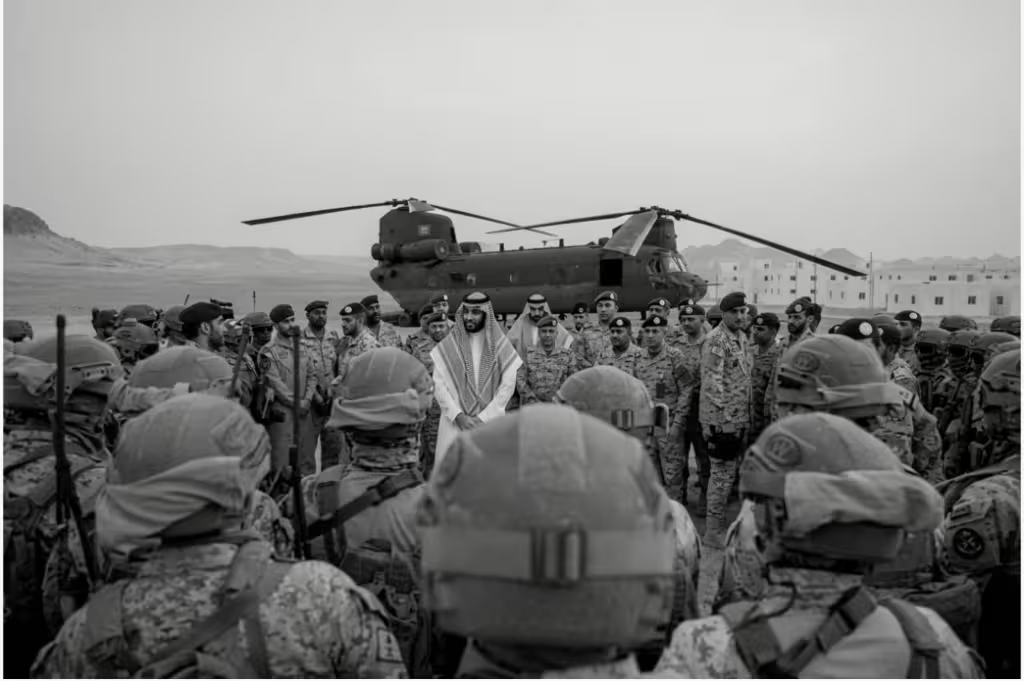
Saudi Arabia appears to be widening its military options in Yemen after its confrontation with the Houthis moved beyond maritime threats and toward the energy route Riyadh needs to bypass disruption in the Strait of Hormuz. A report by i24NEWS, citing Yemeni sources carried in Western media, says Saudi forces are being repositioned and that a broader campaign is under consideration. There has been no official Saudi announcement of an operation, its timing or its scope.
The reported plans include a naval effort to protect shipping and the possibility of a ground operation in central Yemen. Those are very different missions. A maritime coalition can bring international partners together around a defined objective: keeping sea lanes open. A land campaign would place Saudi Arabia back inside Yemen’s fragmented battlefield, where local forces, shifting loyalties and political constraints make military goals harder to separate from the conflict’s wider consequences.
At the same time, Riyadh is seeking a multinational naval coalition to protect shipping in the Red Sea and the Bab al-Mandab Strait. Saudi Arabia’s Defence Ministry said, according to the report, that 14 countries — including Turkey, Pakistan, Egypt, Sudan and Djibouti — had backed the initiative. The United States and several European countries have also been approached.
Details
- Force movements: The report said Saudi troop activity in eastern Yemen has fuelled speculation that forces are being repositioned for a wider mission.
- Ground option: A possible push into central Yemen has been reported, but no Saudi decision, operational plan or troop commitment has been publicly confirmed.
- Houthi blockade: The Houthis announced on July 20 that Saudi ships would face a blockade until Riyadh ended what the group calls its blockade of Yemen.
- Transit fees: The group denied that it planned to impose tolls on all vessels, according to the report.
- Oil infrastructure: On July 25, the Houthis said they had struck infrastructure moving oil from Saudi fields in the Eastern Province to a Red Sea export hub.
- Strategic route: The corridor has greater significance while Hormuz remains disrupted, as it gives Saudi crude an alternative route to international markets.
- Naval coalition: Riyadh is seeking a multinational force for Red Sea and Bab al-Mandab security, according to the report.
- Reported backing: Fourteen countries were said to have supported the initiative, including states linked to Red Sea security and regional trade routes.
- What remains unclear: The scale of any Saudi deployment, the coalition’s operational role and whether planning will develop into a ground offensive have not been confirmed.
Between the lines
This is not only a response to Houthi attacks. It is a test of Saudi Arabia’s room for manoeuvre. If the oil route to the Red Sea comes under sustained pressure while Hormuz remains impaired, the kingdom faces strain on two maritime exits rather than one. A naval coalition would help separate the immediate task of protecting trade from the far more consequential question of escalation inside Yemen — while sharing the security burden with countries whose interests are also exposed.
What to watch
The clearest signal will be whether Riyadh sets out a command structure and operational mandate for the proposed naval coalition, or moves quickly toward new action on Yemeni territory. The extent of damage to oil-transfer infrastructure and the durability of threats to Saudi shipping will also shape the pressure for escalation. Until then, a ground operation remains a reported scenario, not an announced military decision.