The latest
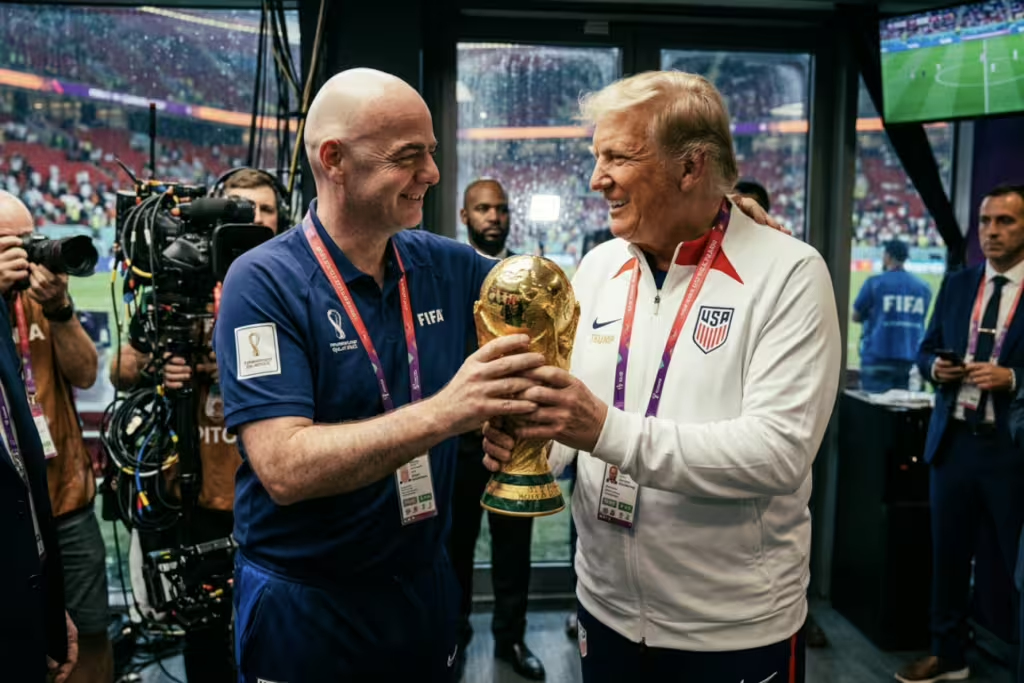
FIFA President Gianni Infantino wants to convert the World Cup’s commercial success into a permanent investment asset. The plan follows the tournament’s expansion from 32 to 48 teams and comes as FIFA expects revenue of $15 billion for the 2022-2026 cycle, mostly from broadcasting, sponsorship, ticketing and hospitality.
The proposed company, FIFA Forward Enterprise, would oversee the operational delivery of the men’s and women’s World Cups and the Club World Cup. FIFA says consultations are beginning and that its Council and 211 member associations will make the final decision.
Opponents argue that private investment would change the incentives shaping competitions. Expanding the World Cup, staging it more frequently than every four years or moving tournaments to markets offering higher returns would directly increase the company’s value, even if those decisions placed greater pressure on players, domestic leagues and supporters.
Details
- Ownership structure: FIFA would retain a majority stake, investors would initially buy 20% to 30% for several billion dollars and member associations would collectively receive about 20%.
- Lead investor: FIFA expects Joshua Kushner’s Thrive Capital to lead the investor group, with JPMorgan serving as financial adviser.
- Political connection: Sources said figures close to Donald Trump’s administration were consulted. FIFA said Jared Kushner is not an investor.
- Member incentive: Each association could receive a stake worth about $20 million and choose whether to hold or sell it. For smaller members, that could exceed several years of revenue.
- European opposition: UEFA said the plan crosses a line football institutions should not cross and argued that the game’s governance is not an asset to trade.
- FIFA’s status: FIFA is a nonprofit organization effectively owned by its members and enjoys tax-exempt status in Switzerland, raising questions about its relationship with a commercial subsidiary.
- Infantino’s future: Sources said he could become commissioner or chief executive after his final presidential term ends in 2031, potentially earning compensation comparable with the NFL commissioner.
- Official denial: FIFA said such a role had never been discussed, while insisting that its president and administration would need leading positions to maintain control of the subsidiary.
- Potential conflict: FIFA would retain authority over the international calendar after 2030, while its decisions on tournament size and frequency would directly affect the company’s profitability.
- Previous attempt: Infantino failed in 2018 to secure support for a $25 billion SoftBank-backed deal involving a new Club World Cup and global Nations League.
Between the lines
FIFA would not legally sell the World Cup itself. It would package the tournament’s revenue streams inside a company whose shares could be valued and traded. Yet separating tournament operations from football governance may prove largely technical because the body controlling match frequency and scheduling would also benefit from increasing the asset’s value.
What to watch
The proposal presented to FIFA’s Council and member associations will determine investor rights, the company’s authority and whether national bodies can sell their stakes. The vote will also show whether immediate financial gains can overcome European opposition and concerns about conflicts of interest.