The latest
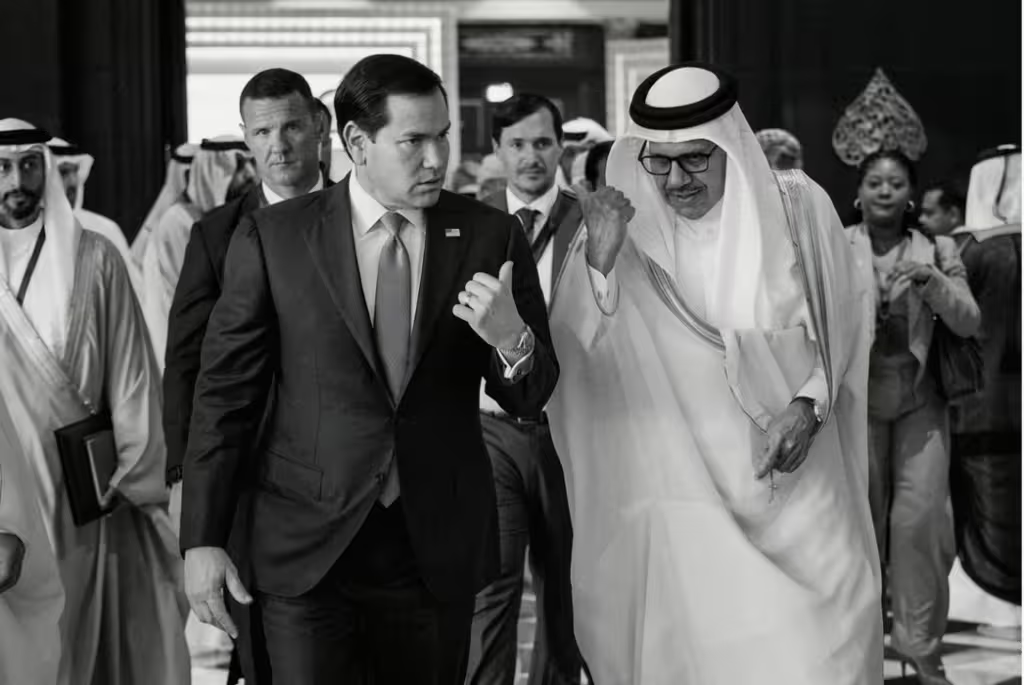
Gulf states targeted by Iranian attacks are trying to build a common position to end the war and reopen the Strait of Hormuz. They have intensified meetings with Washington and issued joint statements condemning the attacks, but differing national calculations have made it difficult to turn coordination into a unified strategy.
Saudi Arabia, the UAE and Oman have some alternatives for exporting oil and gas outside the strait, while Qatar, Kuwait and Bahrain depend on it more heavily. Their views also differ over the appropriate level of escalation: Oman and Qatar favor mediation, the UAE has shown greater readiness for a military response, and Saudi Arabia has taken a middle position.
Longstanding disputes have deepened those differences. Riyadh and Abu Dhabi have clashed over Yemen and Sudan, while the effects of the Gulf dispute with Qatar faded only in recent years. As attacks spread to the Red Sea and Saudi tankers came under fire, Gulf states have been forced to cooperate without full trust or a shared vision for ending the war.
Details
- Common goal: Gulf states want to keep the Strait of Hormuz open and protect their energy facilities and export routes.
- Different priorities: Some countries are focused on reopening the strait, while others favor stronger military pressure on Iran.
- Diverging positions: Oman and Qatar lean toward mediation, the UAE appears more prepared to escalate, and Saudi Arabia occupies a middle ground.
- Uneven exposure: Saudi Arabia, the UAE and Oman have alternative energy export routes, unlike Qatar, Kuwait and Bahrain.
- Widening attacks: Iranian strikes have hit Bahrain, Kuwait and Jordan, while Houthi forces have attacked Saudi tankers in the Red Sea.
- Energy alternatives: The UAE is developing a pipeline to Fujairah, while Kuwait is exploring the use of Saudi and Emirati networks to move its oil.
Between the lines
Agreement on the need to end the war does not mean Gulf states agree on the shape of a settlement. Countries facing the greatest risk of direct Iranian attacks want a rapid de-escalation, while others fear that backing down without weakening Tehran could leave them facing a greater threat later. The GCC therefore appears closer to a coordination framework than a unified alliance.
What to watch
The next test will be whether the Gulf states can secure a direct role in cease-fire talks or negotiations to reopen the strait. If they fail to unify their demands, Iran may deal with them individually while the United States continues to shape the war according to its own calculations.