The latest
Talks in Pakistan over a possible 10-day ceasefire with the United States have revealed signs of a power struggle between Iranian officials seeking a swift end to the war and hardliners in the Islamic Revolutionary Guard Corps who continue launching attacks across the Gulf.
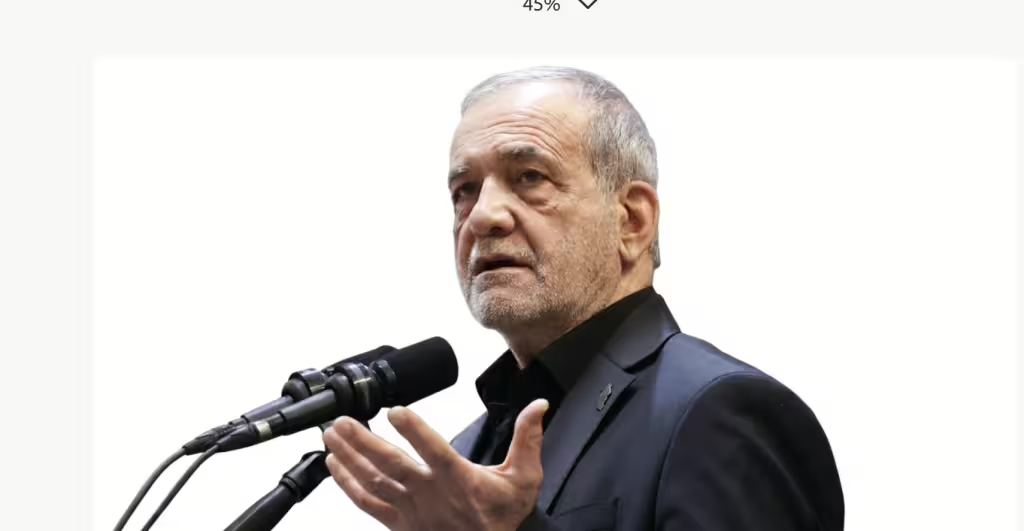
President Masoud Pezeshkian said he has begun communicating regularly with Supreme Leader Mojtaba Khamenei and takes his orders from him. Khamenei has remained out of public view since being wounded in the strike that killed his father, issuing only written statements pledging revenge.
Officials familiar with the talks said Foreign Minister Abbas Araghchi and Parliament Speaker Mohammad Bagher Ghalibaf had privately told mediators that they disagreed with the Revolutionary Guard. Iranian negotiators also said they had no prior knowledge of an attack on a Qatari tanker in the Strait of Hormuz while Doha was trying to broker another ceasefire.
Details
- Pro-engagement camp: Pezeshkian and Araghchi see an agreement as a path to sanctions relief and a way to contain an economic crisis that has made governing more difficult.
- Hardline pressure: Opponents accuse the diplomats of appeasing Washington and Israel after the war’s human and economic losses.
- Araghchi’s position: He said the possibility of a negotiated solution should not be allowed to slip away, warning that war carries mounting costs.
- Mediator concerns: The attack on a Qatari tanker embarrassed Doha, while Oman—another mediator—has also faced Iranian attacks during the regional escalation.
- Point of agreement: Both camps appear united behind Iran’s claim to control and profit from shipping through the Strait of Hormuz.
- Limited gains: Negotiators failed to secure the release of billions of dollars in frozen assets, weakening their position against those pushing to continue the war.
Between the lines
The division may be real, but it also serves a negotiating purpose. By presenting themselves as the officials capable of restraining the Revolutionary Guard, Iranian diplomats give mediators a reason to keep talking even when military operations contradict messages of de-escalation.
What to watch
Mojtaba Khamenei’s position will determine whether the diplomatic camp can secure a ceasefire or whether the Revolutionary Guard continues setting the course on the battlefield. Further attacks in the Gulf will also test whether Iran’s negotiators have the authority to honor any agreement with Washington.