
The latest
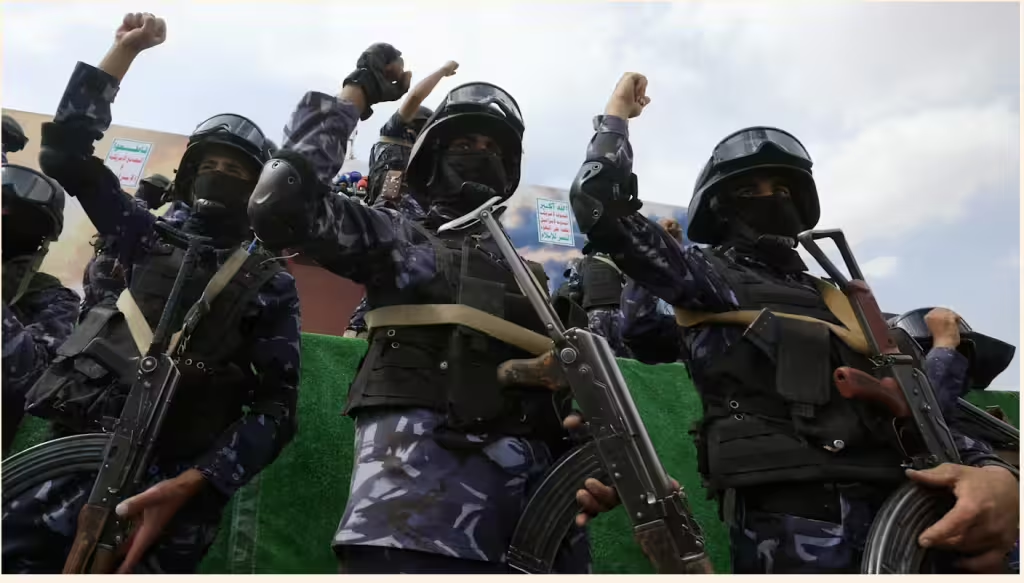
The Houthis have returned to the center of the Middle East conflict through Saudi Arabia’s most vulnerable pressure point: oil exports. Their declared blockade of the kingdom’s ports is more than a bilateral threat. It is an attempt to add Bab el-Mandeb to the crisis in Hormuz, placing the region’s two critical energy routes under simultaneous pressure.
The escalation began after direct flights between Iran and Houthi-controlled Sanaa resumed for the first time in more than a decade. Riyadh fears the route could transport weapons and military advisers. When an Iranian plane carrying a Houthi delegation returned from Tehran, Sanaa airport was struck and the aircraft diverted to Hodeidah. Washington says it carried weapons, missile parts and experts, but that claim has not been independently verified.
The Houthis responded with missiles and drones targeting Abha airport, then threatened Saudi shipping. The confrontation followed Mohammed bin Salman’s request for Trump’s support for possible military action, signaling that Riyadh recognizes the difficulty of containing the escalation alone and fears returning to the grinding war it has sought to leave behind since the 2022 truce.
Details
- Alternative route: Bab el-Mandeb became critical to Saudi exports after the kingdom moved crude through its east-west pipeline to Yanbu to bypass disruption in Hormuz.
- Scale of exposure: Saudi Arabia has exported about 4.9 million barrels a day from its Red Sea coast, according to shipping data.
- Saudi response: The Saudi-led coalition pledged to protect vessels and confront Houthi attacks with “firmness and force.”
- Enforcement test: It remains unclear whether the Houthis will attack ships bound for Saudi ports or use the threat to raise costs and extract political concessions.
- Immediate impact: Red Sea war-risk premiums rose from about 0.3% to 0.75% of a vessel’s value after the announcement.
- Wider conflict: The crisis coincided with a tenth night of U.S.-Iran strikes and efforts by Qatar and Pakistan to revive a ceasefire.
Between the lines
The Houthis are not simply an automatic Iranian proxy. They are aligned with Tehran but retain their own Yemeni calculations. The blockade gives Iran added leverage without forcing it to bear the full cost, while offering the Houthis a way to seek concessions from Riyadh. Actual attacks on shipping, however, could trigger major Saudi and U.S. strikes and pull Yemen back into open war.
What to watch
The decisive indicator is whether the threats become attacks near Bab el-Mandeb. Continued Iranian flights to Sanaa and the scale of U.S. military support for Riyadh will determine whether the crisis remains a limited deterrence contest or collapses the truce and restores Yemen as a central front in the regional war.
Sources