The latest
The United States and Iran continue to exchange military pressure around the Strait of Hormuz, even as the Trump administration insists the door to diplomacy remains open. Iran’s refusal to alter its position on the strategic shipping lane underscores, according to U.S. officials and outside experts, the limits of relying on air power alone to force a political shift in Tehran.
Details
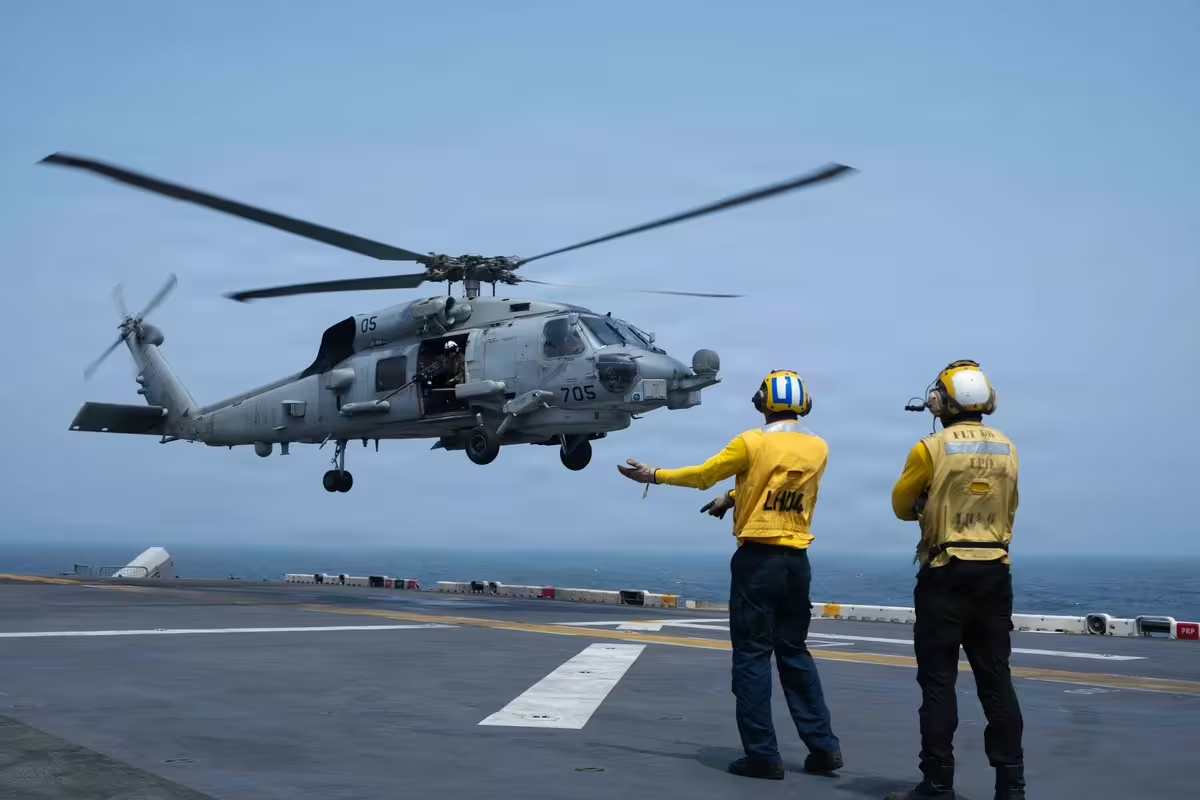
- U.S. position: Secretary of State Marco Rubio said Washington remains prepared to negotiate if Iran demonstrates genuine willingness to engage, while accusing Tehran of continuing missile and drone attacks against shipping in the Strait of Hormuz.
- Trump strategy: According to The Associated Press, a U.S. official said the administration links continued military operations to the killing of American service members and attacks on maritime traffic, while keeping diplomatic channels open.
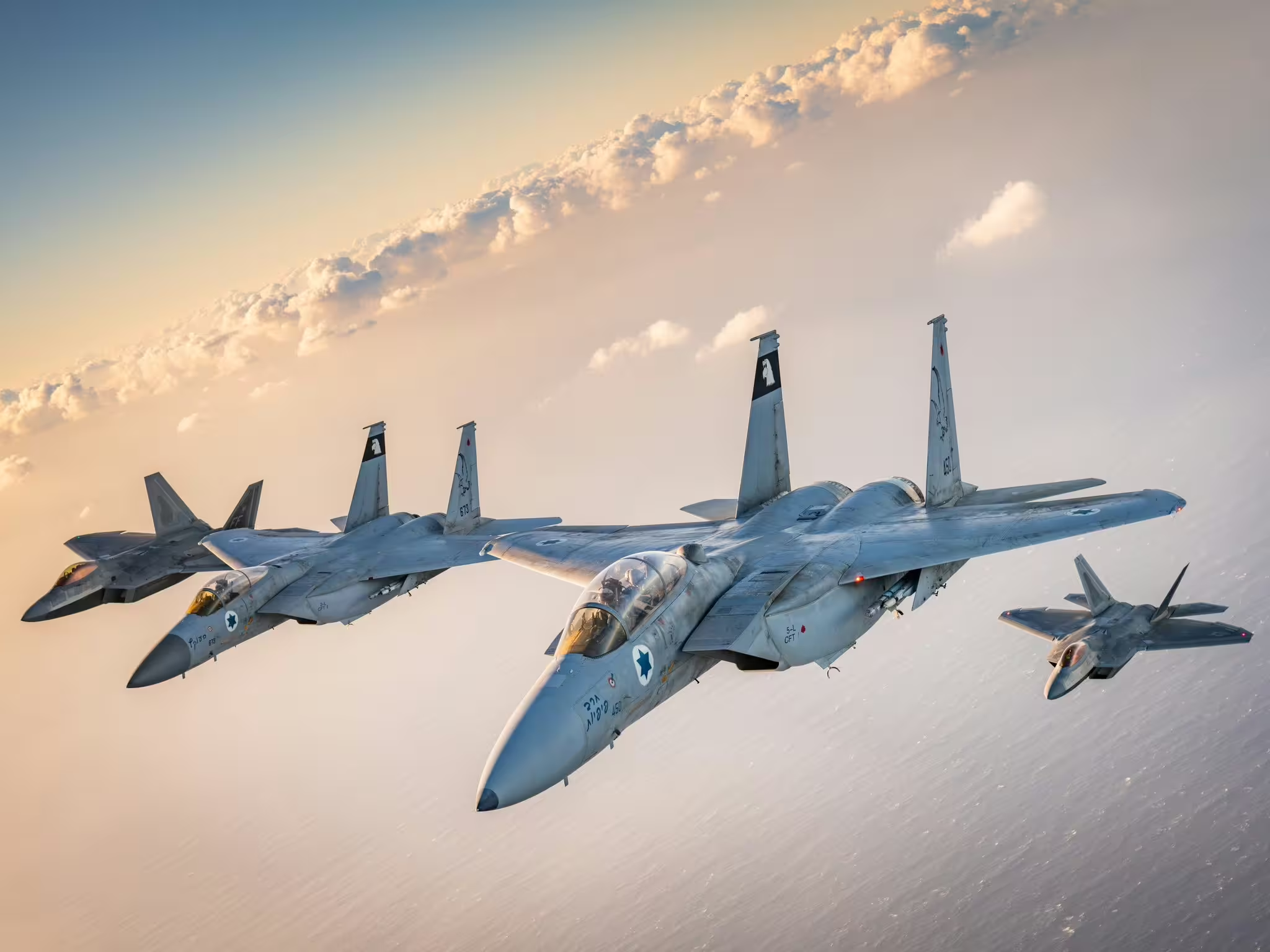
- Limits of air power: U.S. analysts say the strikes have damaged Iranian military infrastructure but have not compelled Tehran to change course. They argue broader objectives would be difficult to achieve without ground operations—an option with little political support in the United States.
- Diplomatic challenge: Former U.S. diplomat Alan Eyre said deep mutual distrust between Washington and Tehran, combined with the administration’s lack of a coherent negotiating strategy, makes a diplomatic breakthrough increasingly difficult.
- Escalation risks: Mona Yacoubian of the Center for Strategic and International Studies warned that each new round of escalation reduces the chances of reviving diplomacy, while any expansion of disruptions into the Bab el-Mandeb Strait could further destabilize global trade and energy markets.
Background
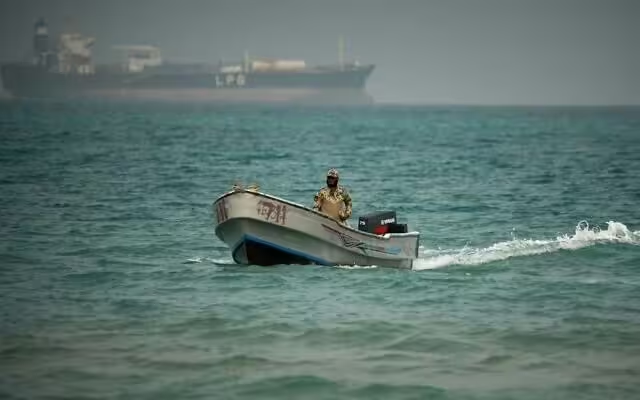
Roughly one-fifth of the world’s seaborne oil passes through the Strait of Hormuz, making it one of the world’s most strategically important maritime chokepoints. Iran has repeatedly threatened to disrupt traffic there during periods of tension with the United States, while Washington relies on its military presence and regional partners to safeguard freedom of navigation. Research institutions including the International Energy Agency and the Center for Strategic and International Studies have consistently warned that prolonged disruption in the strait would quickly affect oil prices and global supply chains.
Between the lines
The latest developments suggest that air strikes alone have not achieved Washington’s political objective of changing Iran’s behavior, while diplomacy remains constrained by profound mutual distrust. That leaves both sides pursuing pressure without a clear path to de-escalation.
What to watch
Attention will focus on any direct or mediated diplomatic contacts, as well as the intensity of attacks affecting shipping in the Straits of Hormuz and Bab el-Mandeb, the two indicators most likely to shape the trajectory of the crisis and global energy markets.