The latest
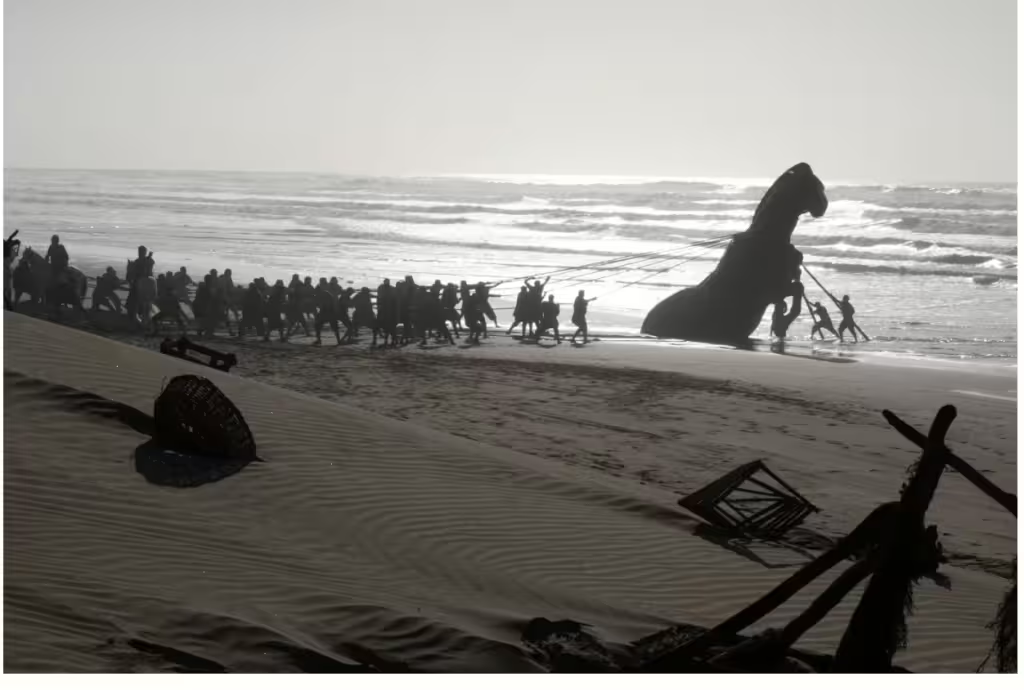
Nolan turned one of literature’s most famous deceptions into the visual and dramatic centerpiece of “The Odyssey.” He imagined the Trojan Horse half-buried on the Moroccan coast, as if it were a soaked religious offering abandoned by a departing army, giving the ancient trick a more plausible foundation than the traditional image of a giant wooden horse on wheels.
The structure was more than a background prop. Atlantic waves tore pieces from it before actors hauled it over dunes and log rollers with ropes. The production built multiple versions and worked out the mechanics during filming in Essaouira and Aït Benhaddou rather than relying primarily on digital effects.
The central sequence takes viewers inside the horse with the Greek warriors. Matt Damon, Jon Bernthal and about 25 other performers crowded into a dark structure filled with cold water and rocked by machinery, while Nolan and cinematographer Hoyte van Hoytema filmed with an IMAX camera in the style of a claustrophobic documentary.
Details
- Long-held idea: The image of a beached horse came to Nolan more than 20 years ago when he was considered to direct a film based on “The Iliad.”
- New design: The horse was placed on its hind legs to appear more dynamic and monumental, with its pose inspired by a photograph of production designer Ruth De Jong on a rearing horse.
- Cinematic reference: Nolan drew inspiration for burying the structure in sand from the Statue of Liberty scene at the end of the original “Planet of the Apes.”
- Massive production: The film cost $250 million, used 5,300 costumes and was shot over 91 days in six countries.
- Technical first: It is the first Hollywood feature filmed entirely with IMAX film cameras.
- Strong debut: The movie earned $264.1 million worldwide during its opening weekend, the biggest global launch of Nolan’s career.
Between the lines
Nolan’s practical realism is not simply visual spectacle. The horse sequence connects Odysseus’s deception to the slaughter that follows Troy’s fall, establishing the trauma that shadows the hero throughout his long journey home.
What’s next
The film’s performance will test whether adaptations of classical texts can compete with major commercial franchises. It also strengthens Nolan’s case for large-format theatrical filmmaking and physical effects as Hollywood becomes increasingly dependent on digitally created imagery.